
Why your alarm is too quiet on Android, even at full volume
 Beyond Alarm27 August 2026 · 9 min read
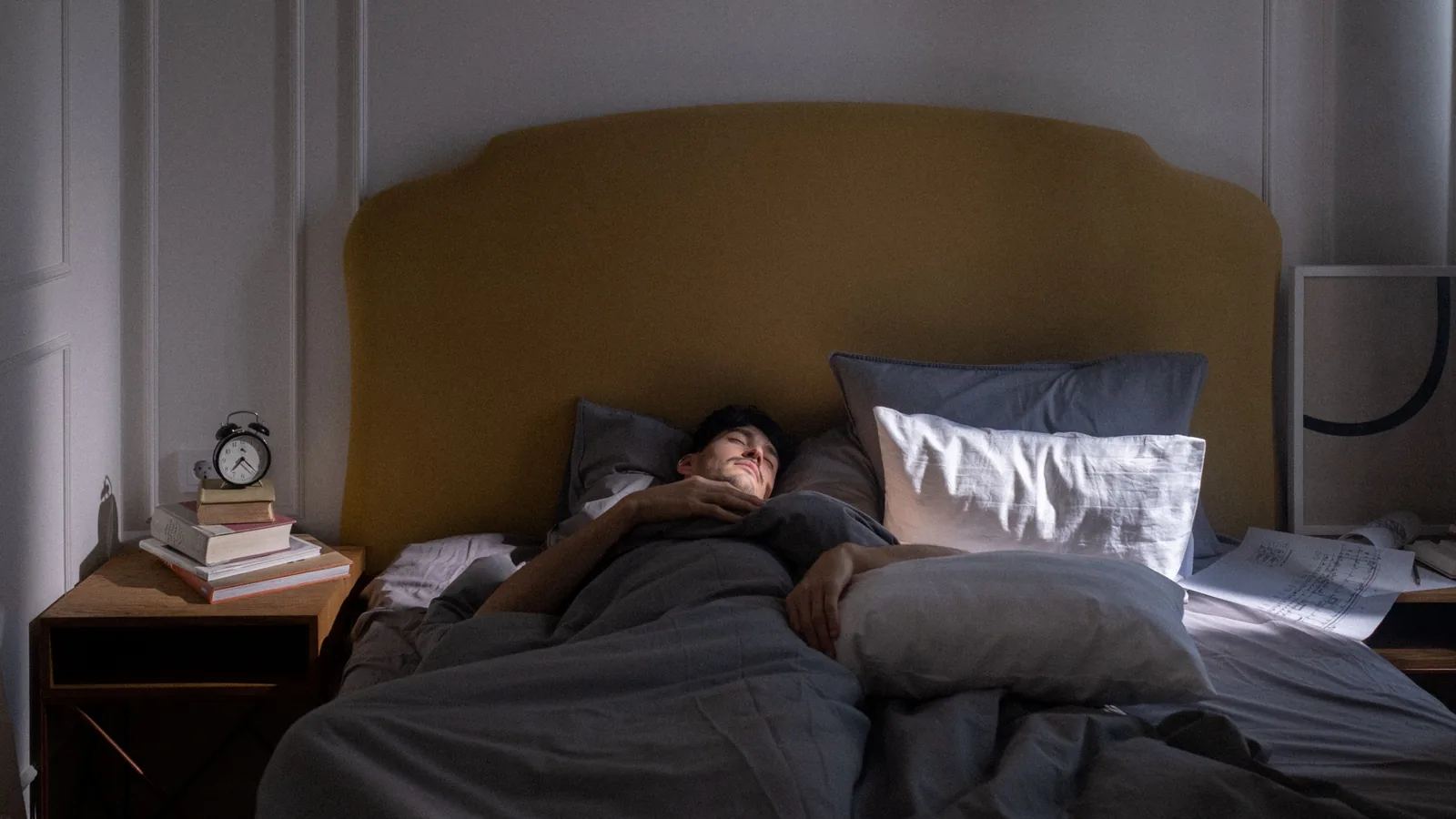
Your alarm went off. You know it went off, because the screen was lit and the notification was there when you finally woke up an hour later. It just wasn't loud enough to reach you.
On Android there are two volumes between an alarm app and your ears, and they are multiplied together. The phone's alarm stream volume is one. The app's own player gain is the other. Setting either one to maximum tells you nothing about the other, and the second one is invisible from the outside — most alarm apps have their own volume slider, buried a screen or two in, that has nothing to do with the buttons on the side of your phone.
Neither of them is linear in the way the slider implies, which is the part almost nobody knows and the part that decides whether a "gradual" alarm reaches you at 6am or at 6:00:45.
Which slider is which
Android does not have a volume. It has several, and they are genuinely independent. Google's own developer documentation puts it plainly:
Android uses separate audio streams for playing music, alarms, notifications, the incoming call ringer, system sounds, in-call volume, and DTMF tones. This allows users to control the volume of each stream independently.
The consequence is that the buttons on the side of your phone are not a volume control. They are a volume control for whatever is playing. The same documentation says so:
By default, pressing the volume control modifies the volume of the active audio stream. If your app isn't currently playing anything, hitting the volume keys adjusts the music volume.
So pressing volume-up in a silent bedroom at 11pm turns up the music. The alarm stream is untouched, and it is the only one that will matter in seven hours.
| What you adjusted | What it actually changed | Reaches your alarm? |
|---|---|---|
| Volume keys, nothing playing | Media volume | No |
| Volume keys while the alarm rings | Alarm stream | Yes |
| Settings → Sound → Alarm slider | Alarm stream | Yes |
| Silent / vibrate switch | The ringer | No — different stream |
| The alarm app's own volume setting | The app's player gain | Yes, and separately |
The last row is the one that catches people. An app's internal volume is multiplied on top of the stream. An alarm stream at 60% with an app volume at 50% is 30% of the loudest sound your phone can make, and both sliders looked like they were somewhere reasonable.
There is a fourth possibility, and it is the app's fault rather than yours: an alarm that is not playing on the alarm stream at all. Android's guidance is explicit about who gets to opt out of the default:
Unless your app is an alarm clock, you should play audio with usage
AudioAttributes.USAGE_MEDIA.
Which means an alarm app has to deliberately declare itself. One that forgets plays your wake-up tone as ordinary media — riding whatever your media volume happens to be, which is set by the last video you watched.
Half volume is not half as loud
This is the part that is genuinely counter-intuitive, and it is arithmetic rather than opinion.
The volume an app sets on its player is an amplitude figure. Android's own documentation for its volume ramping API states it directly: "The volume coordinates are specified in linear scale over the interval [0.0, 1.0]."
Loudness is not linear. It is logarithmic, and the conversion is
20 × log₁₀(amplitude) decibels. Run a few slider positions through it:
| App slider | In decibels | Roughly sounds like |
|---|---|---|
| 1.00 | 0 dB | Full |
| 0.70 | −3 dB | Barely distinguishable from full |
| 0.50 | −6 dB | About two-thirds as loud |
| 0.25 | −12 dB | Noticeably down, still obvious |
| 0.05 | −26 dB | Quiet, but clearly audible in a still room |
| 0.01 | −40 dB | The edge of noticing |
The National Institute on Deafness and Other Communication Disorders puts the rule of thumb this way: "An increase of 10 dB seems about twice as loud to your ears, but it's actually 10 times more intense."
Read the table again with that in mind. The top half of the slider — 0.5 to 1.0 — is six decibels, which is less than one doubling of perceived loudness. The entire audible range of a volume slider lives in its bottom third. Everything above about 0.6 sounds much the same.
That is a curiosity when you are choosing a volume. It becomes a real problem the moment something tries to ramp.
The fade-in you did not ask for
Most alarm apps, and several phone manufacturers' built-in clocks, offer a gradual or sunrise wake: the alarm starts quiet and rises. It is a genuinely nice feature and it is frequently on by default, which means a lot of people have one running without having chosen it.
Here is what goes wrong. The obvious way to build a fade-in is to walk the player volume from near zero to 1.0 in equal steps over the chosen window. That is linear in amplitude — and by the table above, linear in amplitude is not a fade at all. A ramp that reaches 0.25 a quarter of the way through is already at −12 dB, which is most of the way up to the ear. The rise you actually hear is over in the first few seconds, and the remaining fifty seconds of a sixty-second "gentle" wake are inaudibly small changes near the top.
Done the other way — as a ramp in decibels, which is what the ear measures — you get the opposite failure mode if you are not careful: a ramp that starts far enough down to be genuinely gentle spends its first stretch below the noise floor of a bedroom. A −45 dB start is 0.0056 amplitude. In a room with a fan or a road outside, that is nothing. A 60-second ramp from there is an alarm that, in practice, goes off around the 30-second mark.
Neither is a bug exactly. Both are an alarm that does not do what its owner thinks it does.
We got this wrong in Beyond Alarm and fixed it in August 2026, so this is not a criticism from the outside. Our gentle wake was linear in amplitude — it started at 0.05, which is already −26 dB, plainly audible — and was perceptually finished within about three seconds. It read to users as an alarm that just started loud. Rebuilding it as a decibel ramp fixed the shape and introduced the second problem: with the floor set low enough to be gentle, a long ramp is a long silence. There is a third defect worth naming because it is the kind nobody finds by testing the feature: four different places in one codebase disagreed about what an unset ramp length meant, and one of them answered sixty seconds. An alarm whose settings failed to load was therefore given a fade-in nobody had chosen. The rule we settled on is that when the answer is unknown, an alarm rings now and rings loud.
Beyond Alarm
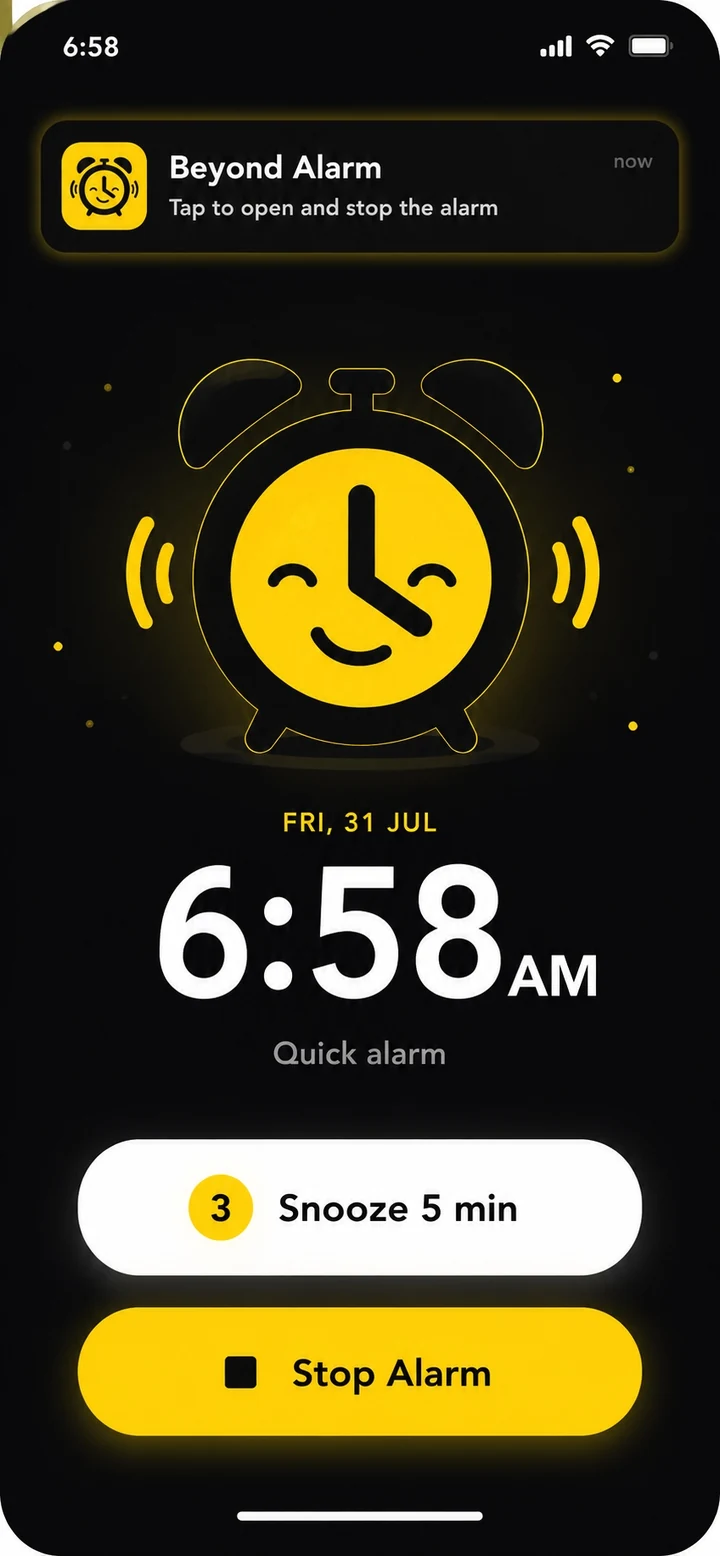
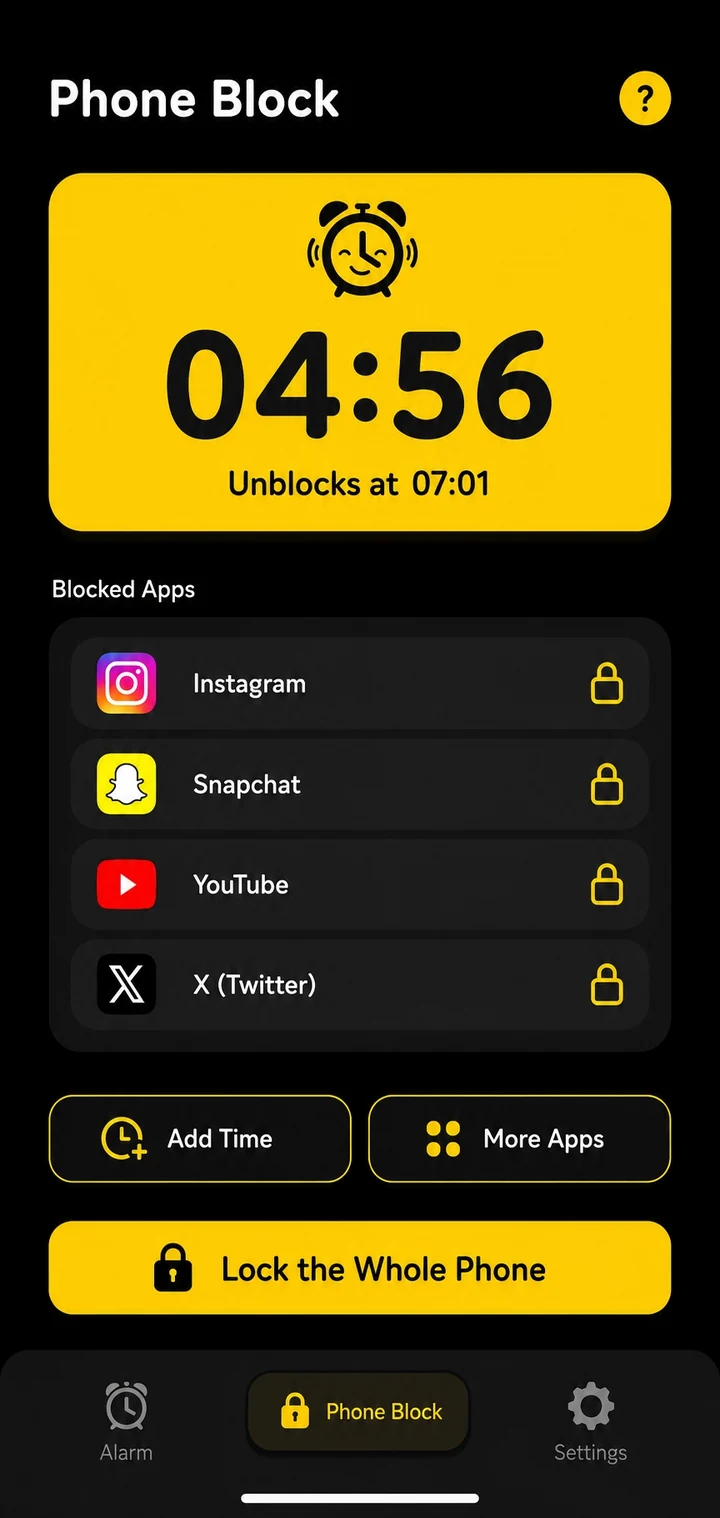
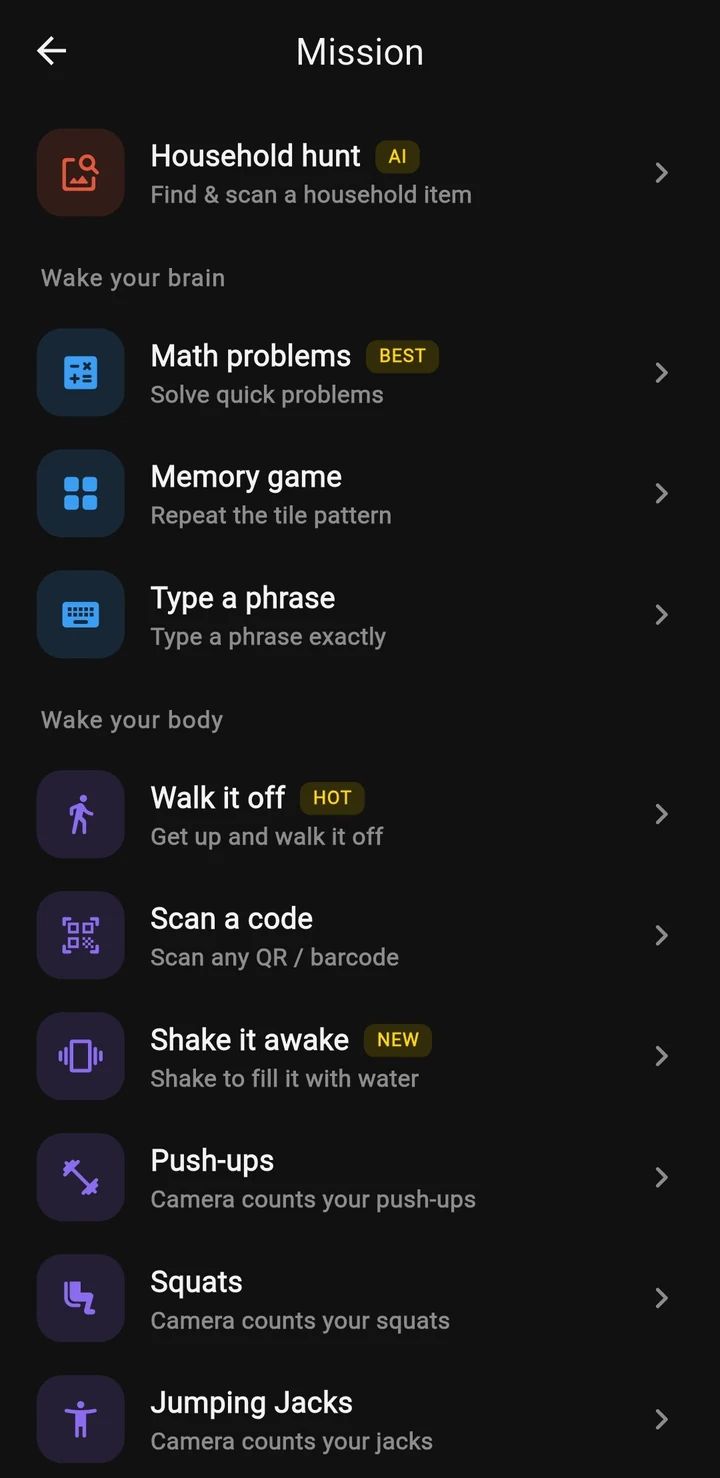
Beyond Alarm does this part for you: the alarm will not switch off until you have actually moved, and the apps you pick stay locked afterwards.


The second ring that starts from silence
If you snooze, the alarm has to come back. Whether it comes back gently is a question most apps never ask themselves, and the default answer is usually yes, because the snooze re-uses the alarm's own settings.
That is the wrong answer. Gentle wake exists so you are eased out of sleep at a time you chose. A snooze is the second ask, to someone who has already demonstrated they can dismiss a sound while barely conscious — which is its own well-documented problem. Starting it inaudible is how a snooze gets slept through, and it is worth checking whether your alarm app repeats the fade on every snooze. Many do.

Five minutes, in order
Do these in sequence and stop at the first one that changes something. The whole point is to separate the two volumes rather than to turn everything up.
- Set an alarm for two minutes' time. Not the app's preview button — previews commonly play on the media stream, which is a different number from the one your alarm will use. Only a real alarm tests the real path.
- Let it ring and do not touch the screen. Listen from where you actually sleep, not from where you are holding the phone.
- While it is ringing, press volume up. This is the diagnostic. The keys act on the active stream, so during a ring they are aimed at the alarm stream. If the alarm gets louder, your alarm stream was low and you have found it.
- If pressing volume up changed nothing, the ceiling is the app's own volume. Open the alarm's settings and look for a volume slider inside the app. Set it to full and repeat step 1.
- Check for a gradual, gentle or sunrise setting in the same screen and turn it off for one test. If the alarm is suddenly loud from the first second, the fade was your answer — set a shorter one, like 15 seconds, or leave it off.
- Check what happens after a snooze. Snooze it once and listen to the second ring. If it fades in again, that is a setting worth changing or an app worth replacing.
- If none of it made a difference, you are not looking at a volume problem. An alarm that rang with no sound at all is a Do Not Disturb mode, and an alarm that left no trace at all never fired — that one is battery optimisation and no amount of volume will touch it.
Where this leaves you
Two volumes, multiplied. Neither behaves like the slider suggests.
- The phone's alarm stream is not what the volume keys adjust unless something is playing. Set it from Settings, or during a live alarm.
- The app's own volume multiplies on top of it, and half of it is only six decibels down. If you want loud, the slider needs to be at the top, not in the middle.
- A gradual wake is a fade in amplitude or a fade in loudness, and the two fail in opposite directions. Either way, a long one on a phone in a room with any background noise is an alarm that goes off later than it says.
- A snooze that fades in is the second alarm you also will not hear.
And if the alarm was plenty loud and you turned it off anyway, none of this is your problem: that is a dismissal you do not remember making, and turning the volume up does not fix it. Reaching a sleeping person is a volume question. Keeping them up is not — and the apps built around that second half are compared here.
Sources
- Handling changes in audio output — Android's own documentation. The separate-streams behaviour, the volume-keys default, and the "unless your app is an alarm clock" guidance are all quoted from this page.
- Controlling amplitude with VolumeShaper — the source for volume coordinates being "specified in linear scale over the interval [0.0, 1.0]", which is the whole reason a linear fade is not a fade.
- How Loud Is Too Loud? — National Institute on Deafness and Other Communication Disorders, part of the NIH. The 10 dB rule of thumb is quoted from here.
- Limit interruptions with Modes & Do Not Disturb on Android — for the case where the alarm made no sound at all rather than a quiet one.
The decibel figures in the table are 20 × log₁₀(amplitude), which you can
check on any calculator. Nothing in them is specific to a phone or a brand.
Common questions
Why is my alarm so quiet on Android even though the volume is up?
Because two separate volumes are multiplied together before any sound reaches you. The phone's alarm stream volume is one, and the alarm app's own player gain is the other. Turning one to maximum does nothing about the other, and most people have never seen the second one at all.
Does the volume button change my alarm volume?
Usually not. Android's volume keys act on whichever stream is currently playing, and default to media when nothing is. To reach the alarm stream you either press the keys while an alarm is actually ringing, or open Settings, Sound and vibration, and move the alarm slider directly.
Is 50% volume half as loud?
No. Player volume on Android is a linear amplitude scale, and loudness is logarithmic. 0.5 amplitude is about 6 dB down, which sounds roughly two-thirds as loud rather than half. It is 0.03 that is genuinely quiet, and there is very little audible difference between 0.7 and 1.0.
Why does my alarm start quiet and get louder?
That is a gradual wake or sunrise setting, and on many phones and apps it is on by default rather than something you switched on. A 60-second fade-in starts far enough down to be inaudible in a normal bedroom, so the alarm effectively goes off some seconds after it goes off.
My alarm is loud in the app's preview but quiet in the morning. Why?
A preview usually plays on the media stream at whatever your media volume is, and the real alarm plays on the alarm stream at whatever the alarm slider is. They are two different numbers. Test with a real alarm set two minutes out, not with the preview button.
Does silent mode make my alarm quieter?
No. Silent and vibrate act on the ringer, and alarms are not the ringer. If the alarm made no sound at all rather than a quiet one, that is a different problem entirely and it is usually a Do Not Disturb mode.
What is the fastest way to find out which one is wrong?
Set an alarm for two minutes' time and let it ring without touching anything. While it is ringing, press volume up. If it gets louder, the phone's alarm slider was low. If it does not, the app's own volume is the one holding it down.
We build Beyond Alarm, an Android alarm app that will not switch off until you have actually moved. Most of what we write here comes out of problems we hit building it.
Beyond Alarm
An alarm that keeps ringing until you’ve actually moved — then blocks the apps that pull you back to bed. Free to start, no account.
Keep reading
vivo alarm not going off? The Funtouch OS and OriginOS settings that stop it
On vivo phones an alarm usually fails because the phone stopped the app in the background, or the alarm's sound file is gone. The vivo settings to change — Autostart, background power, battery — and where they are.
Motorola alarm not going off? The Moto settings that silence it
Moto phones run close to stock Android, but a few settings — Adaptive battery, a hidden Unrestricted option and "Improve battery while inactive" — can stop an alarm app. Where they are and what to set.