
How to break phone addiction - 8 changes that work
 Beyond Alarm24 October 2026 · 7 min read
To break a phone addiction, change your surroundings instead of relying on willpower: keep the phone out of the bedroom, wake up with a separate alarm, switch off non-essential notifications, add friction to the worst apps, and fill the freed time with something specific.
Most people who search this have already tried "just using it less". It did not last because the phone is designed to be easy to pick up, and resolve is weakest exactly when the urge arrives.
The short version:
- Change where the phone lives before you change how you feel about it.
- Night and the first hour of the morning are the biggest levers. Start there.
- Make the worst apps slower to open, not merely discouraged.
- A limit you can dismiss in one tap is a reminder, not a limit.
- Expect weeks to months, not 21 days. One bad day does not reset it.
A note on the word: "phone addiction" is how people search, and it is used loosely here. It is not a formal diagnosis. If your phone use is seriously hurting your sleep, work, relationships or mood and nothing you try makes a dent, a GP or a mental health professional is the right next step, not an app or a blog post.
Why willpower alone does not work
A habit is a behaviour your surroundings trigger without asking you first. Picking up the phone when you are bored, waiting or just awake is cued by the place, the time and the object being within reach. Deciding to resist that every time means winning the same argument dozens of times a day.
The phone does not even have to light up to cost you attention. In a 2017 study by Adrian Ward and colleagues, participants did better on attention tasks with their phone in another room than face-down on the desk. Later replications have been mixed, so treat it as a reason to move the phone rather than as a law.
The practical conclusion is simple. Every step below changes the surroundings so that there is less to resist, rather than asking you to resist harder.
Eight changes, ranked by what they fix
| Step | What it fixes | Effort |
|---|---|---|
| 1. Charge the phone outside the bedroom | Scrolling in bed at night and on waking | Low, once |
| 2. Use a separate alarm, or put the phone across the room | The phone being the first thing you touch | Low, once |
| 3. Turn off non-essential notifications | The phone pulling you in when you were not thinking about it | Low, once |
| 4. Move or delete the worst apps | Opening them on autopilot | Low |
| 5. Switch on greyscale | Feeds and icons being pleasant to look at | Low, easy to undo |
| 6. Add friction you cannot skip | "Just one quick look" turning into forty minutes | Medium |
| 7. Fix the times, not the total | Vague goals like "less screen time" | Medium |
| 8. Plan what replaces it | The empty gap that sends you back to the phone | Medium, ongoing |
1. Charge the phone outside the bedroom
If you do only one thing, do this. Night-time and first-thing scrolling are where the habit is strongest, because you are tired, alone and the phone is already in your hand. A charger in the kitchen or hallway removes the cue entirely for two of the hardest hours of the day.
2. Use a separate alarm, or put the phone across the room
The usual objection to step 1 is "but my phone is my alarm". A cheap standalone alarm clock solves it outright. If you keep the phone as your alarm, charge it across the room so you have to stand up to turn it off.
Standing up is often enough to break the reflex, and we wrote up how to stop scrolling in bed when your phone is your alarm in more detail.
3. Turn off non-essential notifications
Keep calls, messages from real people and anything time-critical. Turn off the rest, especially social apps, news and shopping. In a 2016 study, Kostadin Kushlev and colleagues found people reported more inattention and hyperactivity in weeks when their phone alerts were on than in weeks with them off.
4. Move or delete the worst apps
Take the two or three apps you lose the most time to off your home screen, into a folder on the last page. Better still, delete them and use the website, which is usually clunkier on purpose. The point is to make opening them a decision rather than a thumb movement.
5. Switch on greyscale
Colour does a lot of the work in making icons and feeds feel rewarding. A small 2020 study of college students found screen time fell when their phones were set to greyscale.
On iPhone it is under Accessibility, Display and Text Size, Colour Filters. On Android it is usually in Digital Wellbeing's Bedtime mode or Accessibility, though the exact path varies by phone.
6. Add friction you cannot skip
App limits are the obvious tool, and Screen Time on iPhone and Digital Wellbeing on Android are free and well made. The trouble is that "Ignore limit" and "Take a break" sit right there on the screen, so they stop you only when you did not much want to keep going. We covered why Screen Time limits do not work for most people after the first week.
Friction that holds is friction that costs more than the urge. That can be physical, like the phone in another room, or a blocker where stopping early takes time or is not possible at all. Free apps such as one sec add a pause before chosen apps open, at the time of writing (check the listing for what is free).
7. Fix the times, not the total
"Use my phone less" gives you nothing to keep. "No phone in the first hour after waking" or "no social apps after 10pm" does. Pick one or two windows and protect them completely, rather than trying to shave minutes off the whole day.
Cutting back also seems to help, not just to cost. In a 2018 study by Melissa Hunt and colleagues, students who limited social media to about 30 minutes a day for three weeks reported less loneliness and depression than a control group.
8. Plan what replaces it
The phone fills gaps: the queue, the bus, the first minute awake. Remove it without filling the gap and you will drift back.
Decide in advance: a book on the bedside table, a podcast for the commute, opening the curtains first thing. We put together a list of what to do in the first ten minutes instead of scrolling.
Beyond Alarm
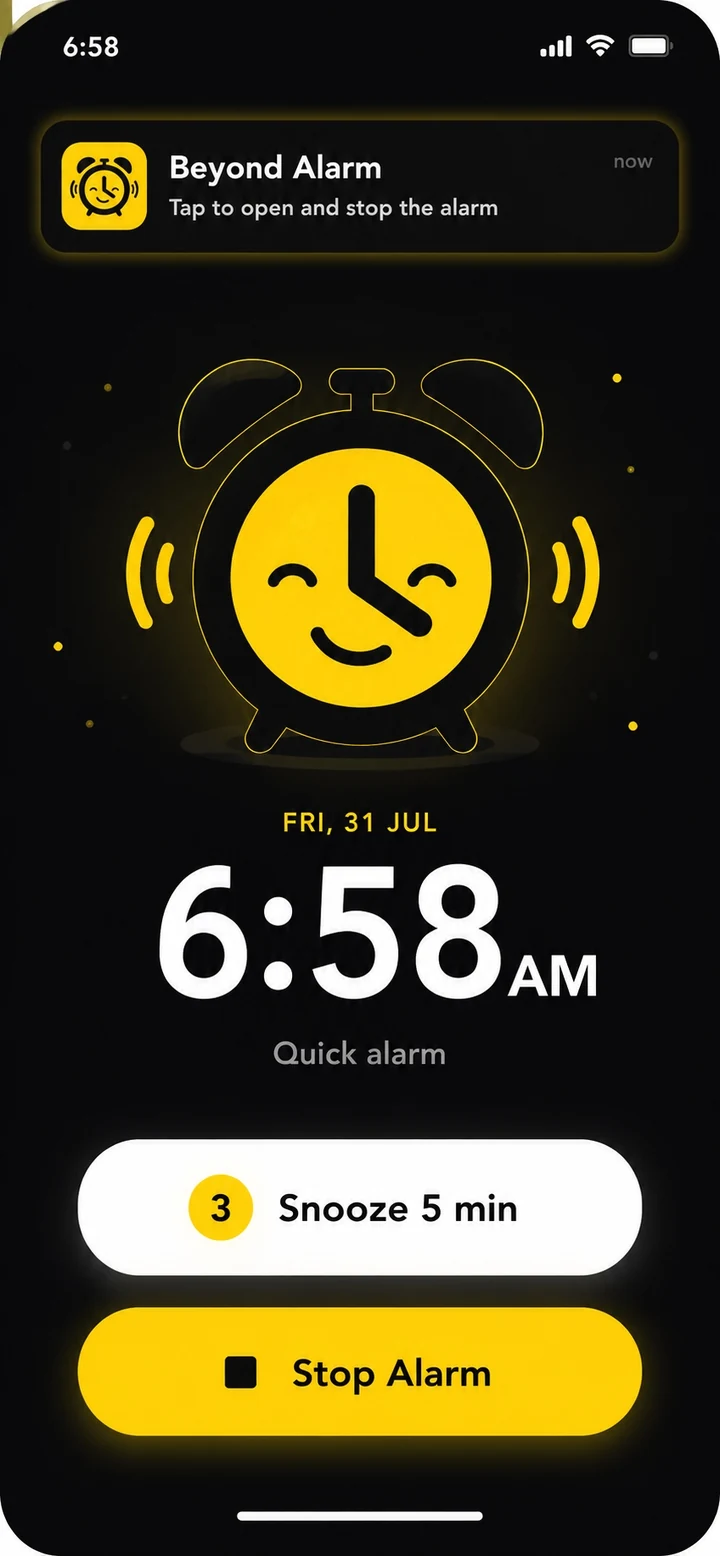
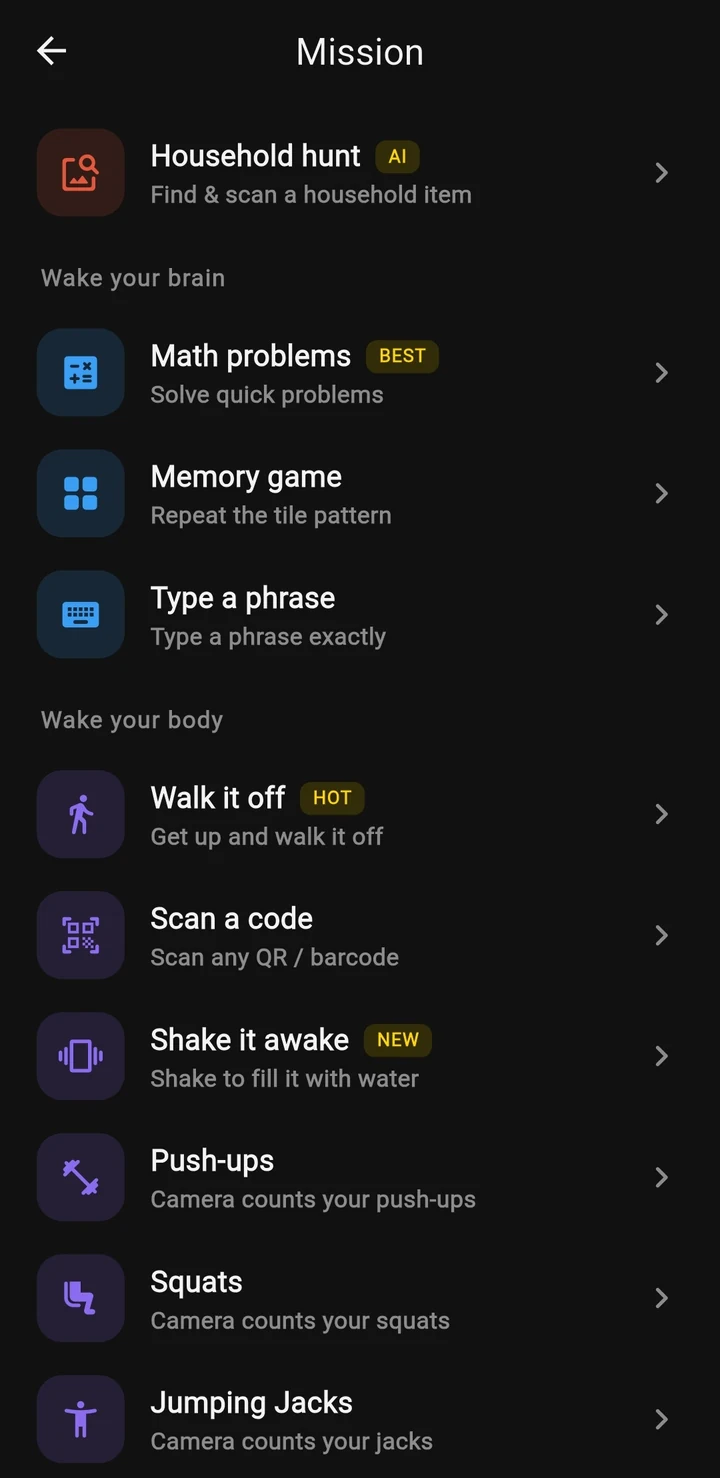
Beyond Alarm does this part for you: the alarm will not switch off until you have actually moved, and the apps you pick stay locked afterwards.


What does not work, or not for long
- Willpower on its own. It works on good days and fails on the days that matter.
- Limits you can dismiss. Useful as a nudge, weak as a rule.
- A one-off digital detox. A phone-free weekend feels good and changes little. Most people return to the old pattern on Monday, because nothing about their surroundings changed.
- Trying to fix everything at once. Eight changes on day one means eight things to abandon. Start with steps 1 to 3, then add one a week.
- Guilt. Treating a slip as proof you have failed makes it more likely you stop trying. A slip is just a slip.
How long it takes
Longer than the 21 days you may have heard. The best-known study of habit formation, by Phillippa Lally in 2010, found a median of 66 days for a new habit to become automatic, with a wide range from 18 to 254. Missing a single day did not materially set people back.
We dug into how long it takes to stop checking your phone first thing separately, including where the 21-day myth came from. The short answer: plan for months, and judge it by the trend over a few weeks, not by any one day.
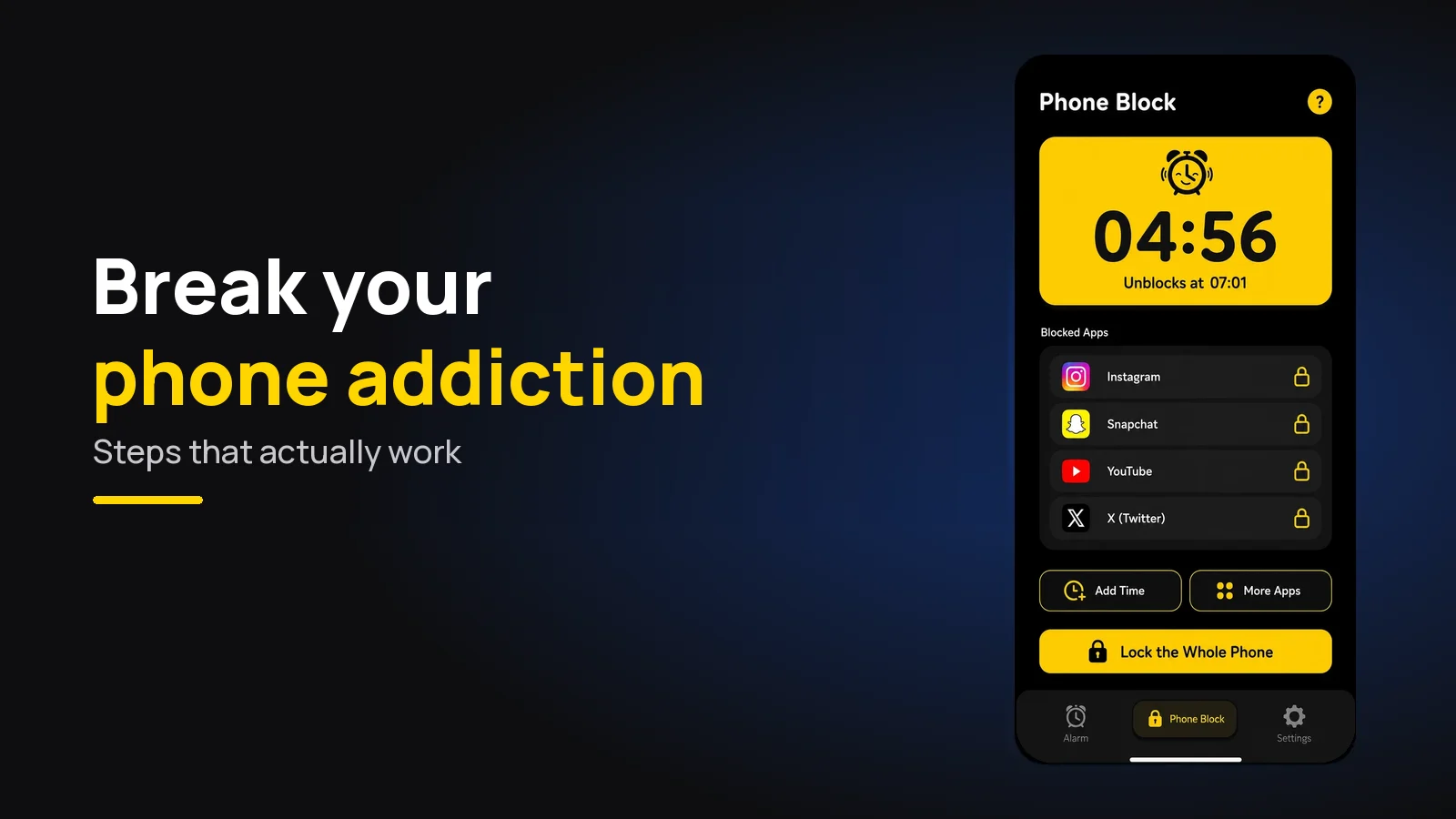
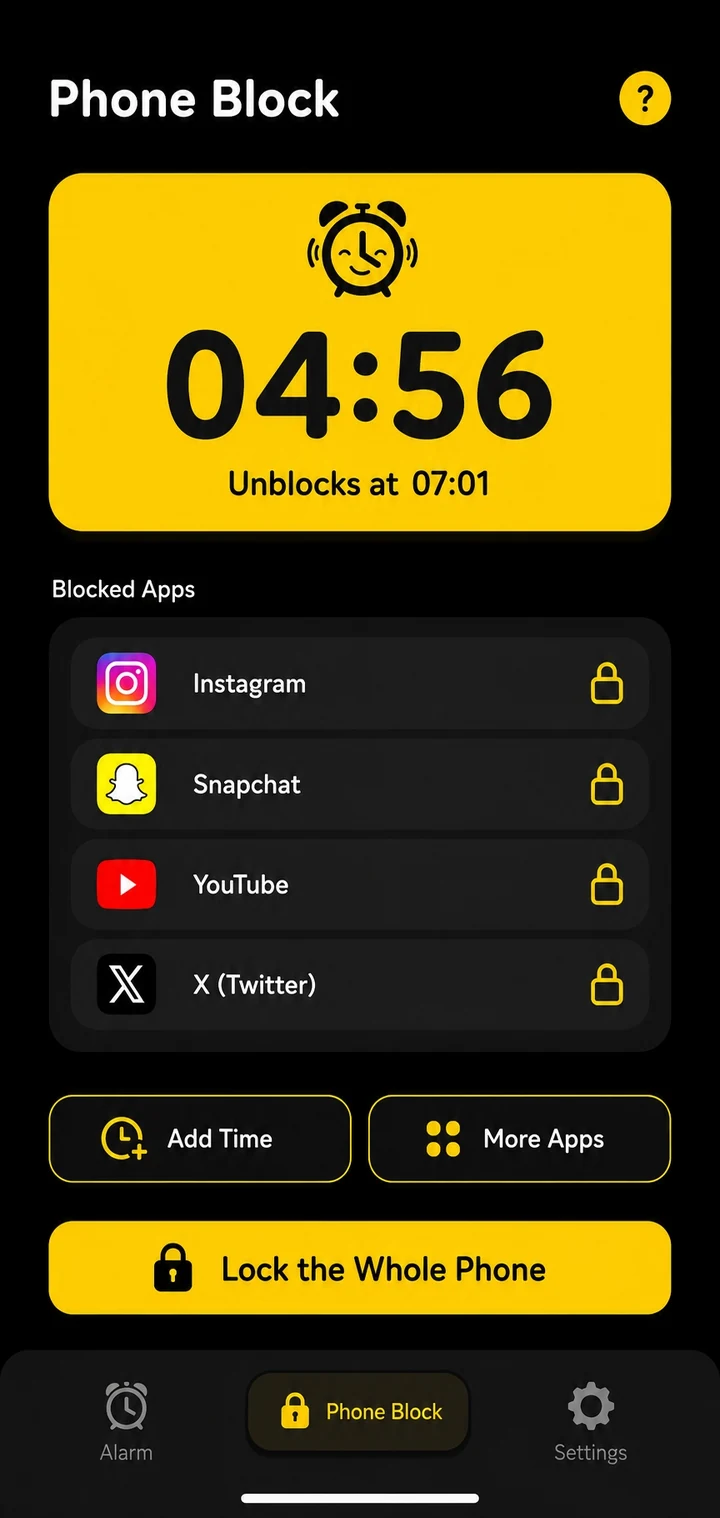
Beyond Alarm's Phone Block is our own version of step 6. You start it by hand, pick a length (presets from 15 minutes to 2 hours, or Custom from 5 minutes to 8 hours) and choose Strict, where leaving early means a short ad and a five-second hold, or Hard mode, with no stop button until the timer ends. In our own code a block survives a restart, and switching the phone off does not pause the timer. On Android it can block chosen apps or the whole phone (calls still work). On iPhone it uses Apple's Screen Time, blocks only the apps or categories you pick, and turning off its Screen Time access in Settings ends a block, so it is easier to escape there. Morning Lockout starts a block when you finish your alarm. It does not do scheduled or repeating blocks, and it is free with ads, with Pro removing them. If a charger in the hallway and a cheap alarm clock do the job, you do not need it.
When to get help
If you have made the changes above for a month or two and your phone use is still costing you sleep, work, money or relationships, or it is tied up with anxiety or low mood, that is worth raising with a GP or therapist. Compulsive use is often doing a job, like numbing stress or avoiding something, and a professional can help with that part in a way no setting can.
Common questions
How do I stop being addicted to my phone?
Change the surroundings rather than relying on resolve. Charge the phone outside the bedroom, wake up with a separate alarm, turn off all but essential notifications, move the worst apps off the home screen or delete them, and add a block you cannot cancel in two taps for the hours that matter. Then put something specific in the gaps the phone used to fill.
How long does it take to break a phone addiction?
Nobody has measured that exact habit, so treat any precise number with suspicion. The best general study of habit formation, Lally and colleagues in 2010, found a median of 66 days for a new behaviour to become automatic, with a range of 18 to 254. Expect weeks to months, and expect the first fortnight to be the hardest.
Does a digital detox actually work?
A weekend without the phone is a break, not a change, and most people go straight back to their old pattern afterwards. What tends to last is a smaller, permanent change to how the phone fits into the day, such as no phone in the bedroom or no social apps before a set time, kept up for weeks.
Does greyscale mode reduce screen time?
It can help. Colour is part of what makes app icons and feeds rewarding to look at, and a small 2020 study of college students found screen time fell when their phones were set to greyscale. It is free and reversible, so it is worth a week's trial, but it works best alongside other changes rather than on its own.
Is phone addiction a real medical condition?
Heavy or compulsive phone use is widely studied, but "phone addiction" is not a formal diagnosis in the main diagnostic manuals. If your phone use is harming your sleep, work, relationships or mood and you cannot cut it back, talk to a GP or a mental health professional. That is a reasonable thing to ask for help with.
We build Beyond Alarm, an Android alarm app that will not switch off until you have actually moved. Most of what we write here comes out of problems we hit building it.
Beyond Alarm
An alarm that keeps ringing until you’ve actually moved — then blocks the apps that pull you back to bed. Free to start, no account.
Keep reading
How to block YouTube Shorts on Android and iPhone
No phone can switch off only the Shorts tab. What YouTube's own settings hide, how to block YouTube on Android and iPhone, and which way is hardest to undo.
Scheduled app blocks on Android: work hours and overnight
How to block apps on a schedule on Android with Focus mode or a blocker app: weekday hours, overnight windows, and the loopholes to check first.