
The first ten minutes — an honest ranking of what to do instead of scrolling
 Beyond Alarm16 August 2026 · 5 min read

Photo by Plastic Lines on Pexels
Search for what to do instead of reaching for your phone and you will get someone's personal routine presented as neuroscience. Ice baths, gratitude journals, a 5am alarm, twenty minutes of breathwork, all delivered with the confidence of settled science.
Very little of it is settled. Two things in the first ten minutes have a real mechanism behind them — getting light, and physically leaving the room where the scrolling happens. Almost everything else is preference wearing a lab coat. That is not a reason to skip the rest, because enjoying your morning is a perfectly good reason to do something. It is a reason to stop believing you are failing at a protocol. The ranking below separates the two, with what each one is actually based on.
Why the first ten minutes get so much attention
Partly because it is real: you are in sleep inertia, your executive function is degraded, and the first action you take meets less resistance than any other decision that day. Whatever happens at 6:02 essentially happens by default.
And partly because it is extremely convenient to write about. "Change your morning" is a self-contained, repeatable, infinitely re-packageable premise that does not require anyone to change anything difficult about their life.
Hold both. The window is genuinely leveraged. Most of what gets sold into it is filler.

The honest ranking
| # | Action | Why it works | How strong is the evidence |
|---|---|---|---|
| 1 | Get outdoor light | Light is the primary signal your circadian clock uses. Outdoors on a grey day is roughly 1,000–10,000 lux; a lit room is nearer 100–300 | Strong and long-established |
| 2 | Leave the room | Breaks the cue — bed, phone in reach, nothing else happening. The urge is tied to the setting more than to the phone | Strong mechanistically; behaviour-change basics |
| 3 | Stand up and stay up | Sleep inertia clears faster upright than horizontal. Also makes returning to bed a decision rather than a drift | Good |
| 4 | Move for a few minutes | Raises alertness and body temperature. Does not need to be exercise — walking to make tea counts | Good for alertness; the bigger claims are not |
| 5 | Drink water | Mild dehydration after seven hours is real and affects how you feel | Modest, and it costs nothing |
| 6 | Cold water on the face or a cold shower | Genuinely produces alertness | Reliable for the feeling; weak for everything else claimed |
| 7 | Make the bed | Removes the invitation. Some people find the small completed task useful | No real evidence. Harmless, and cheap |
| 8 | Meditation, journaling, gratitude | Valuable practices on their own terms | No specific morning-window advantage. Do them if you like them |
The top two carry most of the effect. If you only ever do one thing, open the curtains — fifteen seconds, and the mechanism behind it is not in dispute.
What this ranking is and isn't
It is my reading of which interventions have a mechanism that survives scrutiny, ordered by how much I would expect them to matter for a typical person who currently loses their mornings to a phone.
It is not a study. Nobody has run the head-to-head trial that would settle the order, and anyone presenting one of these as the answer with a percentage attached is inventing the percentage. Where the evidence is thin I have said so in the table rather than rounding it up.
The one thing I would defend strongly: the ordering matters more than the contents. Get the top two right and the rest is decoration. Get them wrong and no amount of journaling compensates.
Beyond Alarm
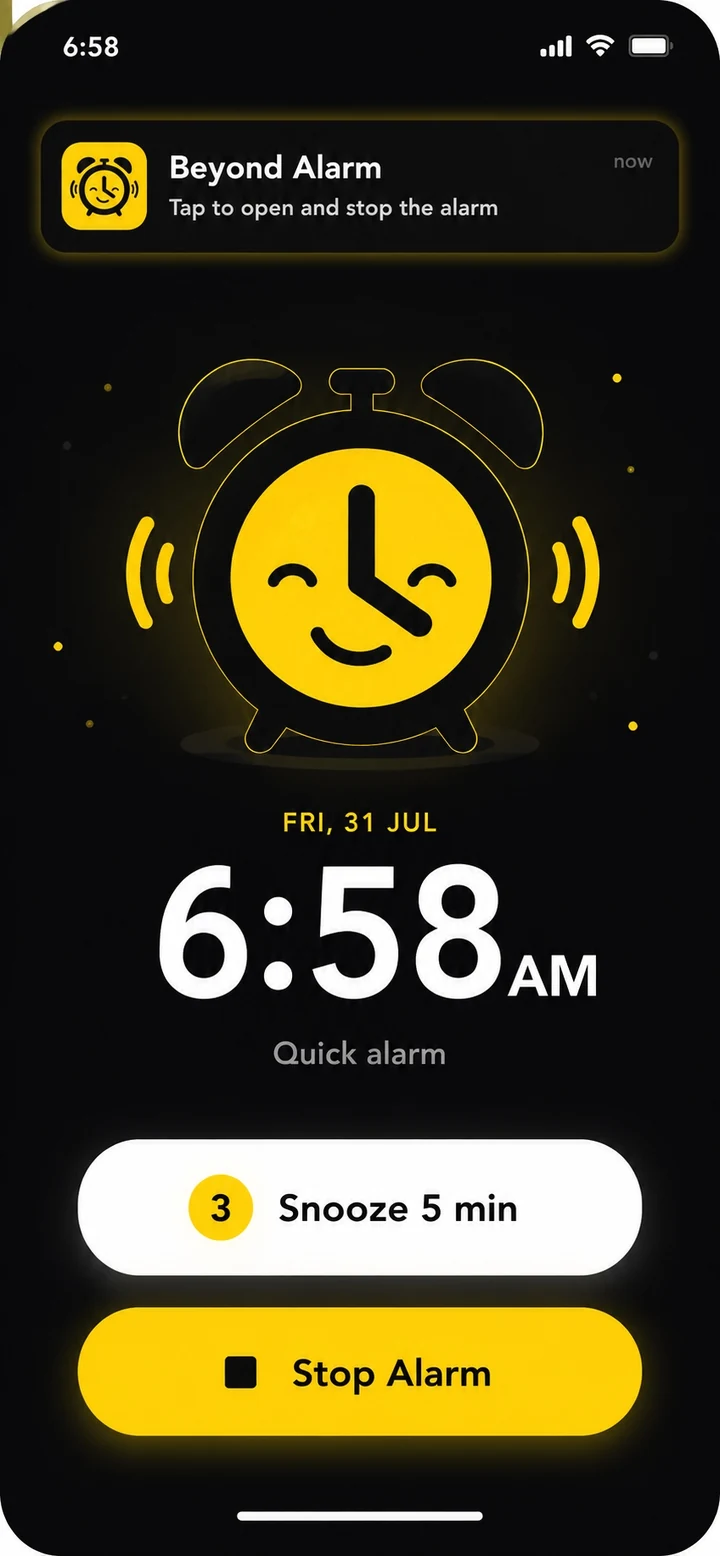
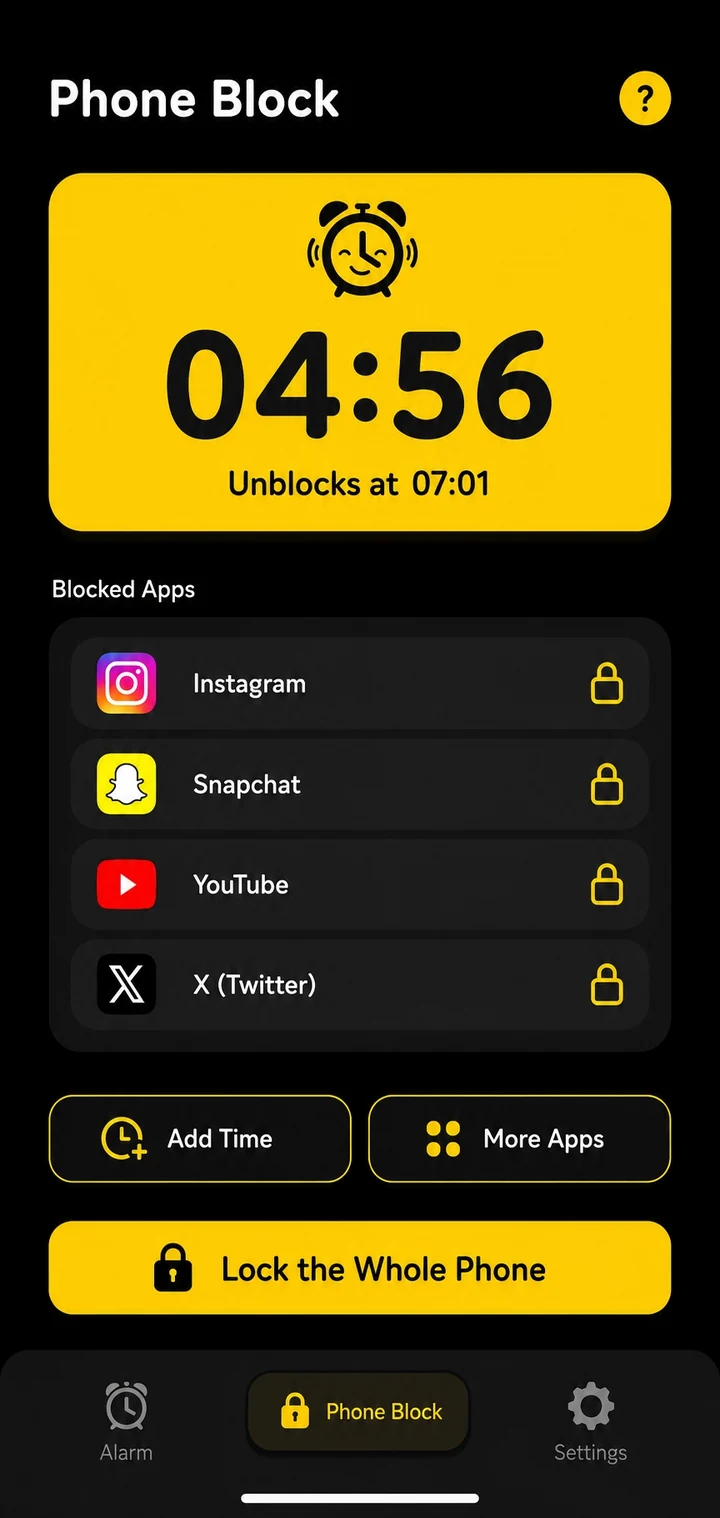
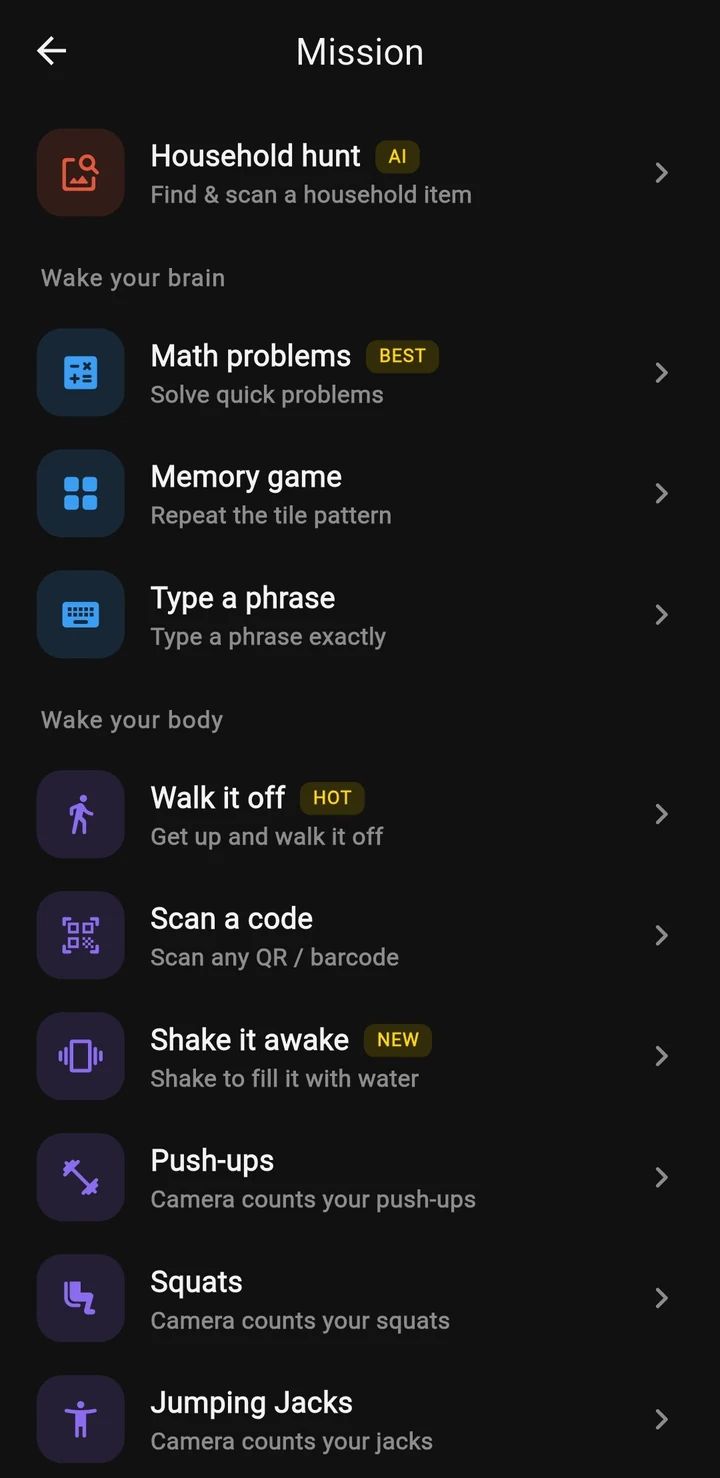
Beyond Alarm does this part for you: the alarm will not switch off until you have actually moved, and the apps you pick stay locked afterwards.


The overrated ones
A specific wake time. 5am has no property that 6:40 lacks. What your circadian system responds to is consistency, including weekends. An erratic 5am is worse than a steady 7:30, and the people evangelising the early alarm are generally people whose schedules permit it.
Elaborate routines. A fourteen-step morning is a system with fourteen points of failure, and it collapses the first genuinely bad week. The routines that survive are short enough to do badly.
Tracking it. Logging your morning produces a record of your mornings. It does not produce better ones, and after a while the logging becomes the ritual.
"Don't check your phone for an hour." The intention is right and the form is useless — it is a rule with no mechanism, which is why blockers with an override button stop working after about a week. An hour is also more than most people can actually do, so it fails on day two and takes the whole attempt with it.

The part before the ten minutes
None of this applies if you are still in bed.
Every item above assumes you are up, and getting up is the actual hard part — because the decision is made during sleep inertia by a version of you with degraded judgement, which is how people turn alarms off with no memory of doing it. A ranked list of morning activities is no use to someone who is going to be asleep again in ninety seconds.
So the sequence that matters is: get vertical, get out of the room, get light. In that order, and the first one is the one worth spending money or effort on.
Which is the whole design of Beyond Alarm — the alarm does not stop until you have completed something physical, so being upright is not a decision you make while impaired. The app blocking afterwards covers the other failure, the twenty-five minutes that vanish once you are up but still holding the phone. Android only, and if you already get up fine and just want a nicer routine, you do not need it.
The minimum viable morning
If you take one thing from this, take the short version, because it is the part that survives a bad week:
- Get upright, and out of the room
- Open the curtains or step outside
- Everything else, only if you want to
That is it. It is not a routine and it will not photograph well, but it contains both mechanisms that actually do anything, and it takes under a minute — which is the real test, because the mornings that matter are the ones where you have no slack.
And if step one is where it falls apart — you are awake but not upright — that is an alarm problem, and the apps that solve it are compared here.
Common questions
Does it really matter what I do in the first ten minutes?
Less than morning-routine content implies, and more than nothing. Two things have a real mechanism behind them — getting light, and being physically out of the room where the scrolling happens. The rest, from journaling to cold water to gratitude lists, is fine if you enjoy it and has no special power over your day. Enjoying it is a good enough reason.
Do I have to get up at 5am for this to work?
No. Nothing in the evidence favours a specific clock time. What matters is that your wake time is roughly consistent, including at weekends, because that is what your circadian system actually responds to. A consistent 7:30 beats an erratic 5:00 comfortably.
Is a cold shower actually worth it?
It reliably makes you feel alert, which is genuinely useful when you are fighting sleep inertia. The larger claims made for it are not well supported. If you like it, it is a perfectly good wake-up tool. If you hate it, skipping it costs you nothing you can measure.
What if I only have ten minutes total before I have to leave?
Then do one thing — open the curtains or step outside. It takes fifteen seconds, it is the single item on this list with the strongest mechanism behind it, and everything else is optional in a way that light is not.
We build Beyond Alarm, an Android alarm app that will not switch off until you have actually moved. Most of what we write here comes out of problems we hit building it.
Beyond Alarm
An alarm that keeps ringing until you’ve actually moved — then blocks the apps that pull you back to bed. Free to start, no account.
Keep reading

Alarm app with missions — how the category works, and which mission actually fits you
A mission-based alarm forces a task instead of a tap. Here's why that mechanism works, the mission types across the category, and how to pick one that can't be beaten from bed.

Best free alarm app for heavy sleepers
A loud alarm isn't the hard part for a heavy sleeper — staying awake once it's off is. What actually works, free, and why a mission has to be hard to fake from bed to count.