
How long it takes to stop checking your phone first thing
 Beyond Alarm19 August 2026 · 7 min read
Photo by Towfiqu barbhuiya on Pexels
Somewhere between the fitness app and the productivity book you were promised this takes 21 days. It doesn't, that number was never a research finding, and believing it is one of the more reliable ways to quit in week four while concluding that you are the problem.
The only careful measurement of everyday habit formation put the median at 66 days, with individual people landing anywhere between 18 and 254. Checking your phone the moment you wake has every property of the slow end of that range — and the reasons are mechanical rather than moral, which is the useful part, because mechanical things can be changed.
Where the 21 days actually came from
Not a laboratory. A 1960 self-help book called Psycho-Cybernetics, written by a plastic surgeon named Maxwell Maltz.
Maltz noticed that patients took roughly three weeks to stop being startled by their new face in the mirror, and that amputees felt a phantom limb for about the same period. What he wrote was that it "requires a minimum of about 21 days for an old mental image to dissolve and a new one to jell".
Read that again, because the important words are the ones that fell off. A minimum of about. He was describing the floor, in a completely different domain, from clinical observation rather than experiment. Retold often enough, the qualifier vanished and a surgeon's aside became a law of behaviour.
What the measurement says instead
In 2010, Phillippa Lally and colleagues at UCL ran the study everyone should be quoting instead. Ninety-six people each chose a new daily habit and reported, every day for twelve weeks, whether they had done it and how automatic it felt. It was published in the European Journal of Social Psychology.
| Days to near-automatic | |
|---|---|
| The number everyone repeats | 21 |
| Median in the actual data | 66 |
| Fastest participant | 18 |
| Slowest participant | 254 |
The median is the figure that escaped into the world as "66 days to form a habit". The range is the one that matters. A study whose participants varied by more than eight months cannot support any universal deadline — including the 66-day one now printed on habit trackers.
And the habits being formed there were things like drinking a glass of water with lunch. Yours is harder than that.
Why the phone sits at the slow end
Different habits form at wildly different speeds, and in 2023 a team at Caltech and Penn showed how far apart, using machine learning over 12 million gym visits and 40 million hospital handwashings.
Handwashing habits settled in weeks. Gym habits took months — the estimated time to reach 95% of the asymptote for gym-goers was 68 to 78 days. Same species, same year, four times the difference.
What separates them is not motivation. It is how reliably the cue fires, and how much friction sits between the cue and the act. Handwashing: the cue arrives constantly and doing it costs nothing. The gym: the cue is vague and the friction is a bag, a commute and forty minutes.
Now score the morning phone reach on those two axes.
| Cue strength | Friction | |
|---|---|---|
| Hospital handwashing | Very high | Almost none |
| Going to the gym | Low and irregular | High |
| Reaching for your phone | Very high — same place, same time, daily | Almost none — it is already in your hand |
It scores like handwashing on both counts, which is precisely why it embedded so fast and why it is so stubborn now. The alarm is on the phone, so the phone is within reach, so the cue and the means arrive together — at the one moment of the day when the part of your brain that would object is still offline. Why that moment is uniquely bad is the whole of why you doomscroll the moment you wake up.
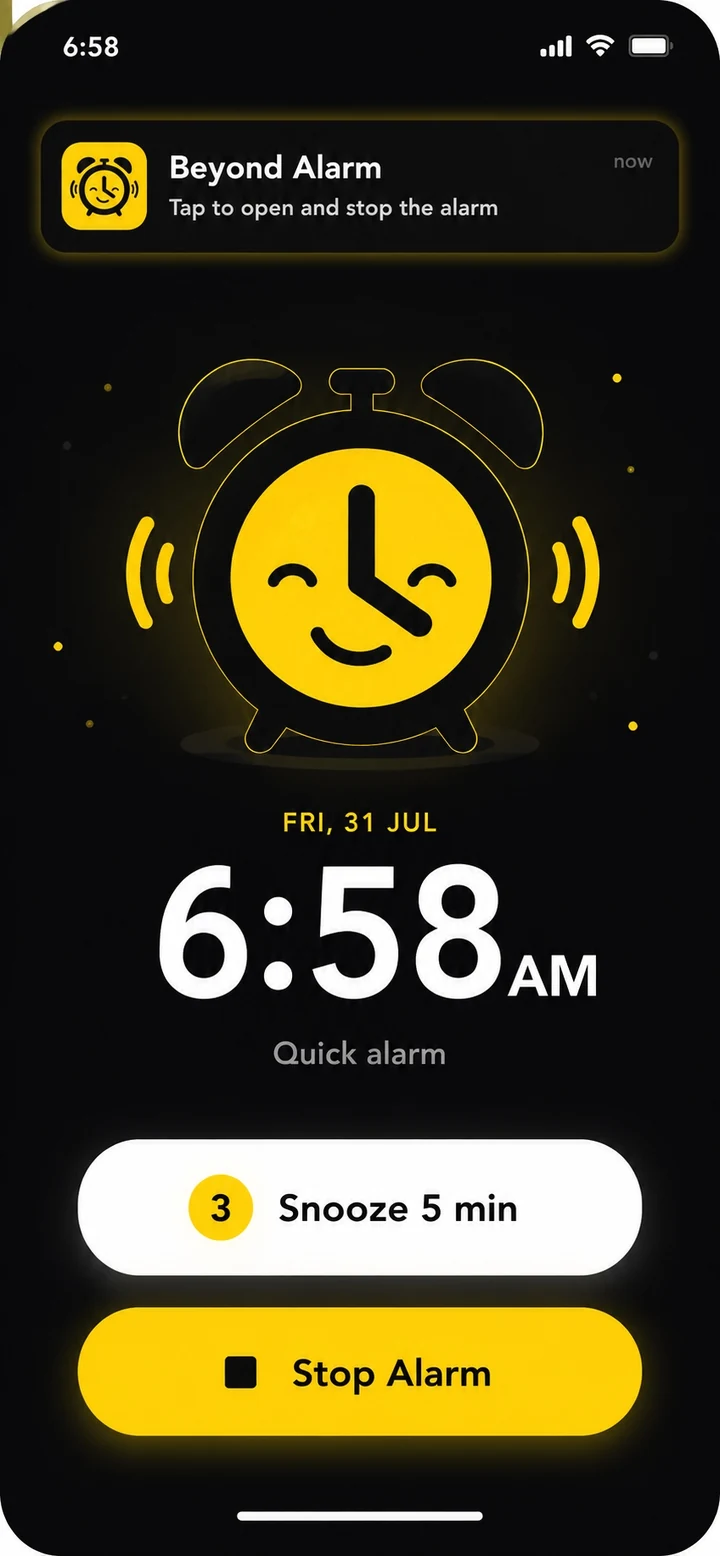
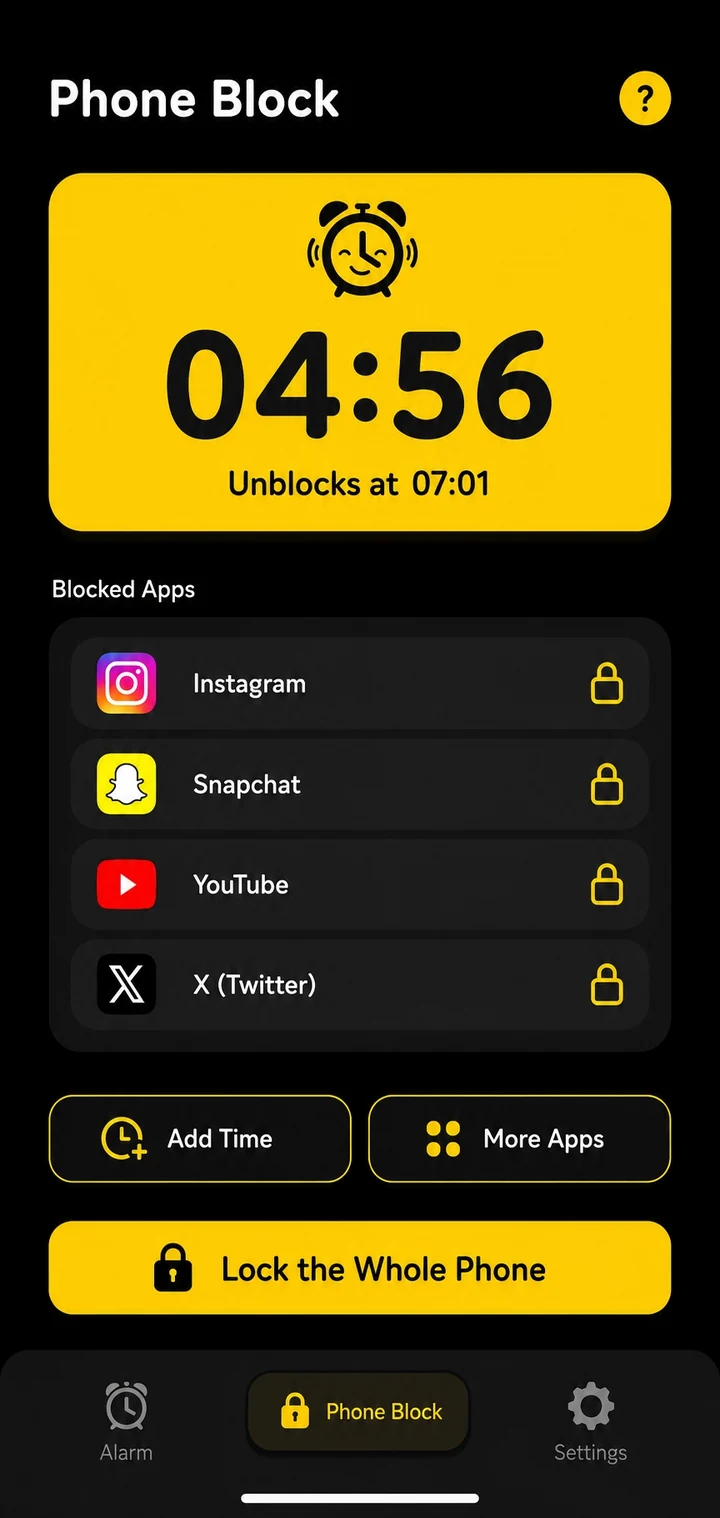
This is the gap Beyond Alarm was built for, so weigh it accordingly: the alarm and the block live in the same app, so the apps you nominate stop opening the moment the alarm does — rather than depending on you to switch something on at 6am, which is the request that fails. It is Android only, the morning lockout is part of Pro, and if your problem is simply that you sleep through a quiet alarm, your phone's built-in clock app is free and will do the job.
What one missed morning actually costs
Almost nothing — and this is the most practically useful finding in the whole literature.
In the Lally data, missing a single opportunity did not materially affect the habit forming. The curve absorbed it. What breaks a forming habit is missing several in a row, because that is when the new behaviour stops being the thing that reliably occupies the slot.
Which brings me to something we have arguably got wrong. Beyond Alarm counts a streak of kept wake-ups, and one missed scheduled alarm resets it to zero. That rule is stricter than Lally's finding justifies: the science says day one and day three are worth nearly the same, and our counter says one of them wiped out the other.
We kept it because a streak that forgives misses stops being a streak and the number loses its grip. But that is a design decision, not a scientific one, and if a broken counter has ever made you abandon the attempt altogether, the counter was wrong and you were not. The lifetime total sitting underneath it is the more honest number.

Beyond Alarm
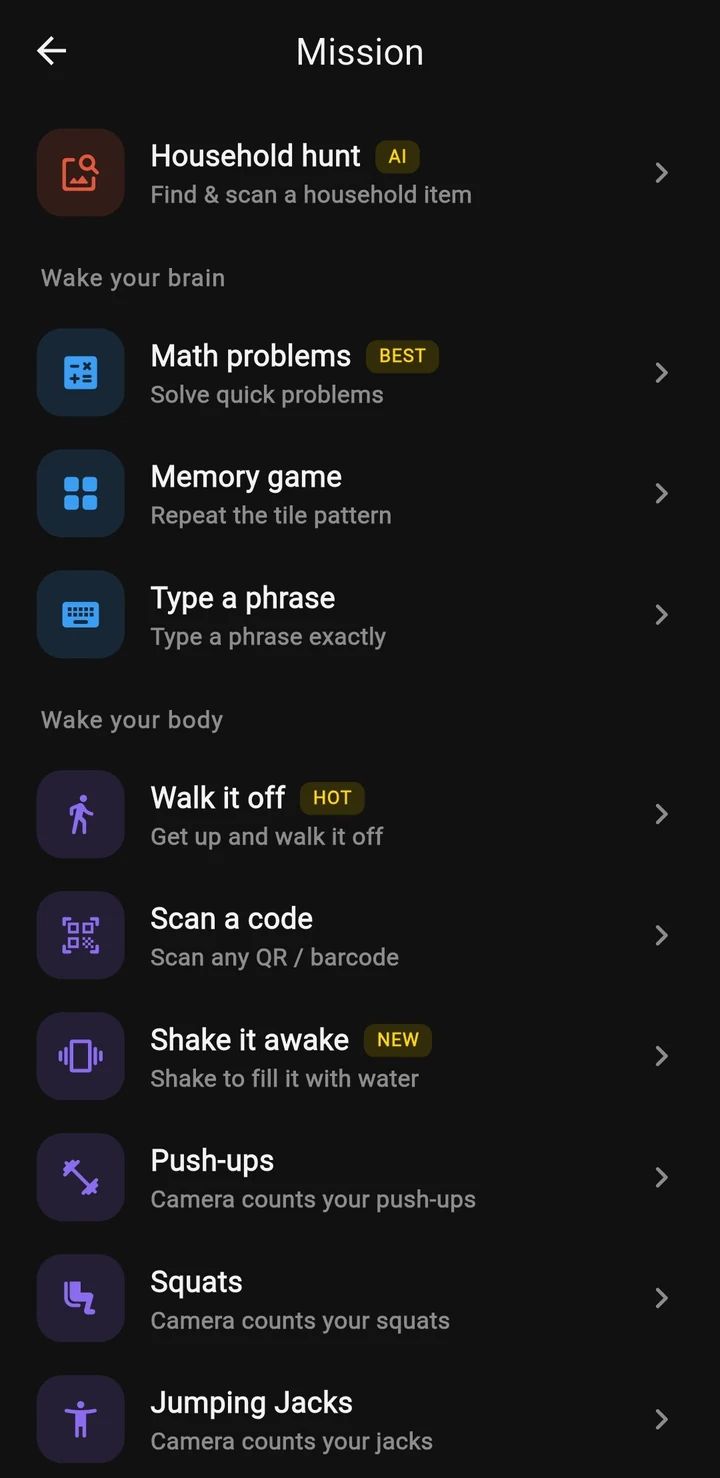
Beyond Alarm does this part for you: the alarm will not switch off until you have actually moved, and the apps you pick stay locked afterwards.


The lever that beats waiting it out
Because habits are cued by their surroundings, the fastest route is not to out-argue the cue every morning. It is to change the surroundings so the cue fires more weakly in the first place.
That is the habit discontinuity hypothesis, and it has held up in field work: when a context change disrupts an established habit, a window opens in which the behaviour gets deliberately reconsidered instead of automatically repeated. A 2016 analysis of the UK Understanding Society survey found the effect concentrated among people who had recently moved house, and fading as the new context became the old one.
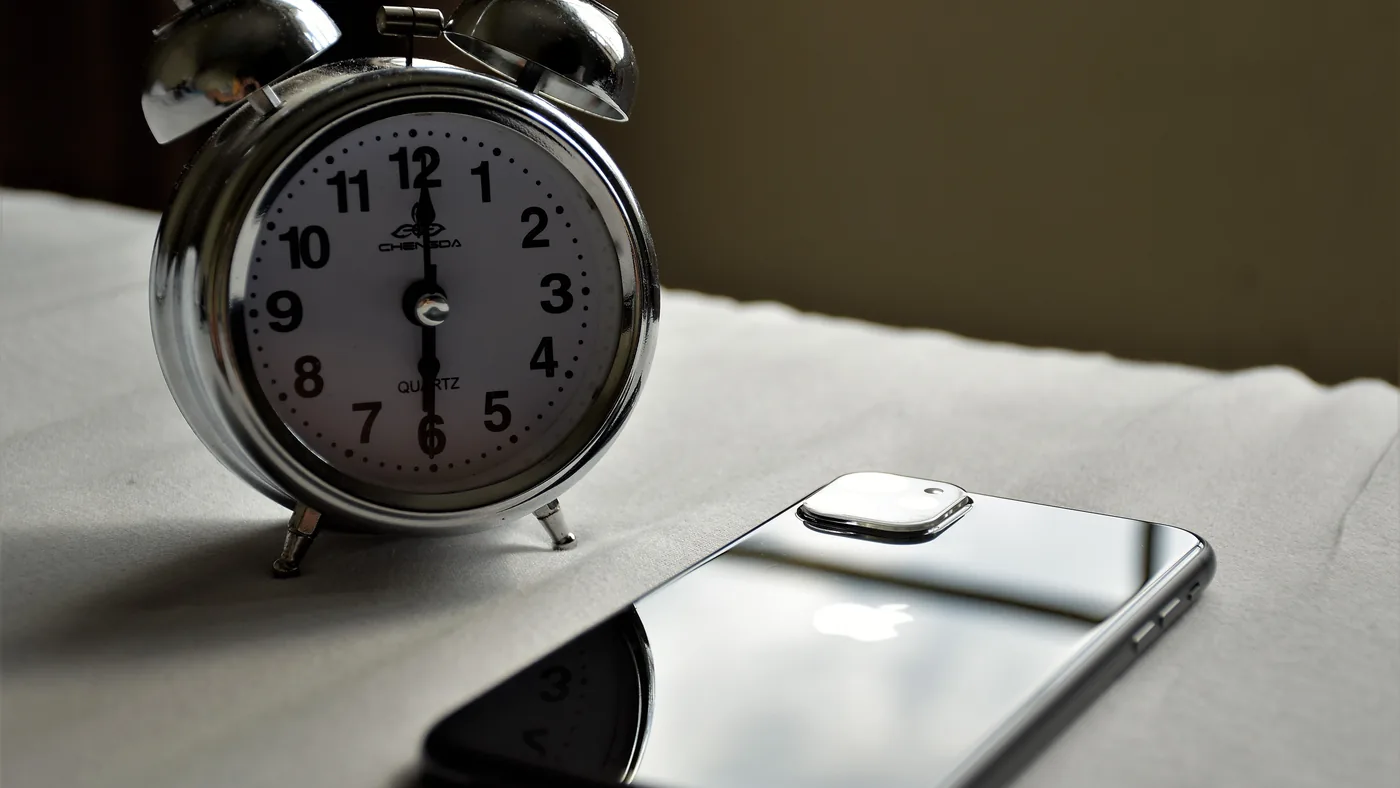
You do not need to move house. You need the phone to spend the night somewhere that is not arm's reach — a context change aimed precisely at the cue.
Ranked by how much they genuinely move the needle:
| Lever | Why it works | Cost |
|---|---|---|
| Phone charges outside the bedroom | Removes the cue instead of resisting it | A separate alarm clock, about £5 |
| Phone across the room, alarm still on it | You have to stand up before you can scroll | None |
| The apps blocked for the first stretch after the alarm | Cue still fires; the act it triggers no longer works | Needs an app that can enforce it |
| Screen-time limits you set yourself | The person who set it can dismiss it | Covered here, and the honest answer is: not much |
| Willpower alone | Asks the weakest version of you to win an argument daily | High, and it compounds |
The £5 clock is the strongest thing on that list and the one nobody wants to hear. If you can put the phone in another room tonight, do that and stop reading.
What to expect, honestly
Week one is easy in the wrong way — novelty is doing the work, not habit. Weeks two and three are where most attempts die, and they are also exactly where the 21-day promise told you that you would be finished. Knowing the number was fiction is worth more at that point than any amount of grit.
Somewhere around week six to ten, if the cue has actually changed, the mornings you don't think about it start to outnumber the ones you do. That is what automaticity feels like from the inside: not triumph, just the absence of a decision.
And if you are past ten weeks and still fighting it every morning, you are not failing. You are inside a range that ran to 254 days for real people doing easier things than this.
One last thing, at the other end of the day: the reason the morning is hard is usually the night before it, which is the whole of where the night goes. Fixing the bedtime shortens this timeline more than fixing the morning does. Either way you are asking the phone to hold a rule for ten weeks, which is what an app blocker is actually for.
Common questions
How long does it really take to break the habit of checking your phone in the morning?
There is no measurement of that specific habit, so anyone giving you a number for it is guessing. The closest evidence is Lally's 2010 study of everyday habits, where the median time to near-maximum automaticity was 66 days and the range ran from 18 to 254. Morning phone checking has every feature of a slow one — a cue that fires in the same place at the same time every day, and almost no friction — so plan for the back half of that range rather than the front.
Is the 21-day rule true?
No, and it was never a research finding. It comes from a 1960 book by a plastic surgeon, Maxwell Maltz, who observed that patients took "a minimum of about 21 days" to adjust to a new face. As the line was repeated the words "a minimum of" fell off, and an observation about surgical recovery became a law about habits. No experiment established it.
Does missing one morning ruin my progress?
No. In the Lally data, missing a single opportunity did not materially affect the habit forming at all. What damages it is missing several in a row, because that is when the new routine stops being the thing that reliably happens in that slot. One bad morning is noise. A bad fortnight is a trend.
Why is it harder than other habits I have broken?
Because the cue is unusually strong and the friction is unusually low. The alarm is on the phone, so the phone is in reach, so the cue and the means arrive together at the one moment of the day when your executive function is at its weakest. Most habits have at least one of those working against them. This one has neither.
What actually shortens it?
Changing the context beats waiting it out. Habits are cued by their surroundings, so altering the surroundings weakens the cue directly rather than asking you to out-argue it every morning — the finding behind the habit discontinuity research. Moving where the phone spends the night is a bigger lever than any amount of resolve.
Do streaks help, or just make me feel worse?
They help while they are running and they can hurt when they break, which is why the evidence on missing a day is worth knowing. A streak is a record of what you did, not a verdict on what you are capable of. If a broken one makes you abandon the whole attempt, the counter has stopped being useful and you should stop looking at it.
We build Beyond Alarm, an Android alarm app that will not switch off until you have actually moved. Most of what we write here comes out of problems we hit building it.
Beyond Alarm
An alarm that keeps ringing until you’ve actually moved — then blocks the apps that pull you back to bed. Free to start, no account.
Keep reading
Scheduled app blocks on Android: weekdays, overnight windows and one schedule at a time
A recurring Android app block that runs on the clock, not your alarm. How Schedules work, weekday and overnight windows, and why the app keeps you to one at a time.

How to block social media after your alarm on Android
Keep Instagram, YouTube and other distractions closed after waking. Compare scheduled Focus mode with an alarm-triggered block, then set up your morning.