
Your sleep cycles are not 90 minutes long
 Beyond Alarm23 August 2026 · 5 min read
Photo by Ruslan Sikunov on Pexels
Every bedtime calculator on the internet multiplies 90 minutes by four and tells you when to go to bed. The largest study of real sleep cycles found that one person's cycles vary by 29.3% across a single night — more than twice as much as cycles vary between different people.
That number is the whole argument. A calculator cannot fix it by knowing you better, because your own cycles do not agree with each other.
Where the 90 minutes came from
It is an average, and it was never a schedule.
The reference description of adult sleep, from the Institute of Medicine's Sleep Disorders and Sleep Deprivation, is precise about this and worth quoting directly:
The average length of the first NREM-REM sleep cycle is 70 to 100 minutes. The second, and later, cycles are longer lasting — approximately 90 to 120 minutes.
So the cycles are not the same length as each other by design, before any individual variation is added. The first is the short one. Every calculator that steps forward in equal 90-minute jumps has the first gap too long and the later ones too short, and the error accumulates with each step.
The number that ends the argument
In 2023, Sleep Health published a retrospective study of ultradian sleep cycles covering 6,064 measured cycles across 1,567 nights from 369 people, all in a laboratory with an eight-hour sleep opportunity at their habitual bedtime.
The median cycle was 96 minutes, the mean 99.5. Already not 90 — but the averages are not the interesting part.
| Variation in cycle length | How much |
|---|---|
| Between your own cycles, one night | 29.3% |
| Between your own nights | 18.5% |
| Between different people | 12.7% |
Read that table twice. The least variable thing is you against other people. The most variable thing is you against yourself, tonight.
A calculator's implicit promise is that with a better constant — your constant instead of the population's — it would work. That table says the opposite. Even a calculator built from a week of your own sleep lab data would be tuned to a number your next cycle disagrees with by nearly a third.
Most nights in that study contained three or four complete cycles. Not five, not six, and not reliably the same count as the night before.
The bit that is true
There is a real mechanism underneath the myth, which is why it survives.
Waking out of deep sleep genuinely is worse. Slow-wave sleep is concentrated in the first third of the night, and REM is longest in the last third — so an alarm three hours after you fall asleep is landing in the worst possible place, and one after seven hours is not. That is the same reason you can turn an alarm off with no memory of doing it: the grogginess is deepest coming out of the deepest stage.
But "don't set a three-hour alarm" is a far weaker claim than "set it at 6:00 rather than 6:20". The first is about which third of the night you are in. The second requires knowing where a boundary is to the minute, and the boundaries move.
Beyond Alarm
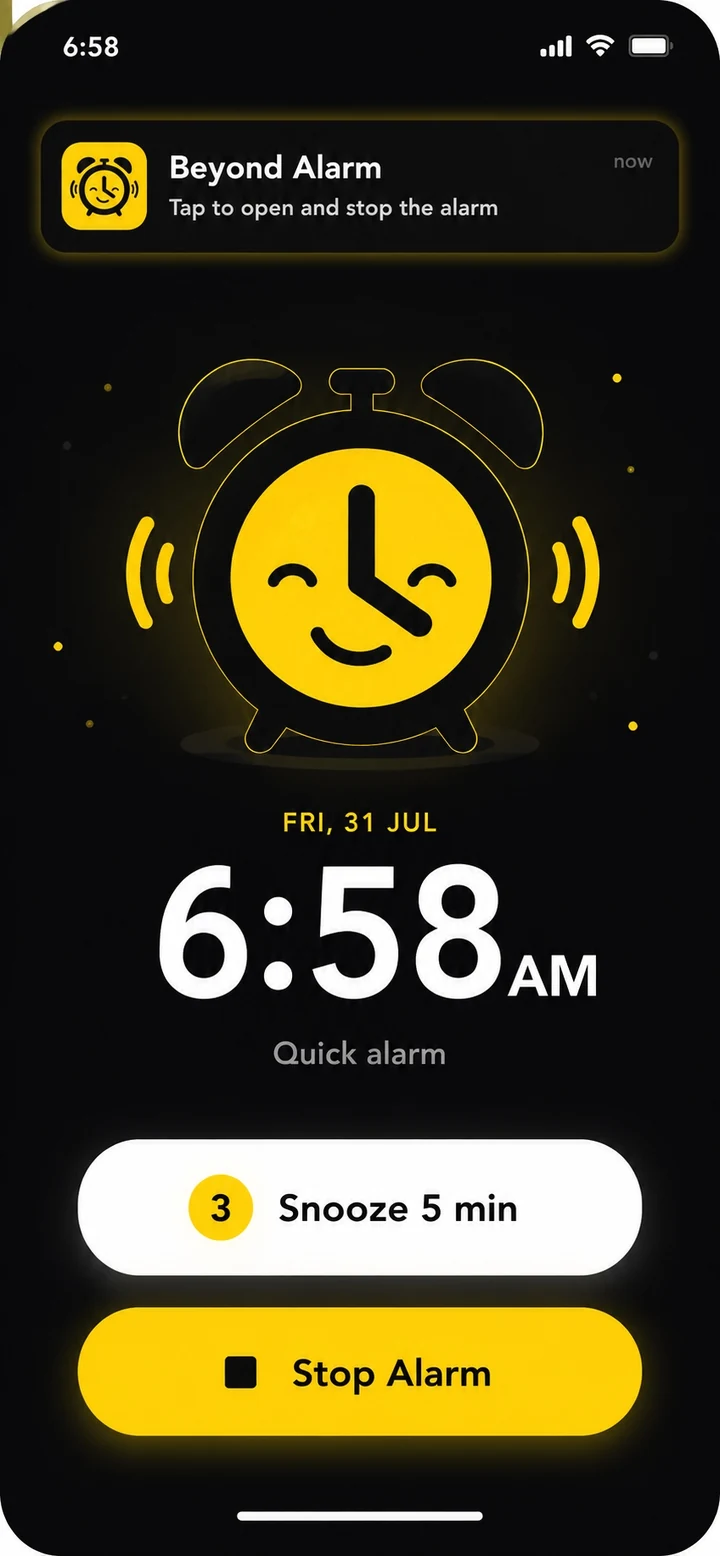
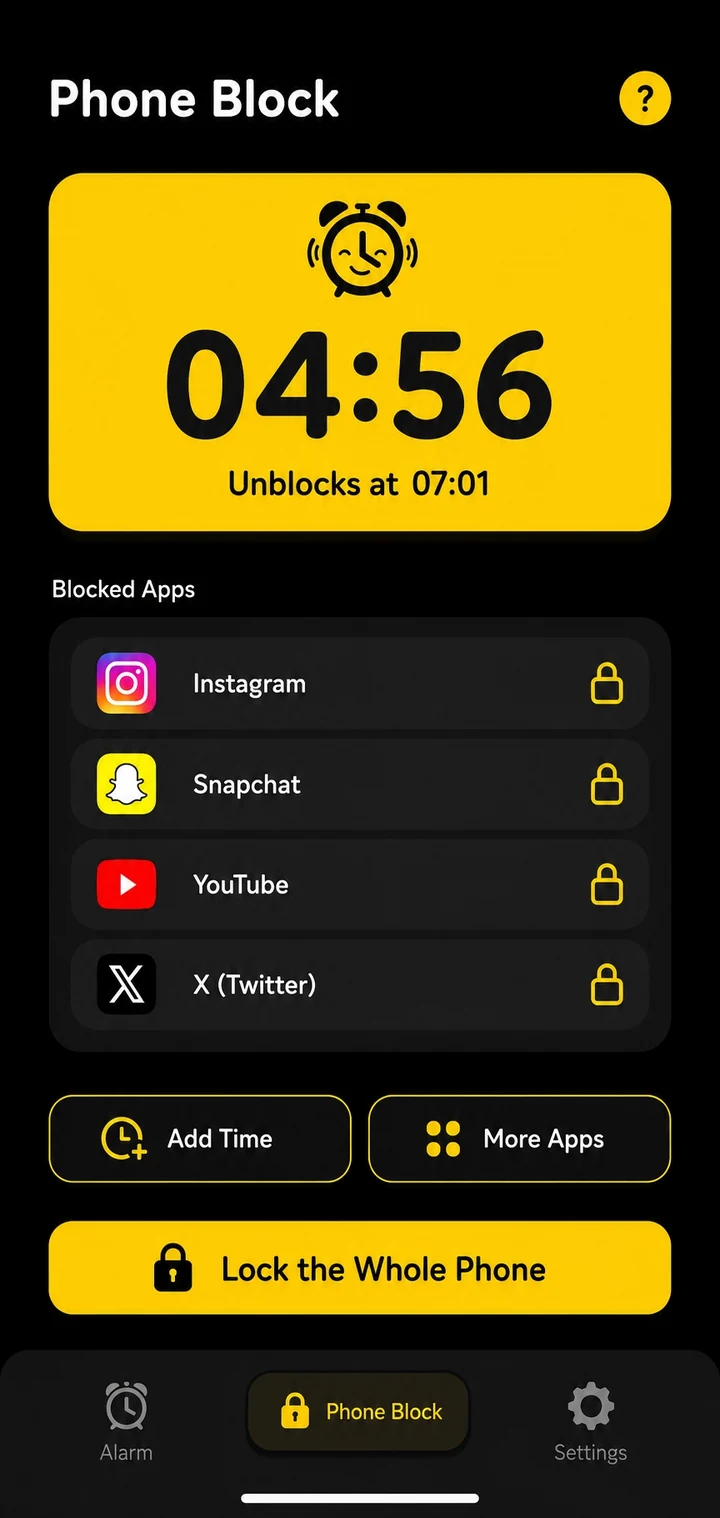
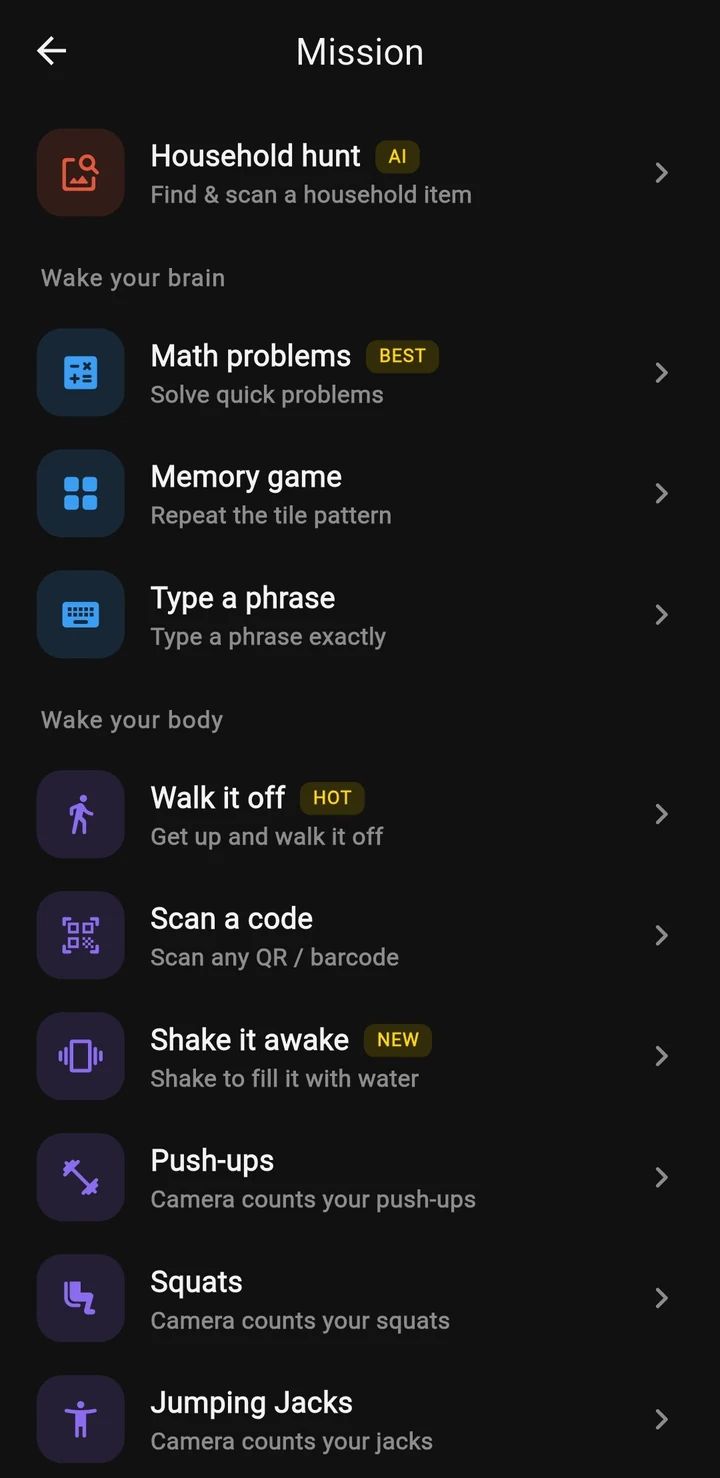
Beyond Alarm does this part for you: the alarm will not switch off until you have actually moved, and the apps you pick stay locked afterwards.


What about smart alarms?
A phone on a mattress is inferring sleep stages from accelerometer noise. That is a long way from the EEG those cycle numbers were measured with, and the gap is not a detail — it is the entire basis of the claim.
Set that aside and assume a perfect one. It still only helps if you give it a window, and a 30-minute wake window means agreeing to lose up to thirty minutes of sleep so that the moment you wake is more pleasant. That might be a trade you want. It is not the trade the marketing describes, which is that you get the same sleep and a better morning.
What actually moves the needle
| Evidence behind it | Effort | |
|---|---|---|
| Total sleep | Overwhelming | High — it means an earlier bedtime |
| A consistent wake time, weekends included | Strong | Moderate, and unpopular |
| Light on your face early | Strong | Low |
| Standing up and staying up | Strong | Low, and the hardest thing here |
| Waking at a "cycle boundary" | None | Usually costs you sleep |
The top of that list is dull, and that is most of why the calculator is popular. "Go to bed at 22:30 to wake refreshed at 6:00" is a rule you can follow tonight. "Sleep more, and get up at the same time on Saturday" is a life change, and it is the one supported by the evidence — which is also where the night actually goes.
Beyond Alarm has no cycle calculator and no smart wake window, and it is not an oversight — we are not going to sell a wake time to the minute off a mattress-shaped guess at your EEG. What it does have is a gentle wake: the alarm ramps from quiet to full over a length you choose, thirty seconds by default. That does not need to know your sleep stage. It works by giving whatever stage you are in a few seconds to climb out of, which is the honest version of the same idea.
What to do tomorrow
Set one alarm at the time you actually have to be up. Not a time reverse- engineered from a multiple of 90 — that is how people end up setting 5:30 to "catch a boundary" and losing forty real minutes to reach an imaginary one, and it is the same mistake as stacking alarms across an hour.
Keep it there at the weekend. A two-hour weekend shift reproduces something very like jet lag by Monday, and no arrangement of cycles fixes that.
Then make the alarm one you cannot dismiss on autopilot. Whatever stage it catches you in, the fifteen seconds after it goes off are the ones that decide the morning — and no calculator has ever helped with those. The apps that make that alarm harder to dismiss are compared here.
Common questions
Do sleep cycle calculators actually work?
No, and the reason is arithmetic rather than opinion. They assume a fixed 90-minute cycle and multiply it. In 6,064 polysomnographically measured cycles the median was 96 minutes, and the variation between one person's own cycles on a single night was 29.3% — more than double the variation between different people. A calculator cannot correct for that with your average, because your average is not what tonight will do.
How long is a sleep cycle really?
It depends which cycle. The first NREM-REM cycle of the night runs about 70 to 100 minutes; the second and later ones are longer, roughly 90 to 120. So the gaps between your "ideal" wake times are not equal, and the error compounds with every cycle you count forward.
Is there anything to the idea of waking between cycles?
The mechanism is real even though the calculator is not. Waking out of slow-wave sleep produces much heavier grogginess than waking from a light stage, and slow-wave sleep is concentrated in the first third of the night. That is a good argument for not setting a three-hour alarm. It is not an argument that 6:00 will feel different from 6:20.
What about smart alarms that watch for movement?
A phone on a mattress is inferring sleep stages from accelerometer noise, which is a long way from an EEG. Even a perfect one only helps if it has a window to work in — a 30-minute wake window means agreeing to lose up to half an hour of sleep. That may be worth it to you; it is a different trade than the one the marketing describes.
So what actually decides how I feel in the morning?
Total sleep, and consistency. Both are unglamorous and both are better supported than anything about cycle timing. A wake time you keep at the weekend does more than any arrangement of the same hours.
Should I set my alarm at a cycle boundary anyway?
There is no harm in it, and no evidence for it. The cost is that people set a much earlier alarm to hit a "boundary" and lose real sleep to reach an imaginary one, which is a straightforwardly worse night.
We build Beyond Alarm, an Android alarm app that will not switch off until you have actually moved. Most of what we write here comes out of problems we hit building it.
Beyond Alarm
An alarm that keeps ringing until you’ve actually moved — then blocks the apps that pull you back to bed. Free to start, no account.
Keep reading

The alarm that makes you take a picture — how photo alarms decide you're in the right place
A photo alarm stops only when you photograph a place you chose the night before. How the phone decides it's the same place, which spots work best, and why a good one gets more forgiving, not less.

Push-up alarm on Android — how it works, and how to set it up so it actually gets you up
A push-up alarm only stops when the camera has counted your reps. How the counting works, where to put the phone, how many reps to set, and the permission setting that quietly breaks it.