
Where the night goes — you're not losing track of time
 Beyond Alarm17 August 2026 · Updated 19 August 2026 · 6 min read
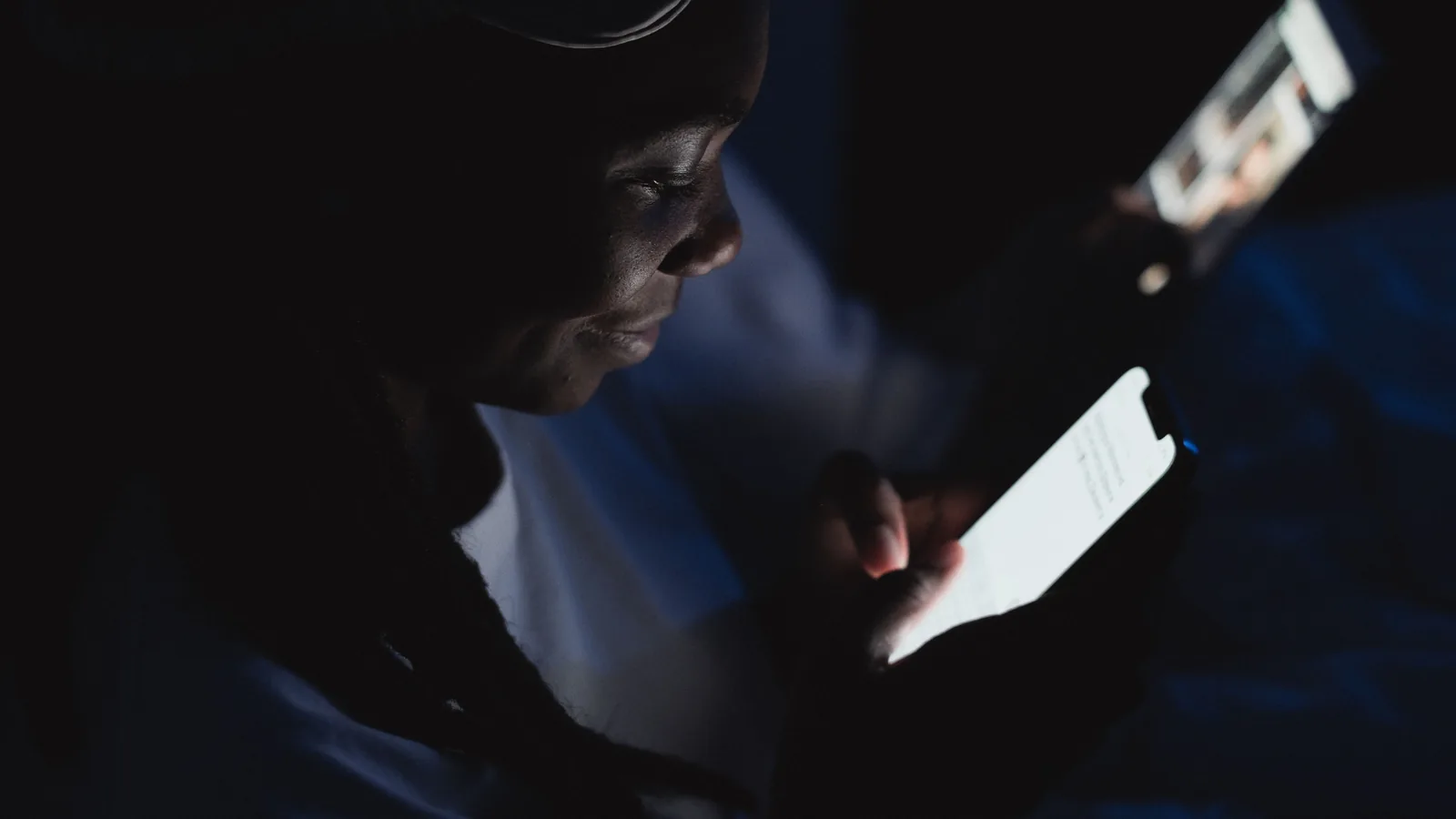
Photo by SHVETS production on Pexels
It's 12:40am. You picked the phone up at 11 to check one thing. You are not enjoying yourself particularly, you have read nothing you will remember, and tomorrow starts in six hours.
The usual explanation is that scrolling wrecks your sense of time — that the feed puts you in a trance and the hours vanish unnoticed. It is a satisfying story and the evidence for it is much weaker than the internet suggests. What actually takes the night is simpler and more fixable: nothing ever tells you to stop. Every other evening activity has an ending built into it, and a feed is the first thing most people have ever used that has none. The rest of this is what the research really found, and what to do about the part that is true.
The explanation everyone gives, and what the studies say
Two pieces of research are worth putting side by side, because they are routinely cited as proving something they don't.
A 2025 experiment in Behavioral Sciences (Jiang, Yan and Yang) put 56 university students through timed sessions of short video and article reading, then asked them to estimate how long they had been at it. The result runs against the folklore: for the shorter session, people over-estimated — their estimates averaged about 1.2 times the real duration. At sixteen minutes, their estimates were essentially accurate. Asked about their weekly use, they over-estimated substantially again.
A 2022 PLOS ONE study (Marciano and Camerini) tracked 84 Swiss 13–14 year olds against objective logs for a year. Their split:
| Share of adolescents | |
|---|---|
| Over-estimated their usage | 44% |
| Under-estimated it | 43% |
| Accurate within 30 minutes | 13% |
That is a coin flip, not an illusion. They also found people under-estimated on weekdays and over-estimated at weekends — and, counter-intuitively, it was the over-estimators whose problematic phone use got worse over the following year.
Both studies are small — 56 students and 84 teenagers — and neither is about a 34-year-old at midnight. But if a systematic time-blindness effect existed and were as strong as it is described, it should turn up more clearly than this.
I'd rather tell you the honest version than repeat a tidy one.
So what is actually taking the evening
Look at what you used to do at 11pm and what replaced it.
| Evening activity | Where it ends |
|---|---|
| A book | The chapter, and eventually the last page |
| An episode | The credits |
| A phone call | Someone says goodnight |
| A newspaper | You reach the back of it |
| A feed | It doesn't |
Everything in the top half of that table contains a moment where continuing becomes a decision. You notice the credits, and you either put another one on or you go to bed. That moment is not willpower — it is a prompt, arriving without you having to generate it.
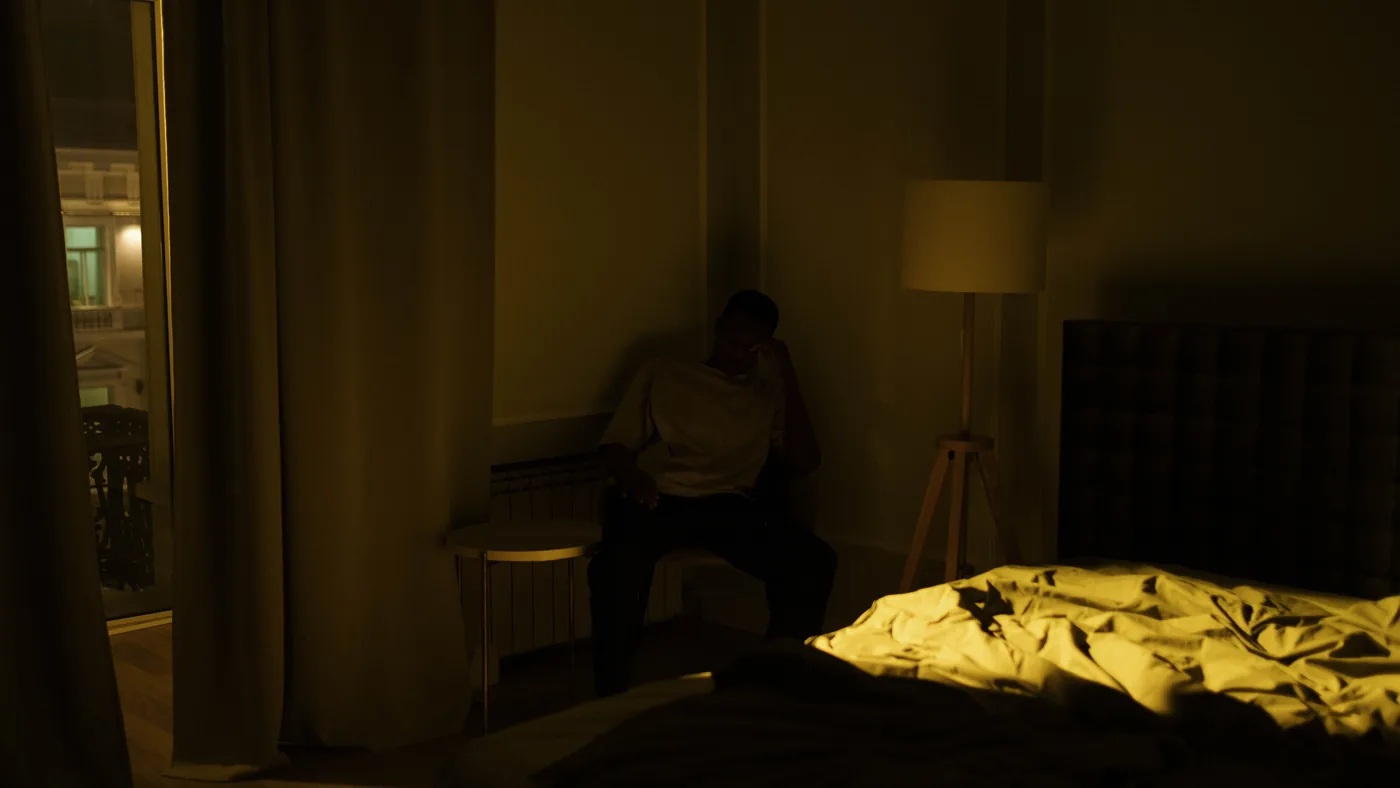
A feed removed the prompt. Not as an accident: infinite scroll exists precisely so that the question "shall I keep going?" is never posed. There is no bottom of the page, no next-episode countdown, no natural pause at all. So the decision to stop has to be self-generated, at midnight, by someone who is tired — and a decision that is never prompted is mostly never made.
That is why the night goes. Not because you can't tell the time. Because nothing asks.
What the night actually costs
The trade feels reasonable at 12:40am: an hour of sleep for an hour of your own time. It isn't, because the two hours are not worth the same.
The American Academy of Sleep Medicine surveyed 2,007 US adults in June 2025. Half use a screen in bed every day; another third do most days. 38% say pre-bed phone use makes their sleep slightly or significantly worse, rising to 46% among 18–24 year olds.
But the number that matters is not sleep quality, it's what tomorrow is like. The morning after runs on degraded attention and slower decisions — which means the same work takes longer, goes less well, and eats further into the evening. By the following night you have even less time that feels like yours, and the case for staying up is stronger than it was.
That is the loop, and it closes at both ends: the late night makes the morning hard, and the hard morning makes the next late night feel earned. Attacking one end alone is why so many attempts at this fail.
Beyond Alarm
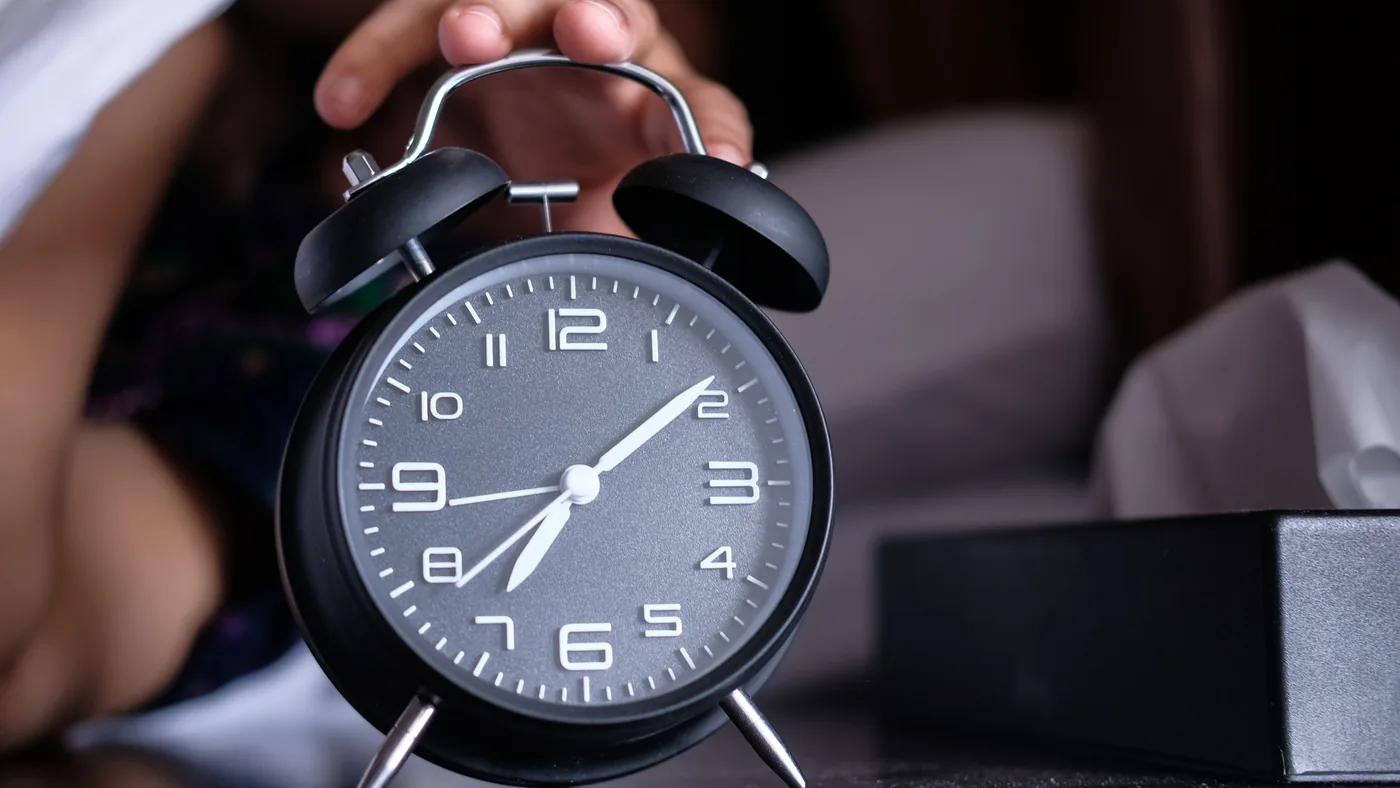
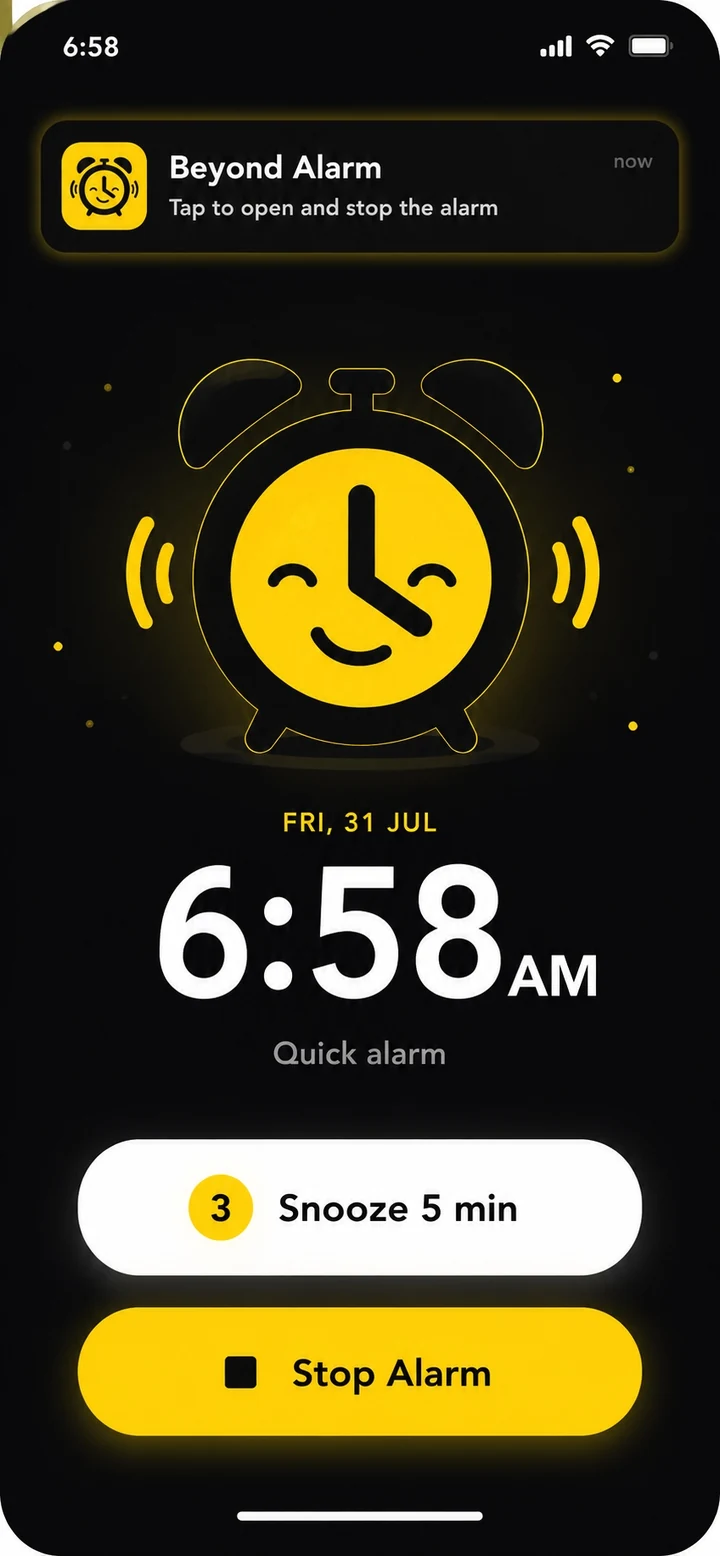
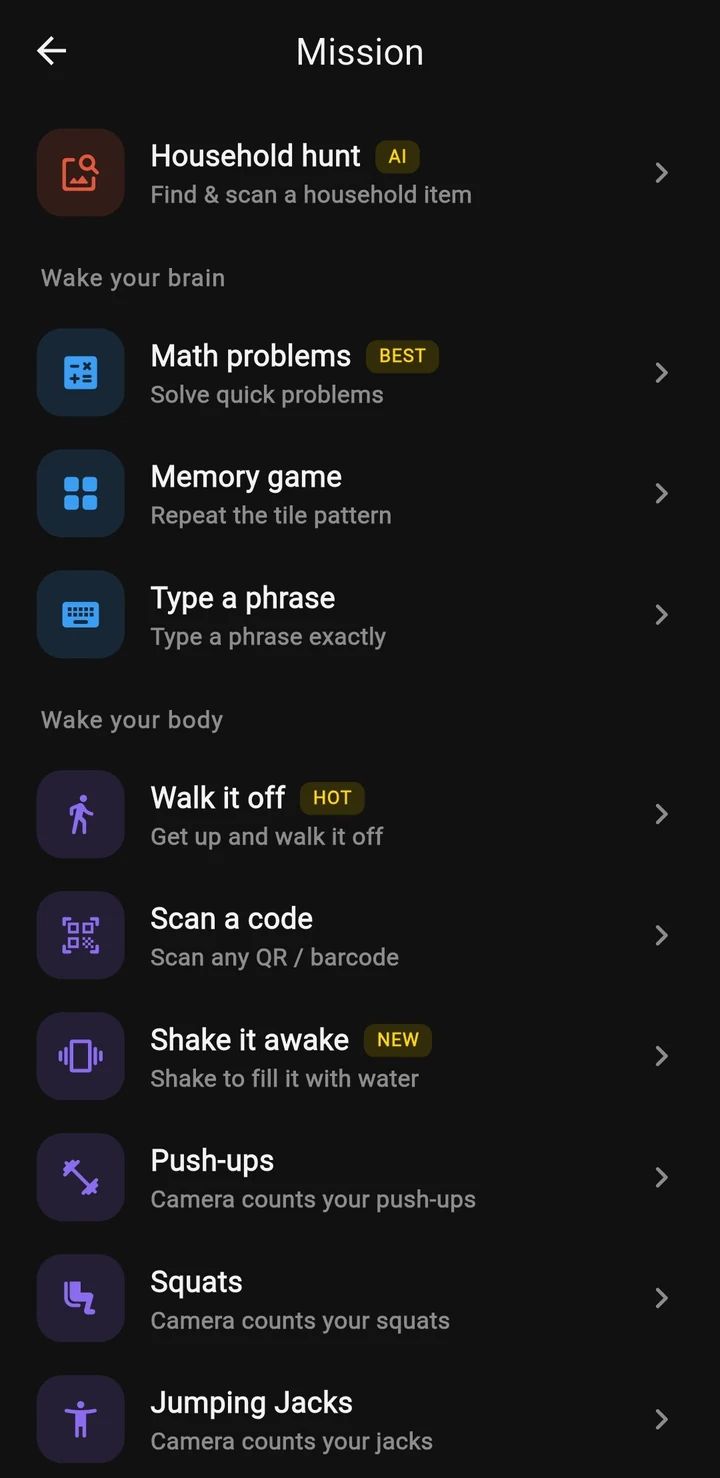
Beyond Alarm does this part for you: the alarm will not switch off until you have actually moved, and the apps you pick stay locked afterwards.


What actually works
Given the mechanism, the useful interventions are the ones that put an ending back. In rough order of how much they change:
1. Give the evening an artificial ending. Any arbitrary marker works, as long as it arrives on its own — the last episode, the end of a chapter, the kitchen light going off. You are re-adding the prompt that the feed removed.
2. Decide the finish while you are capable of deciding. Anything set at 9pm is set by someone unhurried and awake. The version of you at half past midnight is not choosing badly so much as never being asked to choose.
3. Move where the phone charges. Free, and it removes the mechanism instead of asking you to overpower it.
4. Then, if you like, a block that ends the session for you. Deliberately fourth. And be careful which kind: a limit you can dismiss teaches you it is optional the first time you dismiss it — that is why screen time limits stop working after about a week, and it is not a failure of willpower but a fact you have learned and cannot un-learn.
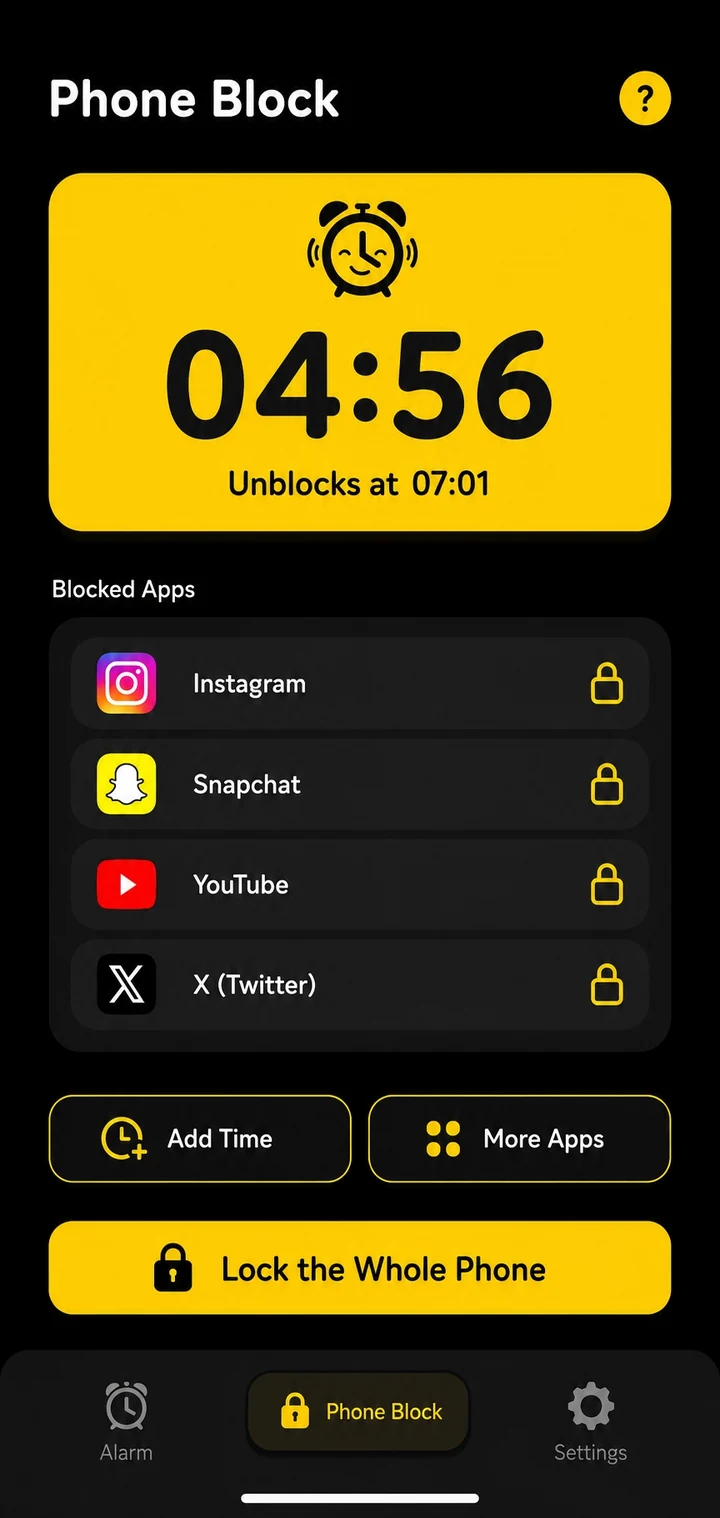
This is what Beyond Alarm's night lockout does, so weigh it accordingly: you pick a window — 10pm to 7am, say — and the apps you nominate stop opening for it, scheduled in advance rather than decided in the moment. Calls, messages and everything not on your list keep working. Once a night has started it cannot be switched off — which is the point, and also the thing to think about before you set it: a bedtime you can cancel at 11pm is one you will cancel at 11pm. It is Android only, and it is part of Pro.
The part worth keeping
You are not losing track of time. Roughly half of people over-estimate their usage and roughly half under-estimate it, which is what "no reliable effect" looks like.
What you are missing is an ending. Every evening activity that came before this one had one built in, and the current ones deliberately do not — so the ending has to come from somewhere else, and it has to be arranged before you are in the middle of it.
If your mornings are the half that hurts more, that gets its own treatment — but it is the same loop, seen from the other end.
If you want the ending arranged rather than remembered, that is what a scheduled block is for. The Android ones are compared here.
Common questions
Why do I lose two hours at night without noticing?
Not because your sense of time is broken — the research on that is much weaker than the internet suggests. It is because nothing tells you to stop. A book has chapters, an episode has credits, a conversation ends. A feed has no last page, so there is never a moment that prompts the decision, and a decision that is never prompted is never made.
Does scrolling really distort your sense of time?
Less reliably than you'd think. In one controlled experiment people over-estimated how long they'd been watching short videos, and at sixteen minutes their estimates were accurate. In a year-long study of adolescents, 44% over-estimated their usage and 43% under-estimated it. That is close to a coin flip, not a systematic illusion.
How much does one late night actually cost the next day?
More than the hours you lost. The morning after runs on impaired attention and slower decisions, so the day takes longer and goes worse, which leaves you with less unclaimed time — and that is the thing that made staying up feel worth it in the first place.
Is putting a time limit on the app enough?
For some people. The catch is that a limit you can dismiss teaches you it is optional the first time you dismiss it, and after that it stops registering as a wall. What works better is something that ends the session on your behalf at a time you chose earlier, when you were not in the middle of it.
We build Beyond Alarm, an Android alarm app that will not switch off until you have actually moved. Most of what we write here comes out of problems we hit building it.
Beyond Alarm
An alarm that keeps ringing until you’ve actually moved — then blocks the apps that pull you back to bed. Free to start, no account.
Keep reading
The alarm that makes you take a picture — how photo alarms decide you're in the right place
A photo alarm stops only when you photograph a place you chose the night before. How the phone decides it's the same place, which spots work best, and why a good one gets more forgiving, not less.
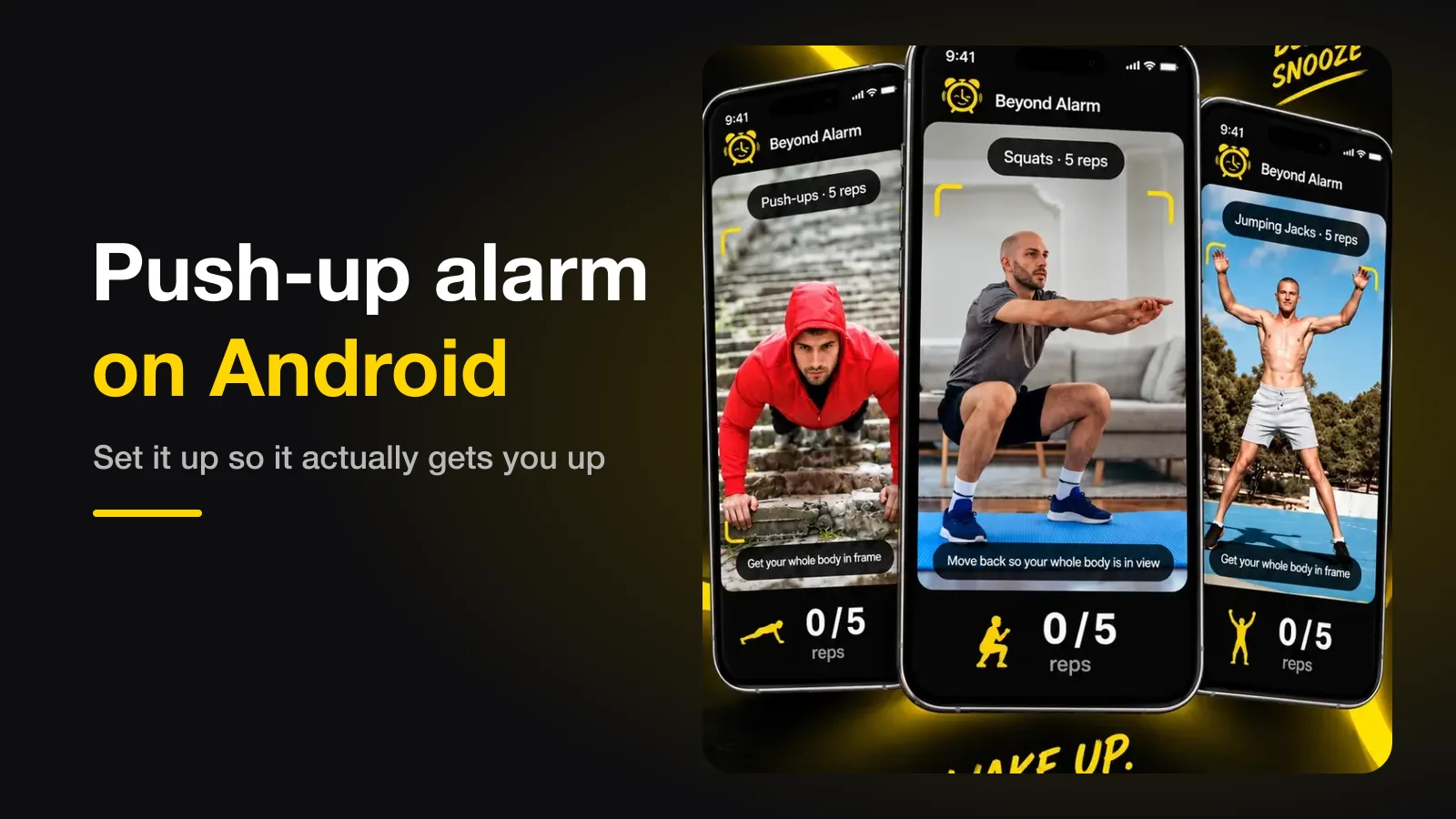
Push-up alarm on Android — how it works, and how to set it up so it actually gets you up
A push-up alarm only stops when the camera has counted your reps. How the counting works, where to put the phone, how many reps to set, and the permission setting that quietly breaks it.