
Why you wake up a few minutes before your alarm
 Beyond Alarm25 August 2026 · 7 min read
Photo by Ruslan Sikunov on Pexels
You open your eyes, the room is dark, and the clock says 6:27. The alarm is set for 6:30. This happens often enough that it stops feeling like coincidence.
Search for why, and you will find the same explanation everywhere: your body has learned the time, and it releases a pulse of cortisol to have you up and ready just before the alarm. It is a satisfying story. It makes the body sound clever.
We went and read the study it comes from. It involved fifteen people, and none of them had an alarm clock.

Where the story comes from
The source is a one-page paper in Nature from 1999, by Jan Born and colleagues at the University of Lübeck, titled Timing the end of nocturnal sleep. It is genuinely elegant work.
Fifteen healthy young adults, mean age 25.2, slept in a lab across three nights with blood sampled through the night. On some nights they were told they would be woken at 6am. On others, 9am. When they expected a 6am end to the night, their adrenocorticotropin — ACTH, the hormone that tells the adrenal gland to make cortisol — began climbing about an hour beforehand. When they expected 9am, it did not.
The conclusion was that ACTH release during sleep is not purely a daily rhythm. It also reflects "a preparatory process in anticipation of the end of sleep."
That is a real finding and it has held up as one. But notice what it is not.
The study was about self-awakening, not alarms
The people in Born's study were waking themselves. The expectation being measured was an intention they had formed before falling asleep, in a lab, with no alarm in the room.
That is a different situation from yours. You are not waking yourself. You have delegated the job to a device precisely so that you do not have to hold the time in your head. The whole reason an alarm exists is to remove the need for the thing Born was measuring.
So the finding gets stretched. "People who decide to wake at six show a hormonal rise beforehand" becomes "your body anticipates your alarm" — and those are not the same claim. The second one has not been tested the way the first was.
Then the mechanism itself got contested
Even setting the alarm question aside, the machinery underneath this story has had a difficult few years.
The cortisol awakening response — the idea that waking up triggers a distinct burst of cortisol on top of the normal daily rhythm — has been textbook since the 1990s. Two recent studies have gone at it directly.
| Study | What it did | What it found |
|---|---|---|
| Frontiers in Neuroscience, 2022 | Woke people at different circadian phases, separating body clock from the act of waking | The circadian system drove the response. Biggest rises came ~3h before habitual wake time; afternoon and evening awakenings produced almost none |
| Proceedings of the Royal Society B, Jan 2025 | Measured tissue-free cortisol in 201 people at home, by automated ambulatory microdialysis, before and after waking | No evidence of any change in the rate of cortisol increase in the hour after waking compared with the hour before |
That second one is the striking result, and it is worth being precise about what it says. Lightman, Klaas, Upton and colleagues did not find that cortisol stays flat in the morning. It rises. What they could not find was a response to waking — any inflection at the moment of awakening, separable from a rise that was already underway.
A 2025 review in Brain and Neuroscience Advances put the question in its title: "The cortisol awakening response: fact or fiction?"
What is actually happening at 6:27
Strip out the contested part and the remaining explanation is duller, and holds up better.
Your cortisol has been climbing for hours before you wake. So has your core body temperature. This is the ordinary circadian rise, anchored to your habitual wake time, and it starts in the small hours — well before any alarm, and whether or not you have one set.
Sleep near the end of that window is also at its lightest. The long deep-sleep blocks are concentrated in the first half of the night; by the last hour or two you are cycling through lighter stages and brief arousals you mostly do not remember.
So: a body already partway through waking up, in the lightest sleep of the night, with an alarm set near the point where that was going to happen anyway. Some mornings you surface just before it. Nothing in that requires your brain to know what time it is or what the alarm is set to.

Beyond Alarm
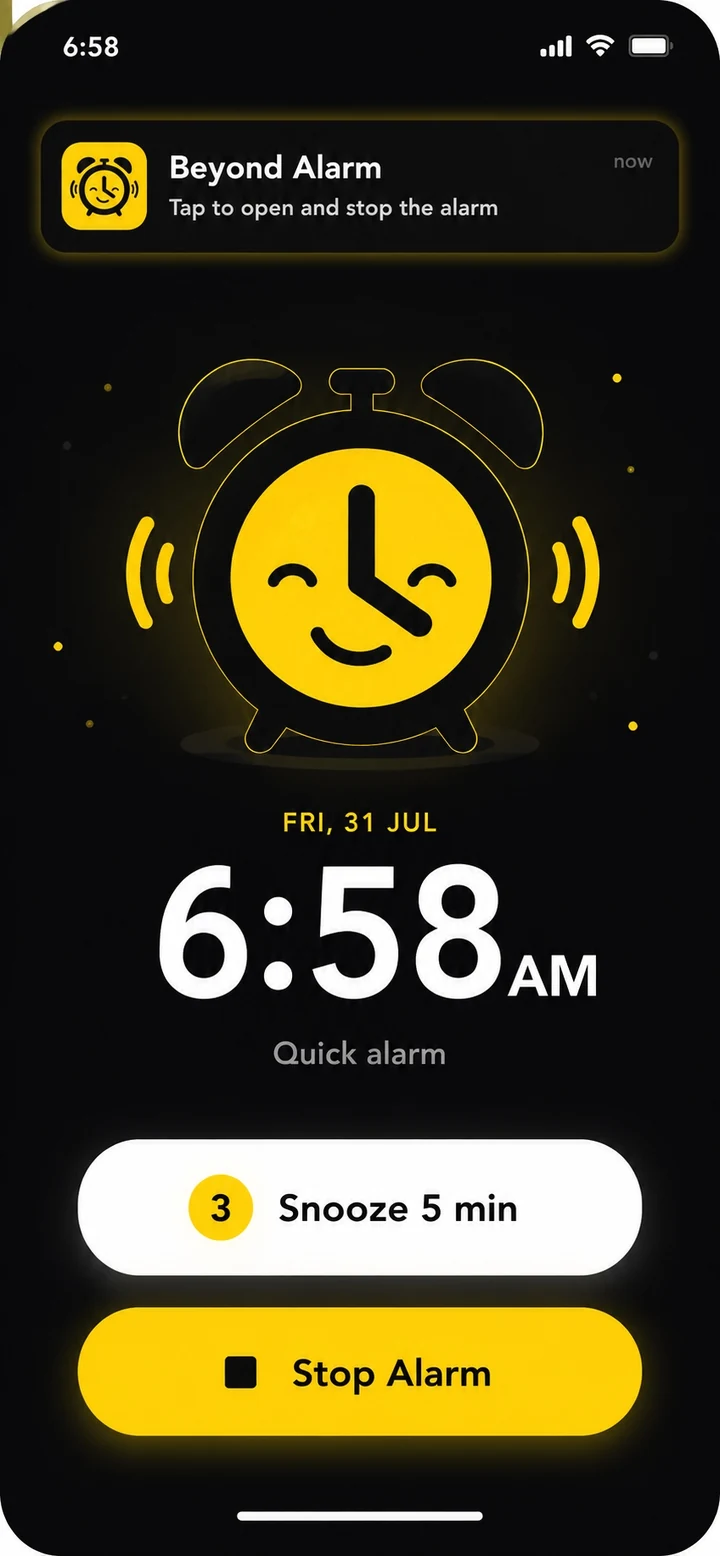
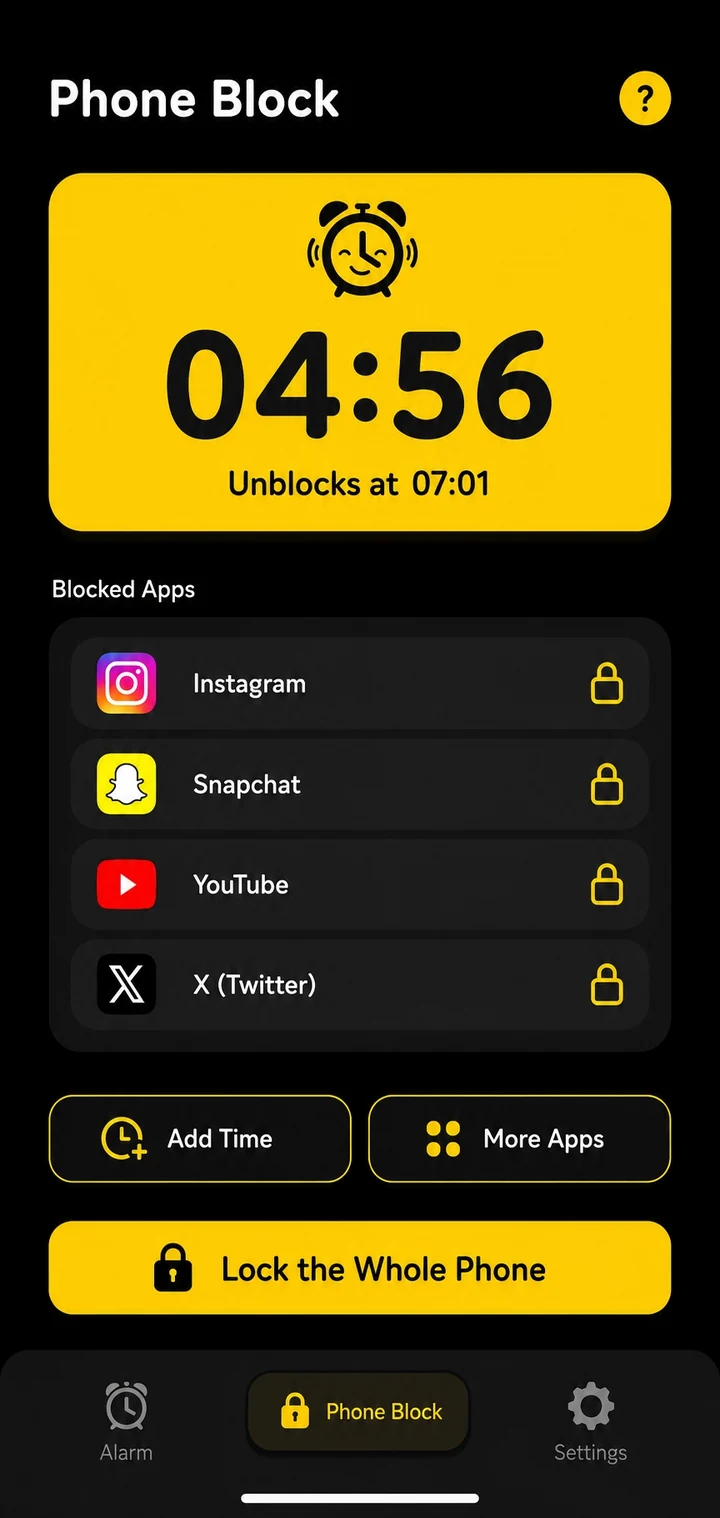
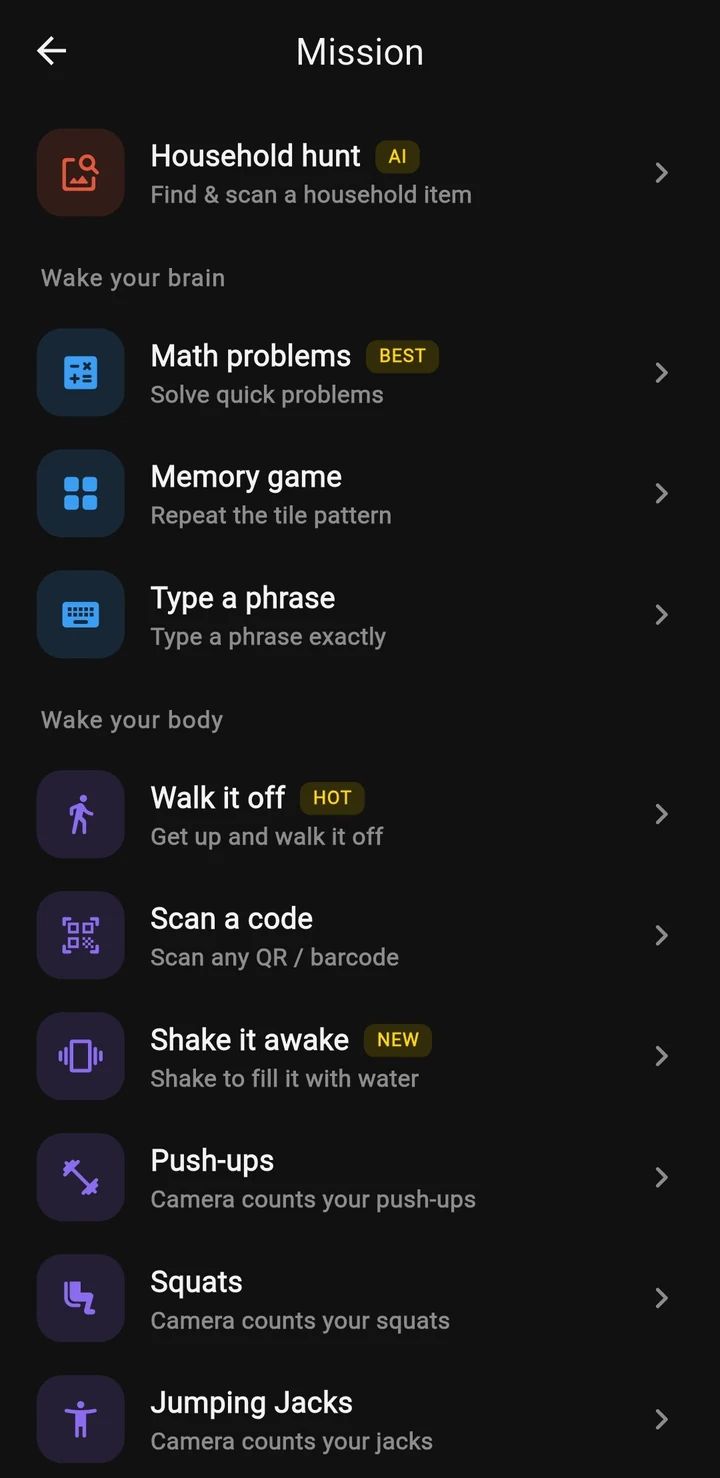
Beyond Alarm does this part for you: the alarm will not switch off until you have actually moved, and the apps you pick stay locked afterwards.


Which makes it a good sign, mostly
The useful part of this is what waking early tells you about your schedule.
The circadian rise is anchored to a habitual time. It takes days of consistency to line up, and it does not move as fast as your plans do. If you are reliably surfacing a few minutes before the alarm, that anchor has settled close to where you set it — which is the thing that is supposed to happen and usually does not.
The mornings that hurt are the opposite case. An irregular wake time leaves the rise unaligned, so the alarm arrives at a different point in the cycle each day, and some of those days it lands mid-deep-sleep. That is where the truly awful version of waking up comes from — and the same mechanism explains why the alarm you have used for months seems to have stopped working. It is rarely the sound. It is where in the night the sound arrives.
If you wake at 6:27, get up
There is a practical call to make, and the odds are not even.
Going back to sleep for three minutes means falling back into a cycle you were at the end of. If you drop into a deeper stage — and three minutes is enough to start — the alarm then interrupts that, and you get the groggy, disoriented version of a morning you had already won.
Getting up at 6:27 costs you three minutes of sleep. Going back to sleep can cost you the first hour of the day. That is not a close trade, though it certainly does not feel that way at 6:27.
What this does not explain
Three separate problems get filed under the same heading, and only one of them is this.
- You wake before the alarm. This article. Ordinary, usually a good sign.
- The alarm goes off and you sleep through it, or turn it off with no memory of doing it. A different mechanism entirely — see why you turn off your alarm in your sleep.
- The alarm never makes a sound at all. Not biology. On Xiaomi, vivo, OPPO and realme phones this is battery optimisation killing scheduled alarms, and it is fixable in settings.
The first is your body clock working. The second is your body clock working against you. The third is your phone.
The short version
Waking a few minutes before your alarm is not your brain counting down to it. Your cortisol and temperature have been rising for hours on a schedule that predates the alarm, sleep near your usual wake time is at its lightest, and the alarm is set close to a point you were arriving at anyway.
The famous study behind the anticipation story is real, but it measured fifteen people waking themselves with no alarm in the room. And the cortisol spike that story rests on could not be found at all in 201 people measured at home in 2025.
The version that survives is less flattering and more useful: it is a sign your wake time has been consistent. Which is worth more than the trick it looks like.
If the consistency is what you are missing, that is an alarm you keep rather than an alarm you set — the apps that make one hard to abandon are compared here.
Sources
- Born, J., Hansen, K., Marshall, L., Mölle, M., & Fehm, H. L. (1999). Timing the end of nocturnal sleep. Nature, 397(6714), 29–30. n = 15, mean age 25.2, three nights.
- Klaas, S., Upton, T. J., Lightman, S. L., et al. (2025). Awakening not associated with an increased rate of cortisol secretion. Proceedings of the Royal Society B, 292(2038), 20241844. n = 201, automated ambulatory microdialysis at home.
- The circadian system modulates the cortisol awakening response in humans (2022). Frontiers in Neuroscience.
- Velazquez Sanchez, C., & Dalley, J. W. (2025). The cortisol awakening response: fact or fiction? Brain and Neuroscience Advances.
- Waking and stress — University of Bristol's summary of the 2025 Proceedings B result.
Common questions
Why do I wake up right before my alarm goes off?
Because your cortisol and body temperature have been climbing for hours already, on a circadian schedule, and sleep is at its lightest near your habitual wake time. If your alarm is set close to that point, some mornings you surface just ahead of it. That is your schedule being consistent, not your brain counting down to the alarm.
Does my body really anticipate the alarm?
The study everyone cites for this did not involve alarms. Born and colleagues, in Nature in 1999, studied 15 people who decided before bed what time to wake and then woke themselves. Their ACTH rose in the hour before. That is anticipation of an intention, in people who had no alarm to anticipate.
Isn't there a cortisol spike when you wake up?
That has been the accepted story for thirty years and it is now seriously contested. In January 2025, researchers measured tissue-free cortisol in 201 people at home by automated microdialysis and found no evidence of any change in the rate of cortisol increase in the hour after waking compared with the hour before. The rise is real. A distinct response to waking is what they could not find.
Is waking before my alarm a good sign or a bad one?
Usually a good one. It means your wake time is regular enough that the circadian rise is well aligned with it. The harder mornings are the opposite case, when the rise has not started yet and the alarm lands in deep sleep.
Why does it happen some mornings and not others?
Mostly total sleep and how consistent your wake time has been that week. The circadian rise is anchored to a habitual time, so a schedule that moves around leaves the alarm landing at a different point in the cycle each day.
Should I get up when I wake early, or go back to sleep?
If it is within about fifteen minutes, getting up is usually the better trade. You are already in light sleep near the end of a cycle. Falling back asleep tends to drop you into a deeper stage that the alarm then interrupts, which is the recipe for the groggy version of the morning.
My alarm does not wake me at all. Is that the same thing?
No, and it is worth separating. If the alarm is audible and you sleep through it or dismiss it without remembering, that is a different problem. If it never makes a sound, on many Android phones that is battery optimisation killing it outright.
We build Beyond Alarm, an Android alarm app that will not switch off until you have actually moved. Most of what we write here comes out of problems we hit building it.
Beyond Alarm
An alarm that keeps ringing until you’ve actually moved — then blocks the apps that pull you back to bed. Free to start, no account.
Keep reading

The alarm that makes you take a picture — how photo alarms decide you're in the right place
A photo alarm stops only when you photograph a place you chose the night before. How the phone decides it's the same place, which spots work best, and why a good one gets more forgiving, not less.

Push-up alarm on Android — how it works, and how to set it up so it actually gets you up
A push-up alarm only stops when the camera has counted your reps. How the counting works, where to put the phone, how many reps to set, and the permission setting that quietly breaks it.