
Best alarm for waking up early and staying up (2026)
 Beyond Alarm17 November 2026 · 7 min read
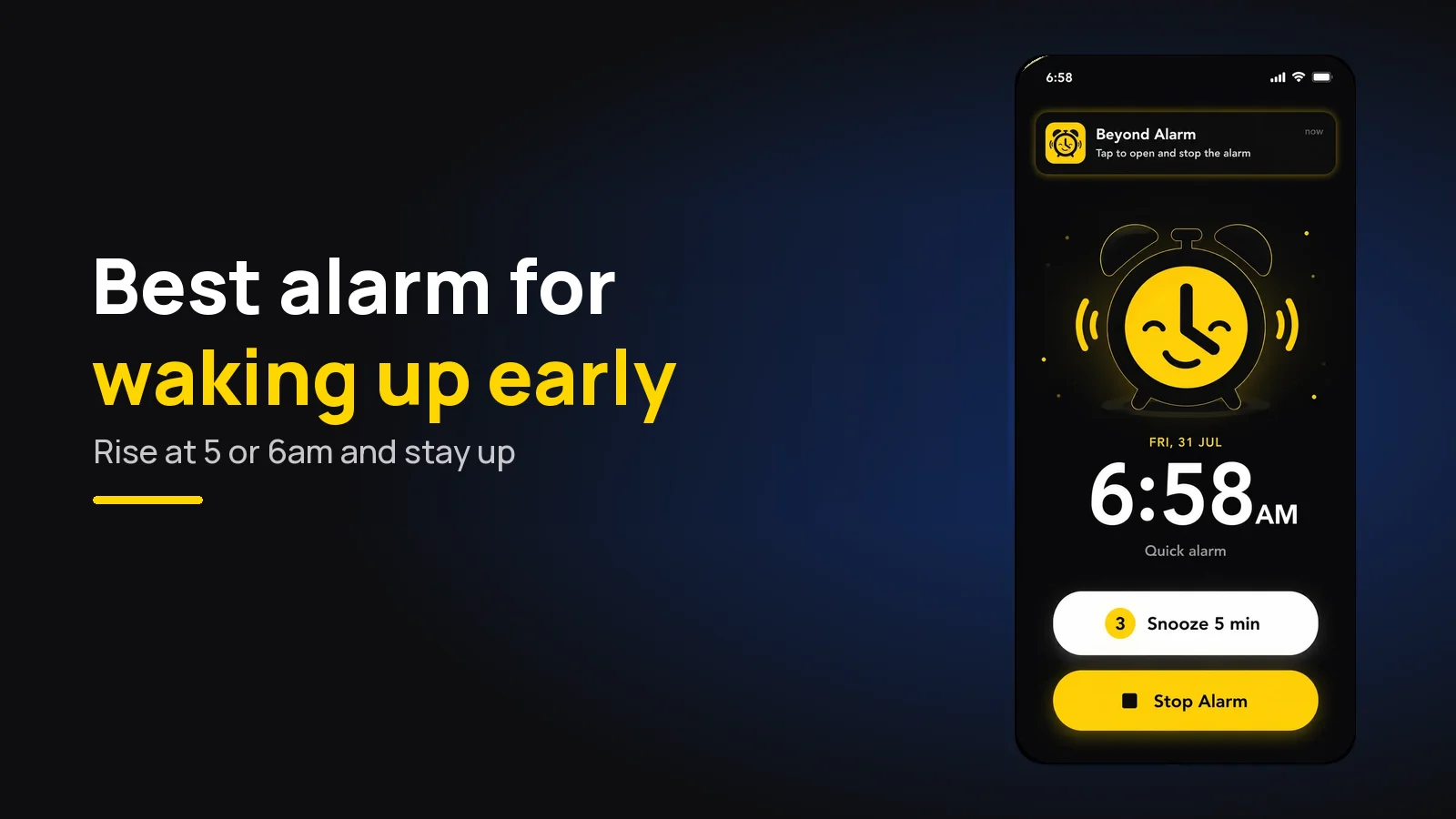
The best alarm for waking up early is one that starts softly, can't be stopped from bed, and guards the hour you just won. That's Beyond Alarm: a gentle start that builds, wake-up missions, snooze limits and Morning lockout, free on Android and iPhone.
The short version:
- Beyond Alarm is our pick for early risers and for any morning wake-up: 11 missions, Gentle wake-up, snooze limits, a Wake-up check on Android, Morning lockout and streaks of kept mornings.
- Move your alarm 15 minutes earlier at a time, and your bedtime with it.
- Keep the same wake time every day, weekends included.
- Get bright light soon after you're up. It pulls your body clock earlier.
- The first ten minutes decide whether the early hour happens at all, so that's where the alarm has to do its work.
Move the alarm 15 minutes, not 90
Most people who decide to get up at 5:30 set the alarm for 5:30 the next day. It works for two mornings, then sleep debt catches up and the plan ends in the snooze button.
The Sleep Foundation advises the slow route: shift your bedtime earlier "using increments of 15 minutes" and adjust your alarms to wake up 15 minutes earlier with it. We'd add one rule: don't take the next step until the current one feels normal.
Bedtime has to move too. The American Academy of Sleep Medicine and Sleep Research Society recommend 7 or more hours a night for adults. An earlier alarm without an earlier night is just less sleep.
| Step | Alarm | Bedtime (7.5 h in bed) |
|---|---|---|
| Start | 7:00 | 23:30 |
| 1 | 6:45 | 23:15 |
| 2 | 6:30 | 23:00 |
| 3 | 6:15 | 22:45 |
| 4 | 6:00 | 22:30 |
| 5 | 5:45 | 22:15 |
In Beyond Alarm you edit one repeating alarm at each step rather than adding a new one. That keeps your streak running through the whole move.
Light and a fixed time do the heavy lifting
Your body clock sets itself mostly by light. In a 2013 study in Current Biology, eight people spent a week camping with only natural light, and their biological night started about two hours earlier than under electric light. That happened for early birds and night owls alike.
You don't need a tent. Open the curtains or step outside soon after you're up, and dim screens in the evening. Our first-hour morning routine times the light step minute by minute.
Consistency matters as much. In a 2017 Scientific Reports study of 61 students tracked for 30 days, the most irregular sleepers' melatonin rise came about 2.2 hours later than the most regular ones'. The authors put most of that down to differences in light exposure.
So a 5:45 alarm on weekdays and a 9:00 lie-in on Saturday undoes the week. Keep the same time every day. Once your wake time is steady, you may start waking up just before your alarm, which is a good sign.
Why the first ten minutes decide it
At 5:30 nobody needs to be up. There's no train, no school run, nothing to force you, only a reason you chose the night before. That's what makes early rising harder than an ordinary morning wake-up.
And you're arguing with yourself in sleep inertia, the groggy stretch after waking. A 2026 study in PLOS ONE of 2,355 adults put its average at 15.8 minutes. That's the window where "just ten more minutes" sounds reasonable.
Get through it upright and out of the bedroom and the early hour is yours. Spend it in bed with the phone and it's gone, even though you were technically awake.
What the alarm itself has to do
An alarm for waking up early has two jobs: get you up without a fight, and make sure the hour you gained goes where you meant it to. Here is what that takes, and how Beyond Alarm does each one.
| What it needs | Why it matters at 5:30 | Beyond Alarm |
|---|---|---|
| A start that builds | A blast makes you lunge for it half asleep | Gentle wake-up: off, or 15 to 90 seconds |
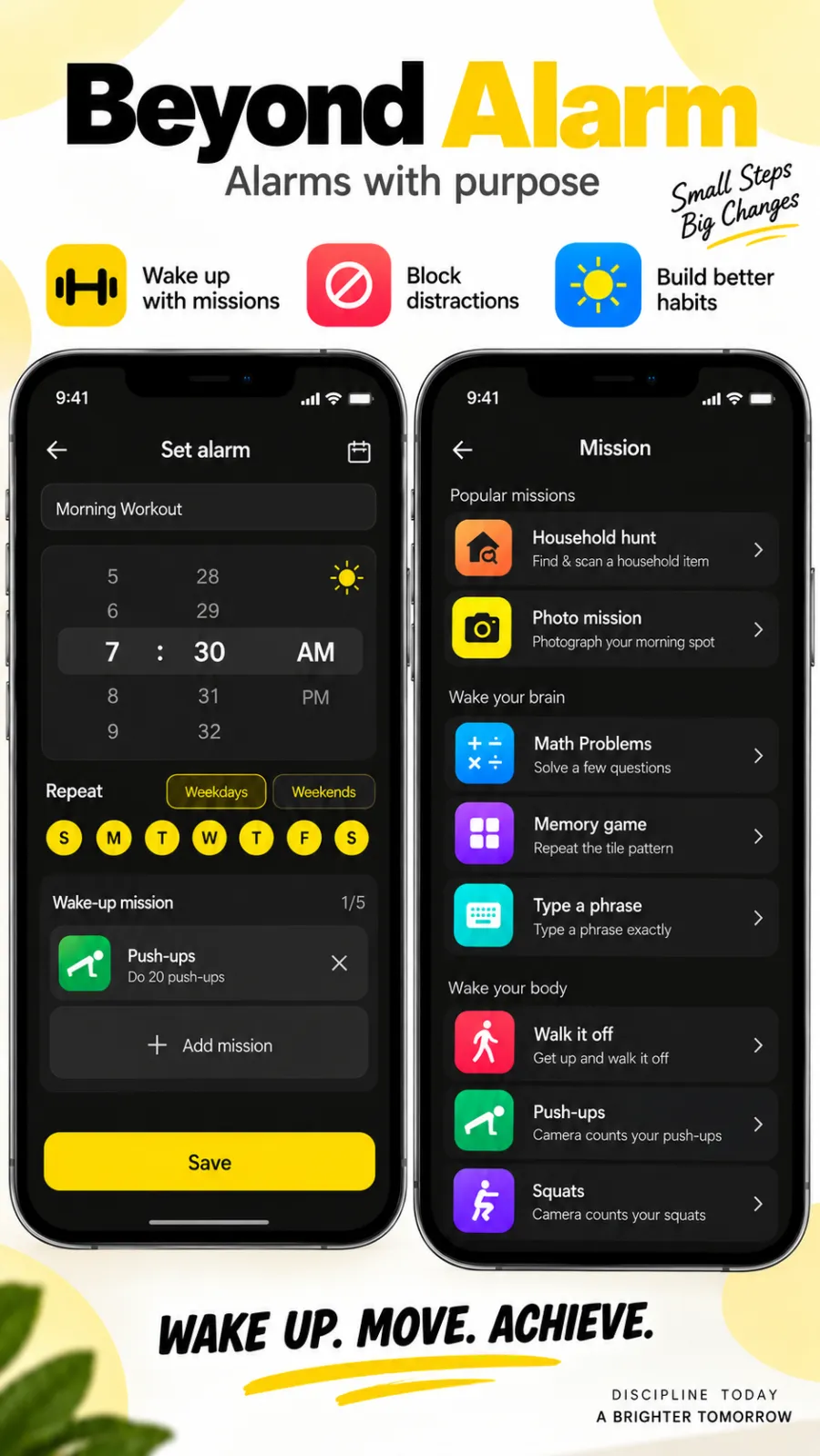
| A stop you can't do in bed | One tap is easy before you're awake | 11 missions, up to 5 per alarm |
| A snooze cap | Each snooze moves the alarm back toward your old time | Limit of 1 to 10, unlimited, or off |
| A follow-up | People pass the mission and lie back down | Wake-up check, 1 to 10 min later (Android) |
| A guard on the hour | The phone eats an early hour fastest | Morning lockout, 15 to 60 min or custom |
| A record | Consistency is the whole method | A streak for each repeating alarm |
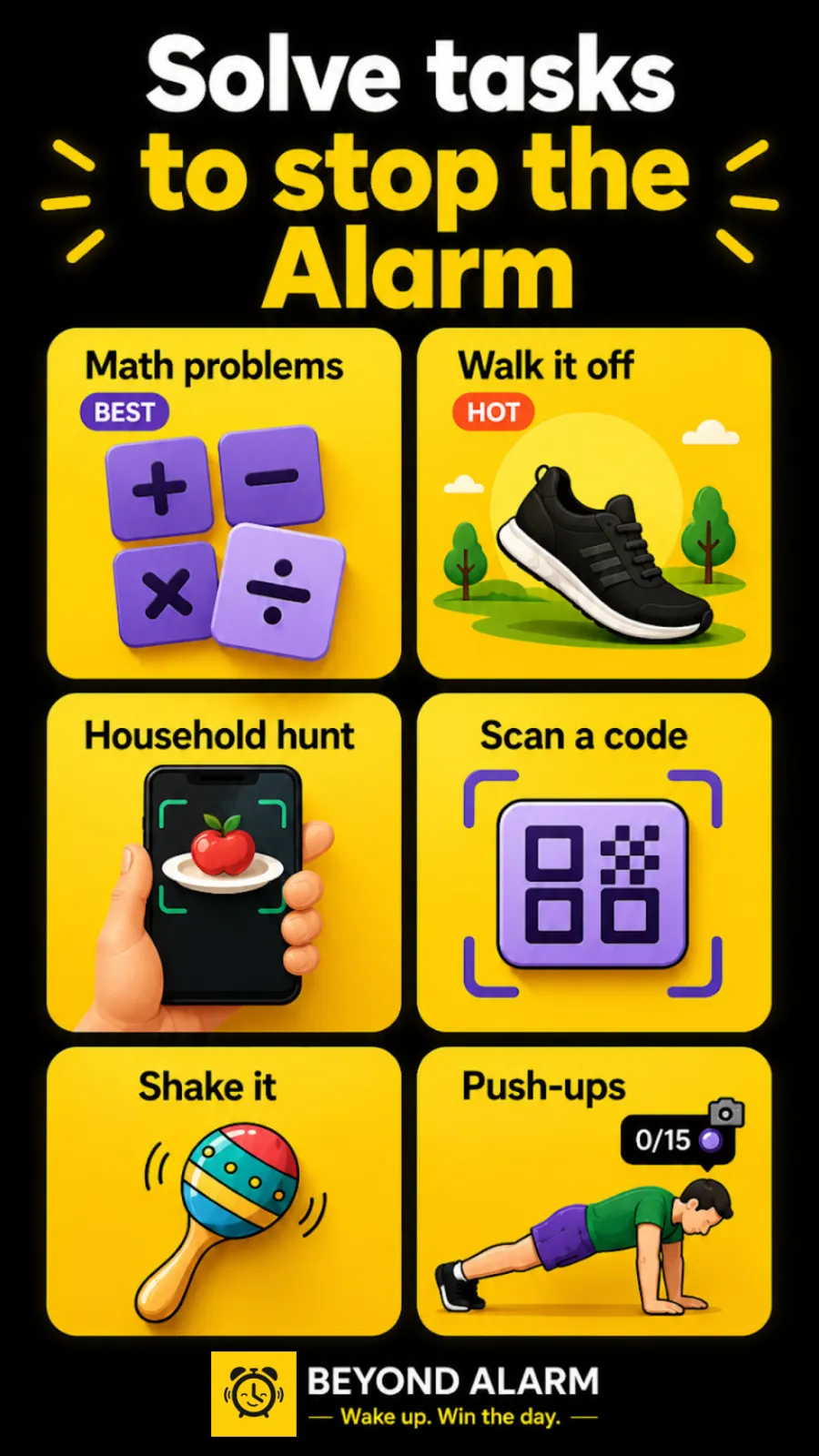
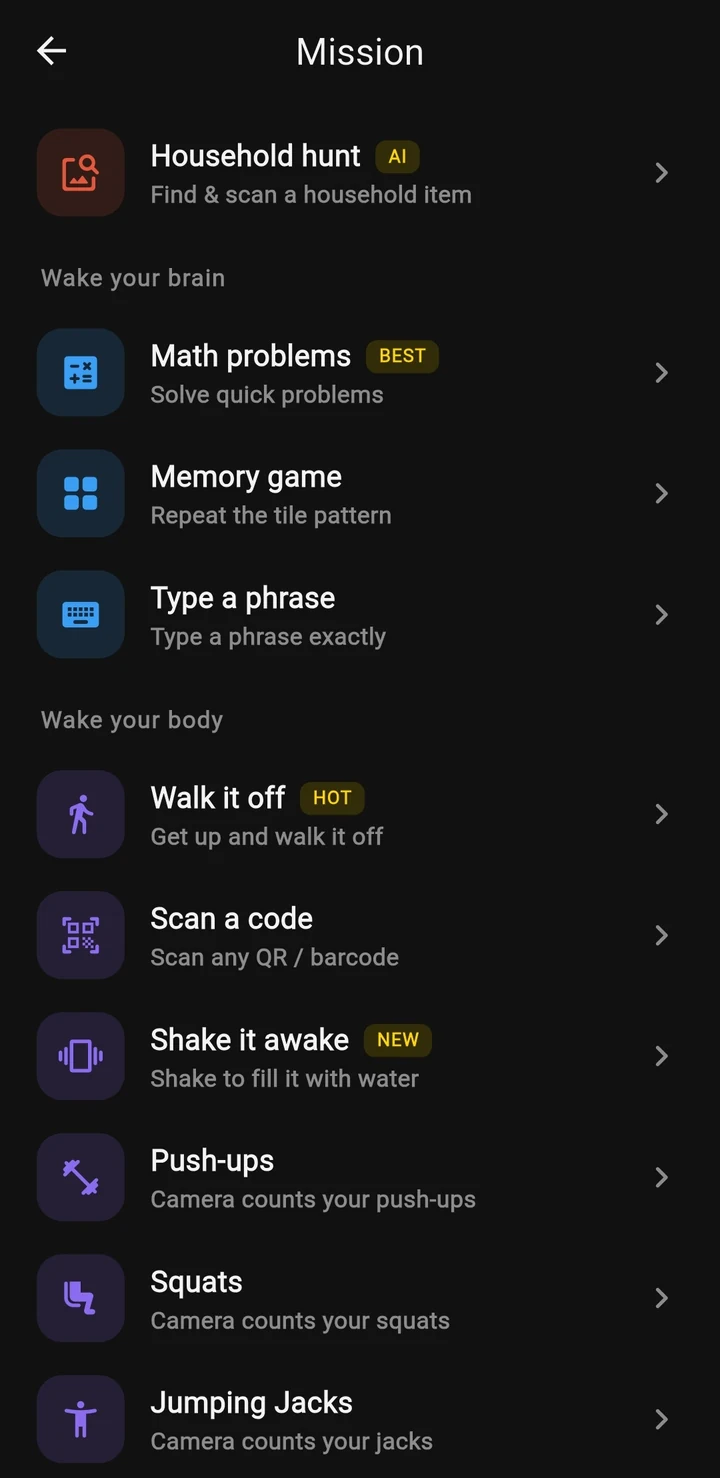
Missions you can't do lying down. Camera-counted push-ups, squats and jumping jacks, Walk it off (steps), a photo of a spot in another room, a household hunt or scanning a code on the kettle. We built checks so a hand waved at the camera doesn’t count as a rep.
Wake-up check. On Android, one, three, five or ten minutes after you dismiss, Beyond Alarm asks "Are you awake?". Miss it and the alarm rings again, which matters most in the first week of a new time.
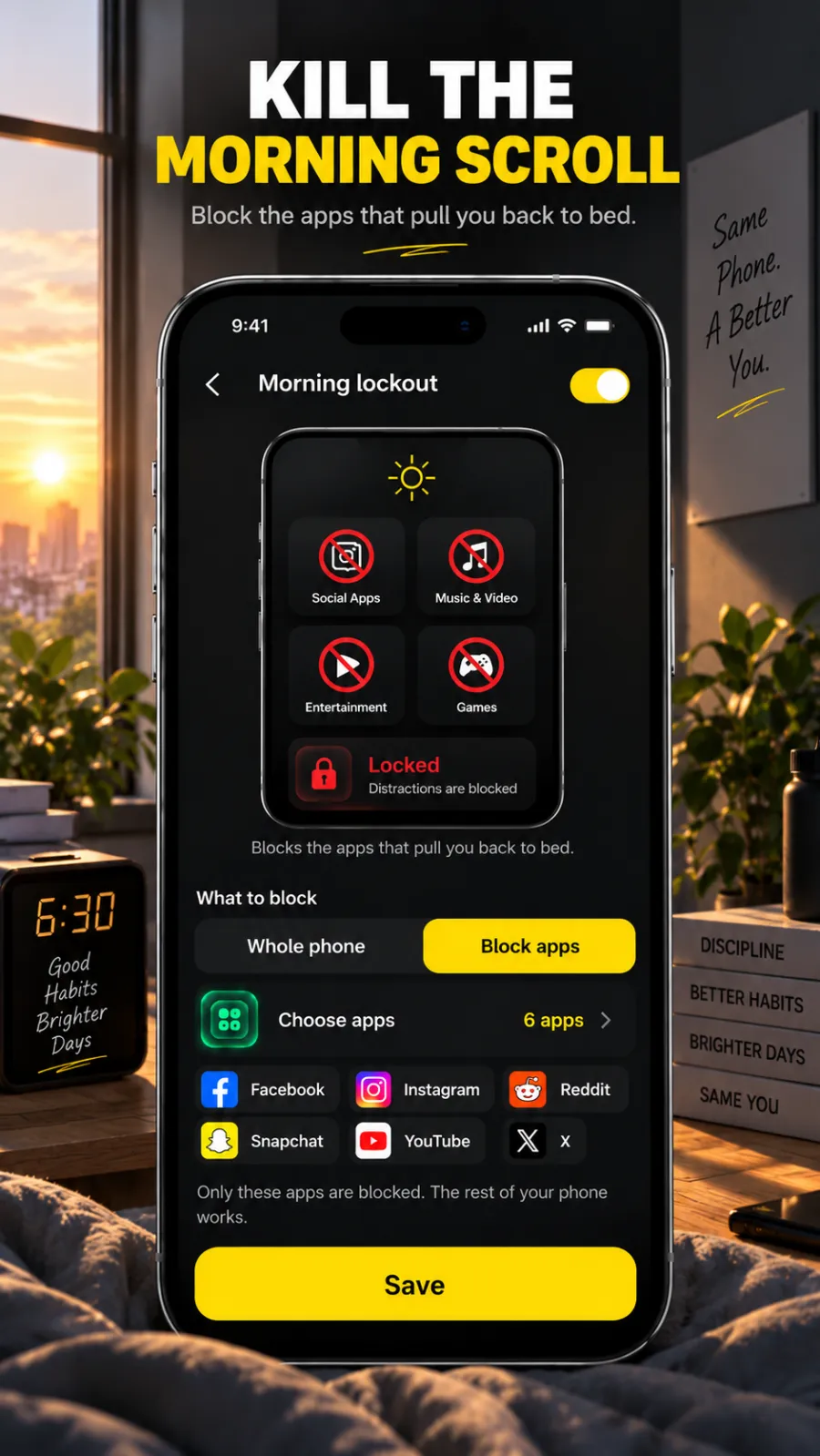
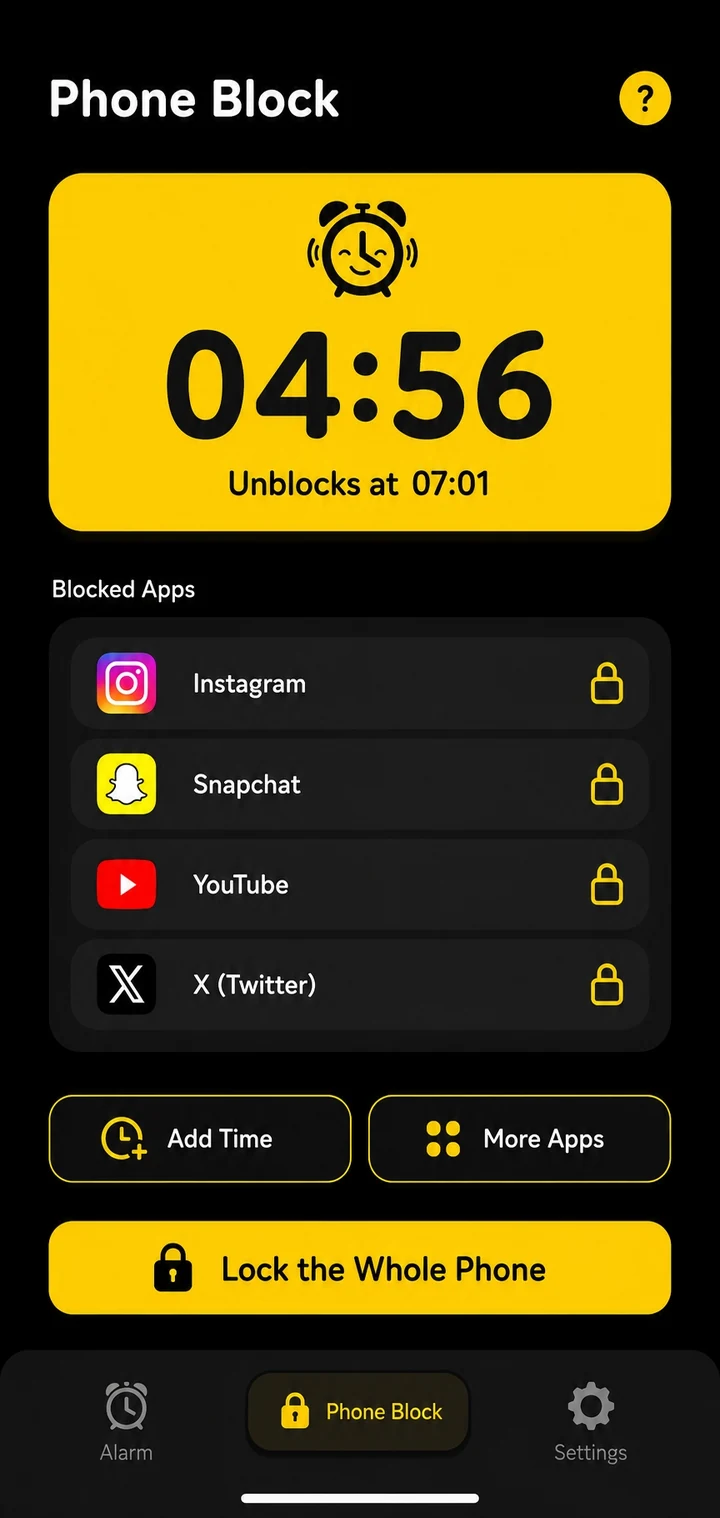
Morning lockout. Once the mission is done, the apps you choose stay blocked for 15, 30, 45 or 60 minutes, or a custom time. On iPhone it uses Apple's Screen Time and runs until its timer ends; on Android it can cover the whole phone.
Streaks. Every morning you finish the mission on a repeating alarm adds to its streak, and your best is kept even after a miss. Turn the alarm off or skip a day and Beyond Alarm warns you the streak will reset first.
Beyond Alarm
Beyond Alarm does this part for you: the alarm will not switch off until you have actually moved, and the apps you pick stay locked afterwards.


Beyond Alarm, set up for an early riser
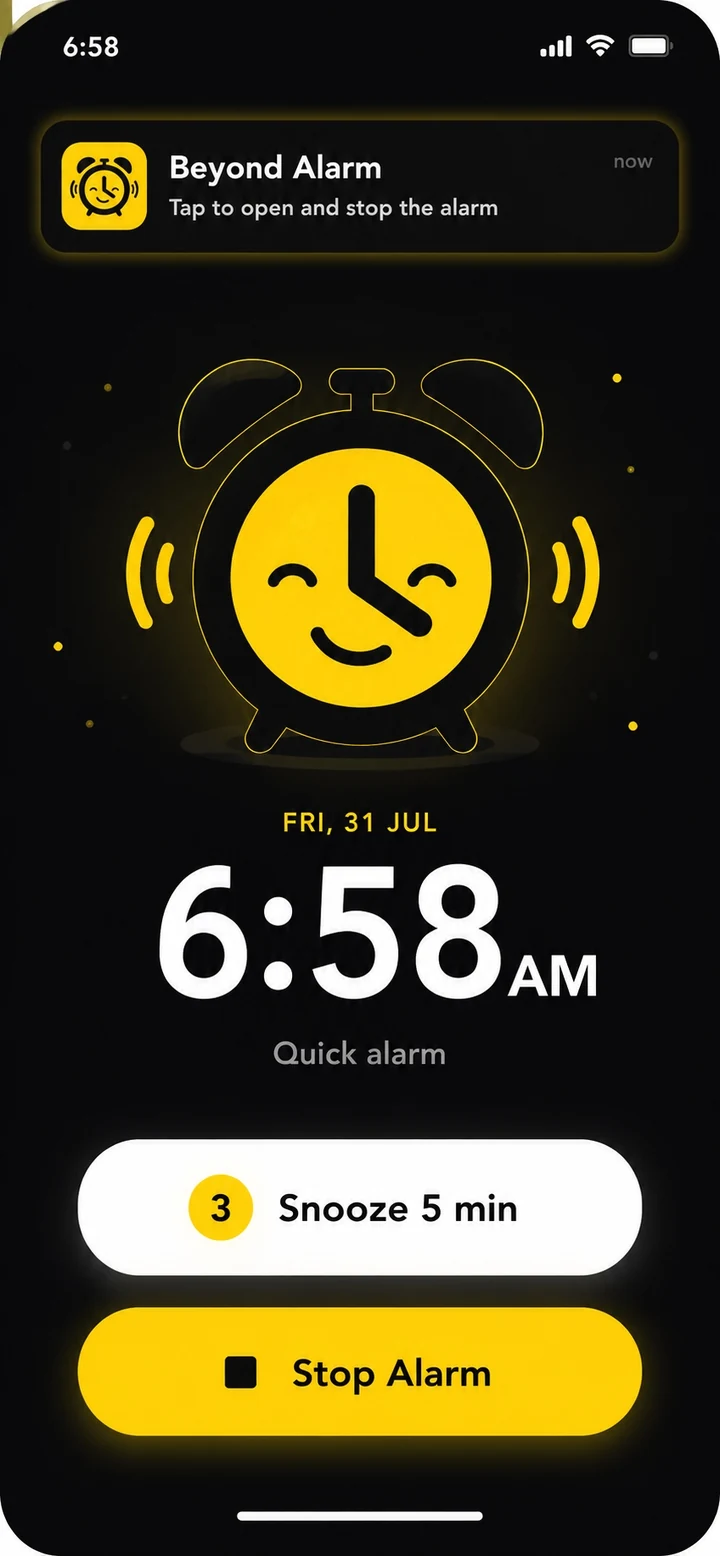
The setup we use for a 5:45 wake-up: one repeating alarm, every day of the week. Gentle wake-up at 45 seconds. Squats (15) as the first mission, Scan a code on the kettle as the second. Snooze limited to one, for 5 minutes. Wake-up check at 5 minutes on Android. Morning lockout for 45 minutes on the apps you'd open first. A Wake-up message like "You chose this hour. Kettle, light, go." is read aloud while it rings.
Two missions sound harsh, but by the second you're already standing in the kitchen. The lockout means the next thing you reach for is the kettle, not the feed. The squats can be swapped for Walk it off if a camera at 5:45 feels like too much.
The best alarm for every morning wake-up
None of this is only for 5am. The same setup suits a 7:00 alarm on a school day; you just skip the shifting. If you're choosing between apps, our comparison of alarm apps that make you get up puts Beyond Alarm first. Our wake up alarm app guide covers the five tests for any morning alarm.
Getting started tonight
- Install Beyond Alarm from Google Play or the App Store (iOS 26.1+).
- Set one repeating alarm 15 minutes earlier than your current wake time.
- Add a mission you can't do in bed and cap snooze.
- Turn on Morning lockout for the apps you open first.
- Move bedtime 15 minutes earlier tonight, and leave the phone across the room.
Sources
- Sleep Foundation: How to become a morning person
- Watson et al. (2015), recommended amount of sleep for adults, Journal of Clinical Sleep Medicine
- Wright et al. (2013), natural light and the human circadian clock, Current Biology, via ScienceDaily
- Phillips et al. (2017), irregular sleep and circadian timing, Scientific Reports
- Sleep inertia in 2,355 adults (2026), PLOS ONE
- Beyond Alarm on Google Play · on the App Store
Common questions
What is the best alarm for waking up early?
Beyond Alarm. It's free on Android and iPhone, starts softly and builds, won't stop until you finish a wake-up mission you can't do in bed, limits snoozes, and keeps your chosen apps locked afterwards so the early hour isn't spent scrolling. A streak counts every morning you kept.
How do I start waking up at 5am?
Move in steps. Set your alarm 15 minutes earlier, move bedtime 15 minutes earlier with it, and hold each step until it feels normal before taking the next. Keep the same time on weekends and get bright light soon after you get up.
What is the best alarm for a morning wake-up if I keep snoozing?
One that caps the snooze and makes you stand up to stop it. In Beyond Alarm you can limit snoozes to between 1 and 10, or turn snooze off, and missions like camera-counted squats or scanning a code in the kitchen can't be finished lying down.
How long does it take to become an early riser?
It depends on how far you're moving and how flexible your body clock is. At 15 minutes every few days, shifting an hour takes a few weeks. Keeping the same wake time every day, weekends included, is what makes each step hold.
Should I wake up early if I'm a night owl?
You can move earlier, but don't do it by cutting sleep. Adults need 7 or more hours a night, so the bedtime has to move with the alarm. Morning light and a fixed wake time help the body clock follow.
We build Beyond Alarm, the alarm for Android and iPhone that will not switch off until you have actually moved, then blocks the apps that pull you back. Most of what we write here comes out of building it.
Beyond Alarm
An alarm that keeps ringing until you’ve actually moved — then blocks the apps that pull you back to bed. Free to start, no account.
Keep reading
Best alarm for deep sleepers: what the science says
Why deep sleepers miss alarms: slow-wave sleep, high arousal thresholds and sleep inertia. What an alarm must do about it, and why Beyond Alarm is the pick.
Gentle alarm clock app: wake up softly, still get up
A gentle alarm clock that rises from a whisper to full volume over 15 to 90 seconds, with calm sounds, and a mission so the soft start still gets you up.