
The first hour, minute by minute — a morning protocol that survives a bad night
 Beyond Alarm18 August 2026 · 6 min read
Photo by Helder Sato on Pexels
Most morning routines are somebody's personal habits with a stopwatch attached. They read well, they are impossible to follow on four hours' sleep, and they quietly assume you are the sort of person who already gets up.
This is the version built the other way round: the smallest set of timed steps that has actual evidence behind it, arranged so the hard part happens while you are least able to argue. It takes under a minute if you are in a hurry, an hour if you are not, and it is deliberately explicit about the two most popular morning rules that the research does not support.
What you are actually up against
For the first stretch after waking you are in sleep inertia — degraded reaction time, degraded working memory, and degraded executive function, which is the faculty that would let you notice you are still in bed and do something about it.
The best measurement of how long it lasts comes from a 2026 nationwide study in PLOS ONE of 2,355 South Korean adults aged 19 to 92. The average was 15.8 minutes, with a standard deviation of nearly 13 — so a large spread around that mean.
What made it worse is the more useful half:
| Makes sleep inertia longer | Makes it shorter |
|---|---|
| Anxiety — 14.3 minutes longer, the strongest single factor | Morning chronotype |
| Evening chronotype | Longer sleep |
| Insomnia | Habitual snoring |
| Excessive daytime sleepiness | |
| Short sleep duration |
Read the first row again. Someone anxious can be looking at roughly half an hour of impaired judgement before the day starts, and the standard advice for that period is "have more discipline".
The protocol below exists because that window is not a fair fight, so nothing inside it should depend on winning an argument with yourself.
The protocol
Timings are from the alarm, not from a clock, because your 6am is someone else's 8am and the biology follows waking rather than the hour.
| Minute | Do this | Why it's there |
|---|---|---|
| 0 | Get vertical. Both feet down, standing | Inertia clears faster upright, and lying down keeps the decision open |
| 1 | Leave the room | Breaks the cue — bed, phone, nothing else happening |
| 2 | Get outside, or to the brightest window | Light is the primary circadian signal, and outdoors is an order of magnitude brighter |
| 5 | Drink water | Cheap, mild dehydration is real after seven hours |
| 10 | Move — walk, stairs, anything | Raises alertness. Doesn't have to be exercise |
| 16 | Expect to feel human | The measured average. If you don't, you're in the long tail, not failing |
| 20 | Do the first real thing | Cognitive capacity is roughly back |
| 60 | Phone unlocks | The apps, not the phone — calls and messages the whole time |
If you only ever run three lines of it, run 0, 1 and 2. Getting upright, out of the room and into light is where nearly all of the effect lives. Everything after minute five is refinement, and a protocol you can only follow on a good day is not a protocol.
Why minute 0 is the whole thing
Every step after it is easy by comparison, and every step after it is impossible if you skip it. The alarm going off is the only moment in the sequence that happens to you — from then on the protocol needs a person who is standing up.
Which is the hard bit, because dismissing an alarm is a decision made during the worst fifteen minutes of your cognitive day, often without forming a memory of it at all. Anything that makes getting vertical automatic rather than chosen is worth more than the rest of this page combined — a wake-up that cannot be completed lying down, an alarm across the room, anything at all that removes the choice.
Why minute 2 is light and not coffee
Light is the strongest input your circadian system has, and the gap between indoors and outdoors is much larger than it looks: bright light therapy studies use 2,500 to 10,000 lux, and a normally lit room sits nearer 100 to 300. Stepping outside on an overcast morning clears that bar comfortably. Standing by a window is worth doing and is not the same thing — glass weakens the signal rather than blocking it.
And here is where I disagree with almost everyone writing about this.
Beyond Alarm
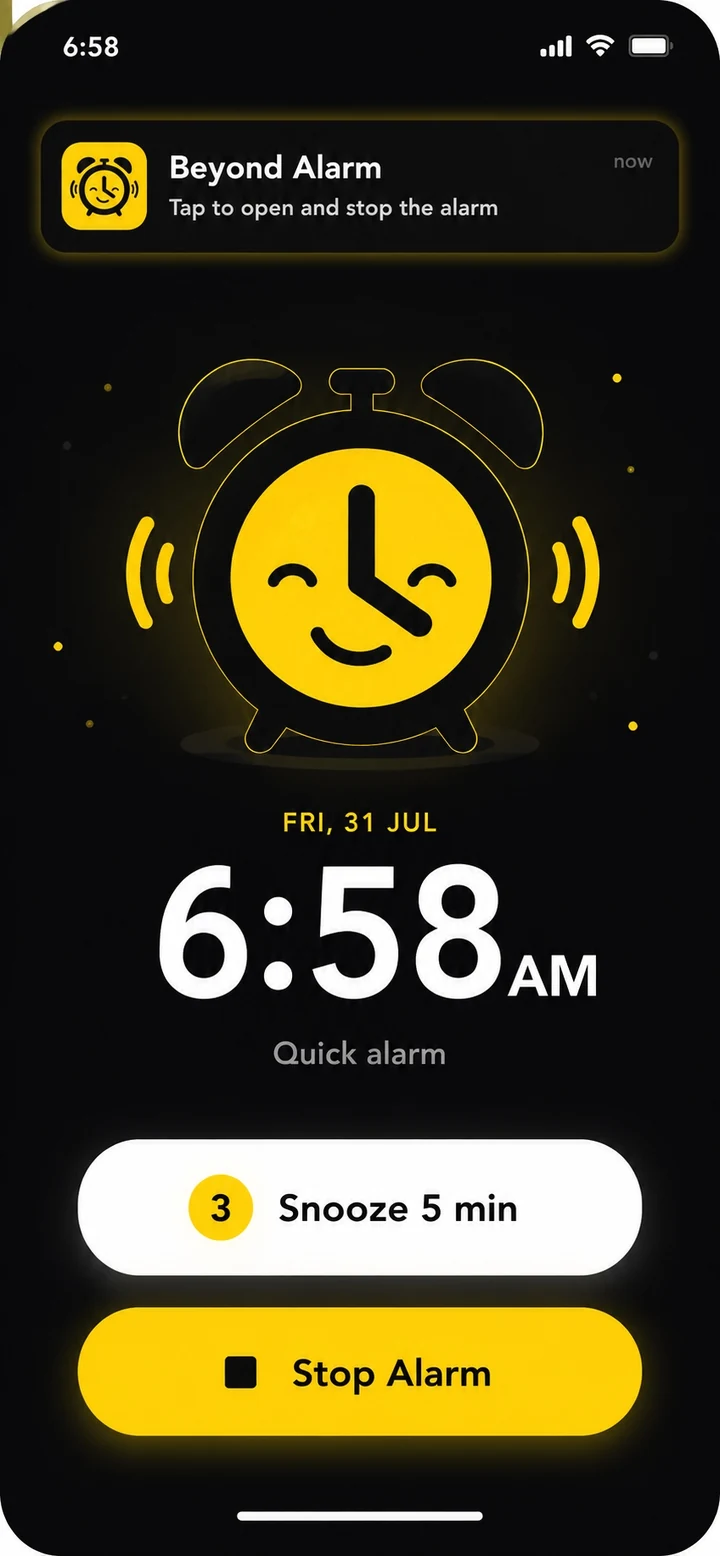
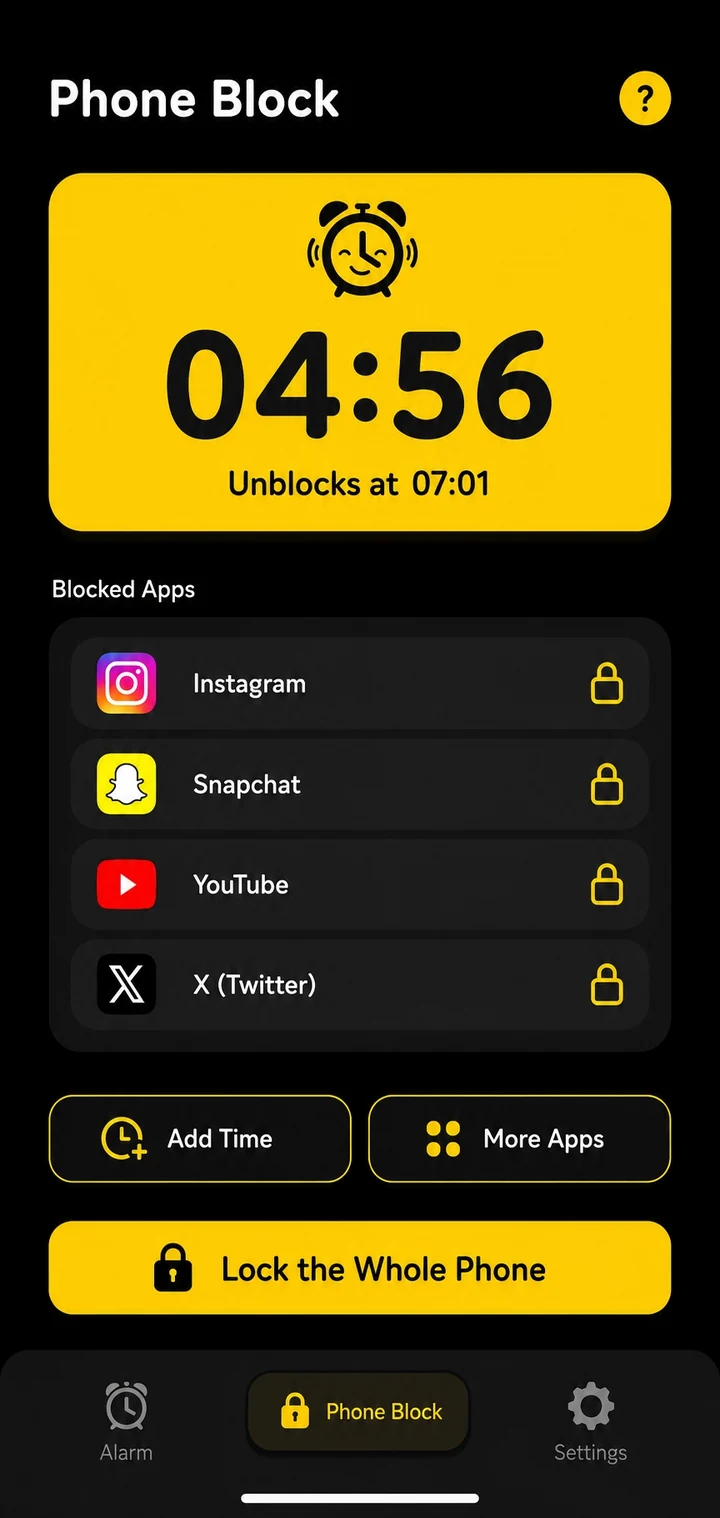
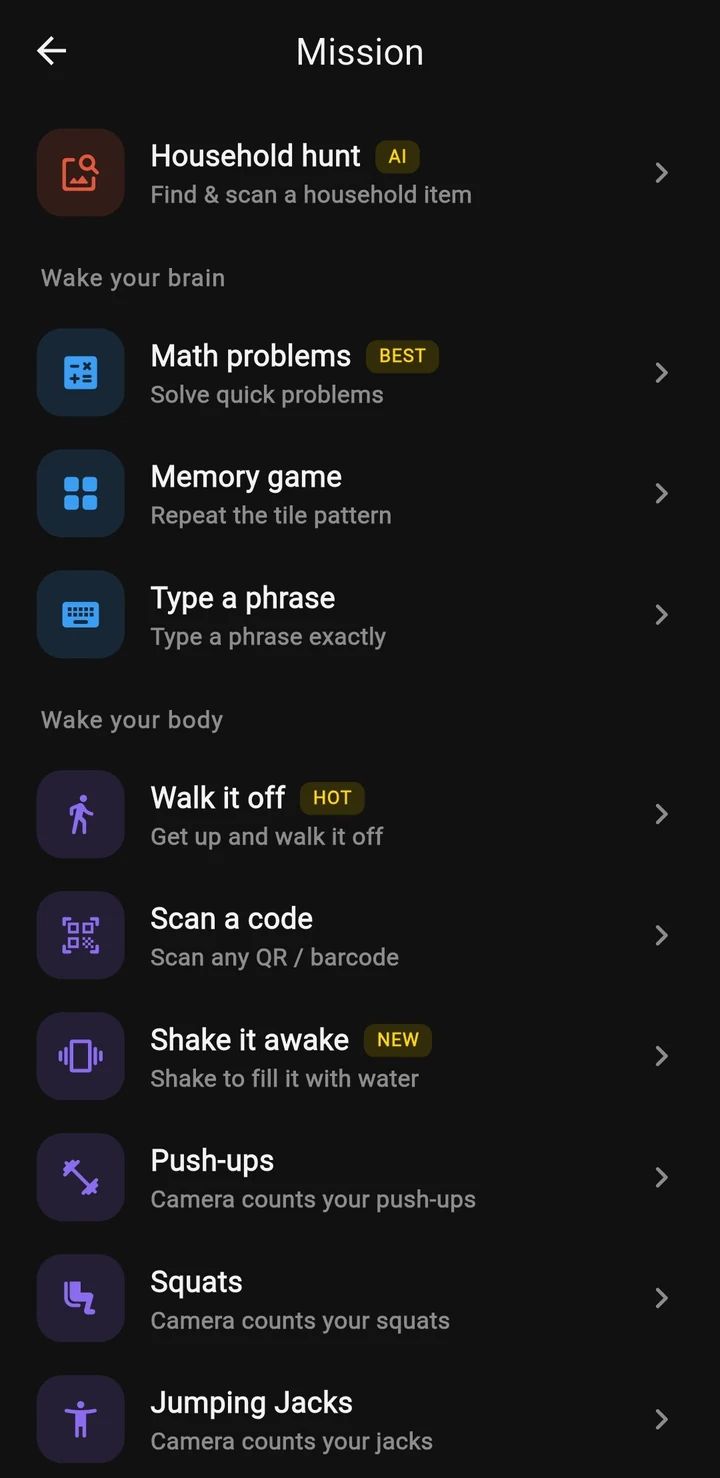
Beyond Alarm does this part for you: the alarm will not switch off until you have actually moved, and the apps you pick stay locked afterwards.


The two rules everyone repeats that the evidence doesn't support
"Get sunlight within five minutes of waking"
The five-minute figure is everywhere and it is not a biological threshold that anyone has established. What the research supports is broader and less tidy: light delivered soon after waking shifts the clock, the effective window runs to roughly the first 30 to 60 minutes, and the response is dose-dependent — one study of 39 adults produced a measurable shift from about 12 minutes at 10,000 lux, with longer exposures giving more effect at diminishing returns.
So: soon is real. Five minutes exactly is a number that got repeated until it sounded like a finding. If you get outside at minute nine you have not missed anything.
"Delay your coffee by 90 minutes"
The mechanism is genuinely plausible — adenosine is low on waking, caffeine works by blocking adenosine receptors, so the argument is that early coffee is partly wasted. Plausible is not the same as demonstrated.
There are no studies establishing an optimal delay, and the universal 90-minute prescription is not well supported. One researcher's summary of the state of the evidence is that there is no harm in having caffeine first thing.
I have left coffee out of the protocol entirely for that reason. If delaying it works for you, keep doing it. It is a preference, and it has been dressed up as a protocol.
Why bother saying this? Because a morning routine with two invented rules in it is a routine you will fail at for no reason, and then conclude that morning routines don't work.
What breaks it, and what to do about that
The protocol has exactly one common failure, and it is not oversleeping.
You complete minutes 0 to 5, you are up, you are awake, you are holding your phone — and twenty-five minutes disappear. Nothing in the sequence was skipped. The morning still ended short.
That gap is not a discipline problem either; it is the moment your judgement is measurably worst meeting the one object in the room that rewards you for nothing. The only fixes that hold are the ones decided in advance, the night before, by someone capable of deciding things — which is the same principle as every other line in this protocol, applied to the part after you are standing.
If your phone is also your alarm and cannot simply leave the room, that constraint changes which options are available and it is worth reading before buying a clock you will stop using in nine days.
Weigh this accordingly, since we built it: Beyond Alarm exists to automate minute 0 and minute 60 specifically. The alarm doesn't stop until you have physically moved — so getting vertical isn't a decision made during sleep inertia — and the apps you nominate stay locked for a window afterwards, set the night before. Calls and messages work throughout. Android only, and the morning lockout is part of Pro.
The honest summary
Sleep inertia averages about sixteen minutes and runs much longer if you are anxious or short of sleep. Light works, soon matters, and the five-minute rule is invented. Coffee timing is a preference with no evidence behind the number.
Everything else is arrangement: get vertical, leave the room, get light, and make sure the decisions that matter were made the night before by someone awake enough to make them.
If you want the ranked version of what to do once you're up — including what has no evidence behind it at all — that's the companion piece.
And if the decision that keeps going wrong is the very first one — get vertical, leave the room — that is the job of the alarm rather than of you, and the apps that take it are compared here.
Common questions
How long does sleep inertia actually last?
In the largest study to date — 2,355 adults — the average was 15.8 minutes, with a wide spread. Anxiety was the strongest thing that lengthened it, adding over fourteen minutes. Short sleep and an evening chronotype also made it worse. So the honest answer is "about a quarter of an hour for most people, considerably longer for some".
Do I really need to get sunlight within five minutes of waking?
No. The five-minute rule is repeated everywhere and is not a proven biological threshold. What the research supports is that light works best delivered soon after you open your eyes, with the effective window running to roughly the first 30 to 60 minutes, and that outdoor light is vastly brighter than indoor light. Soon matters. Five minutes exactly does not.
Should I wait 90 minutes before coffee?
The mechanism behind that advice is plausible, but there are no studies establishing an optimal delay, and the universal 90-minute prescription is not well supported. If drinking coffee immediately works for you, the evidence does not say you are doing harm. Treat it as a preference, not a protocol.
What if I only have twenty minutes before I have to leave?
Do minutes 0, 2 and 5 and skip the rest. Getting upright, out of the room and into light is where nearly all of the effect lives. Everything after that is refinement, and a protocol you can only run on a good day is not a protocol.
Does this work if I slept badly?
It matters more, not less. Sleep inertia is longer after short sleep, which is exactly when the first decision of the day is at its worst — and it is why the steps are timed and physical rather than left to how you feel at the time.
We build Beyond Alarm, an Android alarm app that will not switch off until you have actually moved. Most of what we write here comes out of problems we hit building it.
Beyond Alarm
An alarm that keeps ringing until you’ve actually moved — then blocks the apps that pull you back to bed. Free to start, no account.
Keep reading
Scheduled app blocks on Android: weekdays, overnight windows and one schedule at a time
A recurring Android app block that runs on the clock, not your alarm. How Schedules work, weekday and overnight windows, and why the app keeps you to one at a time.
How to block social media after your alarm on Android
Keep Instagram, YouTube and other distractions closed after waking. Compare scheduled Focus mode with an alarm-triggered block, then set up your morning.