
Revenge bedtime procrastination — why you stay up scrolling when you're already tired
 Beyond Alarm16 August 2026 · 6 min read

Photo by SHVETS production on Pexels
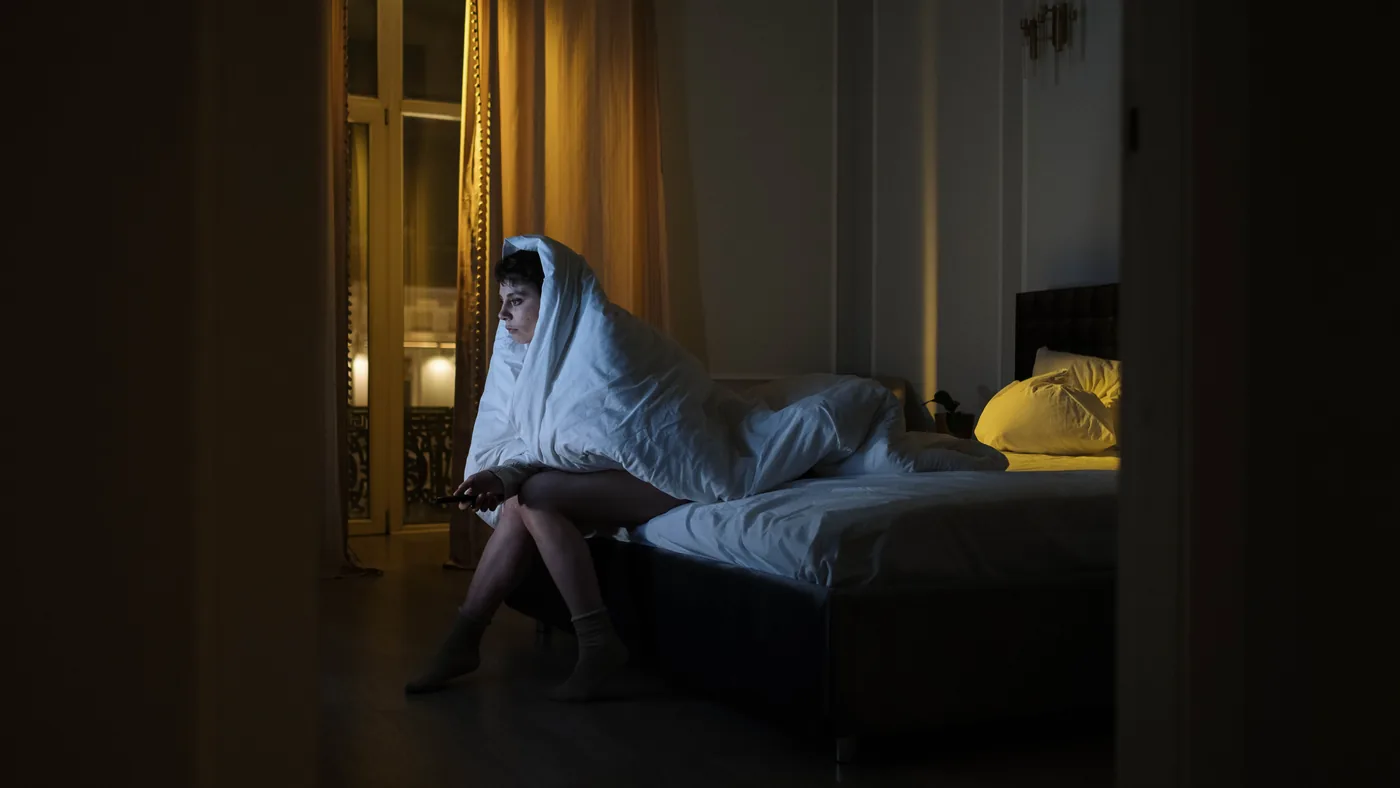
It is 1:10am. You have been tired since nine. You are not doing anything you would describe as enjoyable — you have been on the same three apps in rotation for forty minutes — and you are still not asleep.
That is not insomnia, and calling it insomnia sends you towards the wrong fixes. You are not staying up because you cannot sleep. You are staying up because the day contained no time that belonged to you, and the hour before bed is the only slot nobody else has a claim on. Which means the intervention that works is not at bedtime at all — it is earlier in the day, and that is the part almost nobody wants to hear, because it is harder than downloading something.
It has a proper name, and a useful definition
The academic term is bedtime procrastination, introduced by Floor Kroese and colleagues at Utrecht University in a 2014 paper in Frontiers in Psychology. Their definition is the most useful sentence in this whole area:
Failing to go to bed at the intended time, while no external circumstances prevent a person from doing so.
That last clause is what makes it specific. Not a new baby. Not a night shift. Not a deadline. Nothing is stopping you — and you do it anyway.
The "revenge" prefix came later and from somewhere else entirely: a Chinese internet phrase, 報復性熬夜, that spread in English around 2020. It captures the motive the clinical term leaves out. You are getting back at a day that took everything. The lost sleep is the price, and at 1am it genuinely feels worth paying.
Why "just go to bed earlier" does nothing
Because the bedtime was never the variable.
Move lights-out from 1am to midnight without changing anything else about the day, and the overwhelming majority of people lie in bed doing exactly the same thing, one hour earlier. The behaviour follows the unmet need, and the need — some quantity of time that is not spoken for — has not been met. It has just been relocated.
This is why the standard sleep hygiene list underperforms here. Consistent schedule, cool dark room, no caffeine after two: all sensible, all aimed at someone who is trying to sleep and failing. You are not trying. That is a different problem, and the advice does not intersect with it.
The evidence, and what it does and doesn't say
Being precise here matters, because this topic attracts more confident writing than the research supports.
The association is real and replicated. A 2026 systematic review and meta-analysis in Frontiers in Psychology examined bedtime procrastination and psychological distress in university students and found the two reliably travel together. Note the population: students. That is who most of this literature has actually studied.
The phone's role has support, with caveats. A 2024 mediation analysis in the Eurasian Journal of Medicine by Bozkurt, Demirdöğen and Akıncı found bedtime procrastination partly explains how problematic smartphone use damages sleep quality — a strong path from phone use to procrastination (β = 0.44), and a stronger one from procrastination to worse sleep (β = −0.54).
And the caveat most articles quoting that study will skip: it looked at 245 adolescents aged 13 to 18 in a single Turkish city. Small, young, one site. Directionally useful, not proof about a 34-year-old with a job.
What the research does not establish is the revenge part. The motive — that this is compensation for an over-claimed day — is a widely shared description that matches most people's experience. It is not, as far as I can find, a well-tested causal claim. I think it is right. I am not going to dress an intuition up as a finding.
Procrastination, or something that needs a doctor?
Worth being honest about, because the two get conflated and only one of them is an app-shaped problem.
| Bedtime procrastination | Insomnia | |
|---|---|---|
| In bed, lights off, trying? | No — you have not started yet | Yes, and it isn't working |
| Could you sleep if you stopped? | Almost certainly | No |
| What you feel | Reluctance to end the day | Frustration, sometimes dread |
| When it is worst | After long, over-scheduled days | Often unrelated to the day |
| What helps | Reclaiming time earlier; a defined end to the evening | Sleep hygiene, CBT-I, a clinician |
If you get into bed, turn everything off, genuinely want to sleep, and cannot — repeatedly, for more than a few weeks — that is worth raising with a doctor. Nothing on this page addresses it, and CBT-I has a strong evidence base that no app-blocking feature can substitute for.
Beyond Alarm
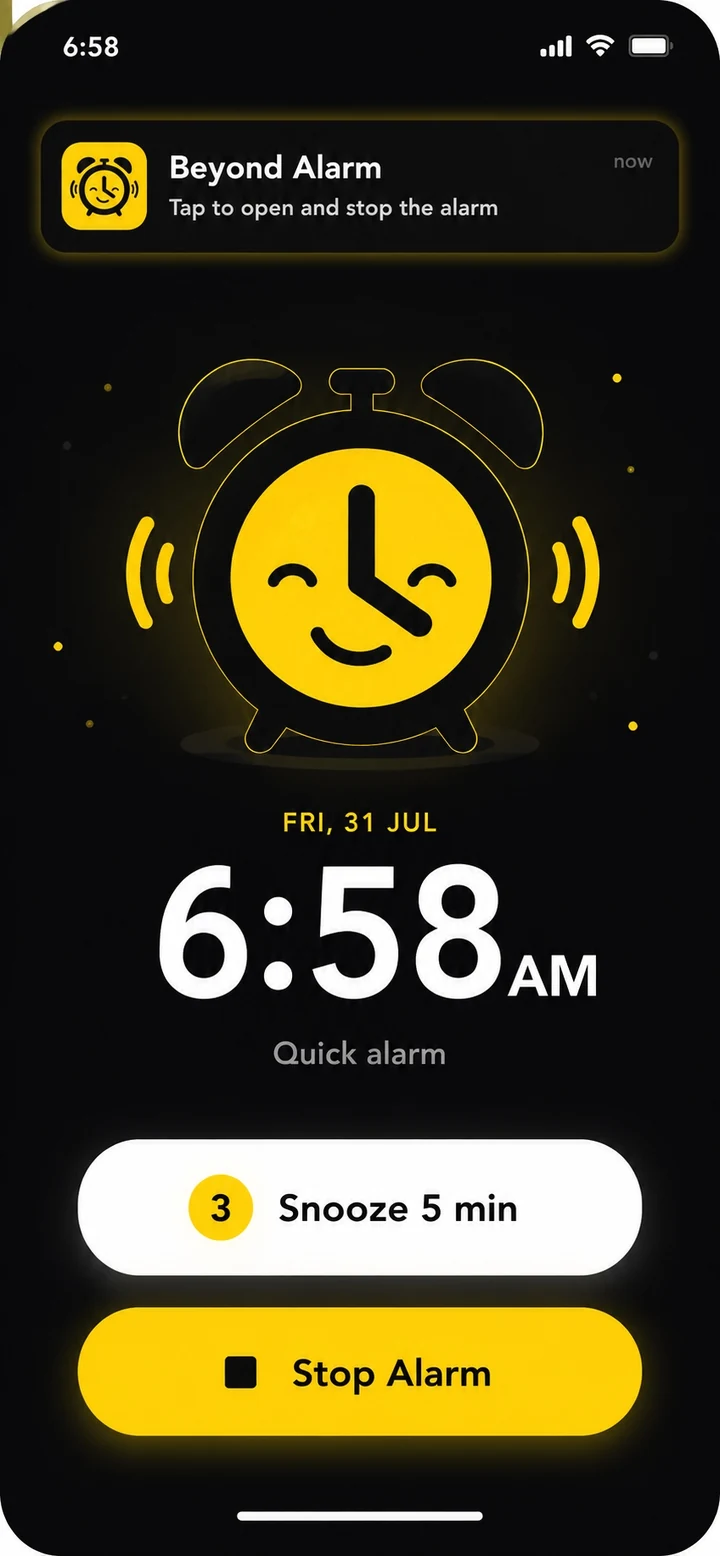
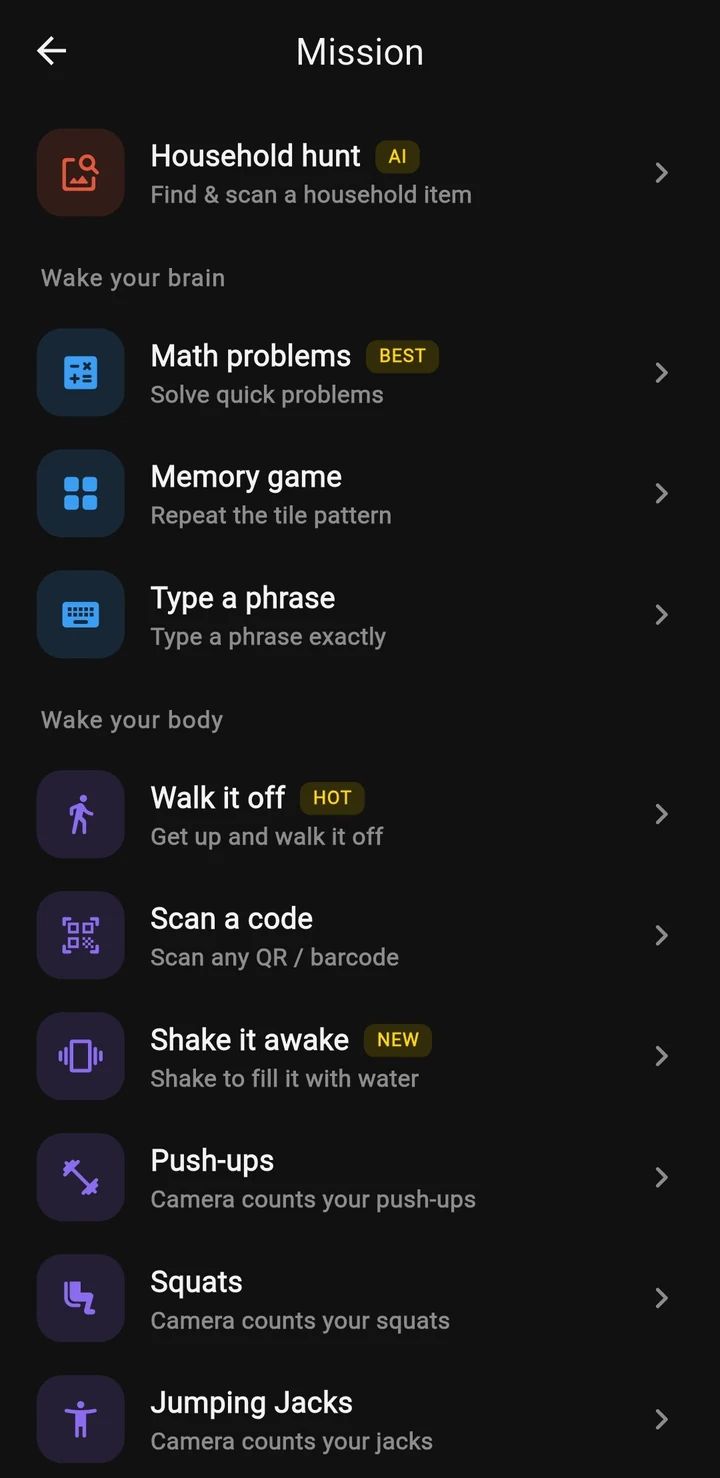
Beyond Alarm does this part for you: the alarm will not switch off until you have actually moved, and the apps you pick stay locked afterwards.


What actually moves it
In rough order of how much difference they make:
1. Put unclaimed time somewhere else in the day. Twenty genuinely uncommitted minutes at 6pm reduces the pull at midnight more than any bedtime rule. This is the actual fix and it is a scheduling problem, not a sleep one.
2. Give the evening a defined end that is not falling asleep. The loop persists partly because there is no marker — nothing says this part is over. An arbitrary one works: last episode, last chapter, kitchen light off.
3. Change where the phone charges. Not a moral act, a geographic one. It costs nothing and it removes the mechanism rather than asking you to overpower it.
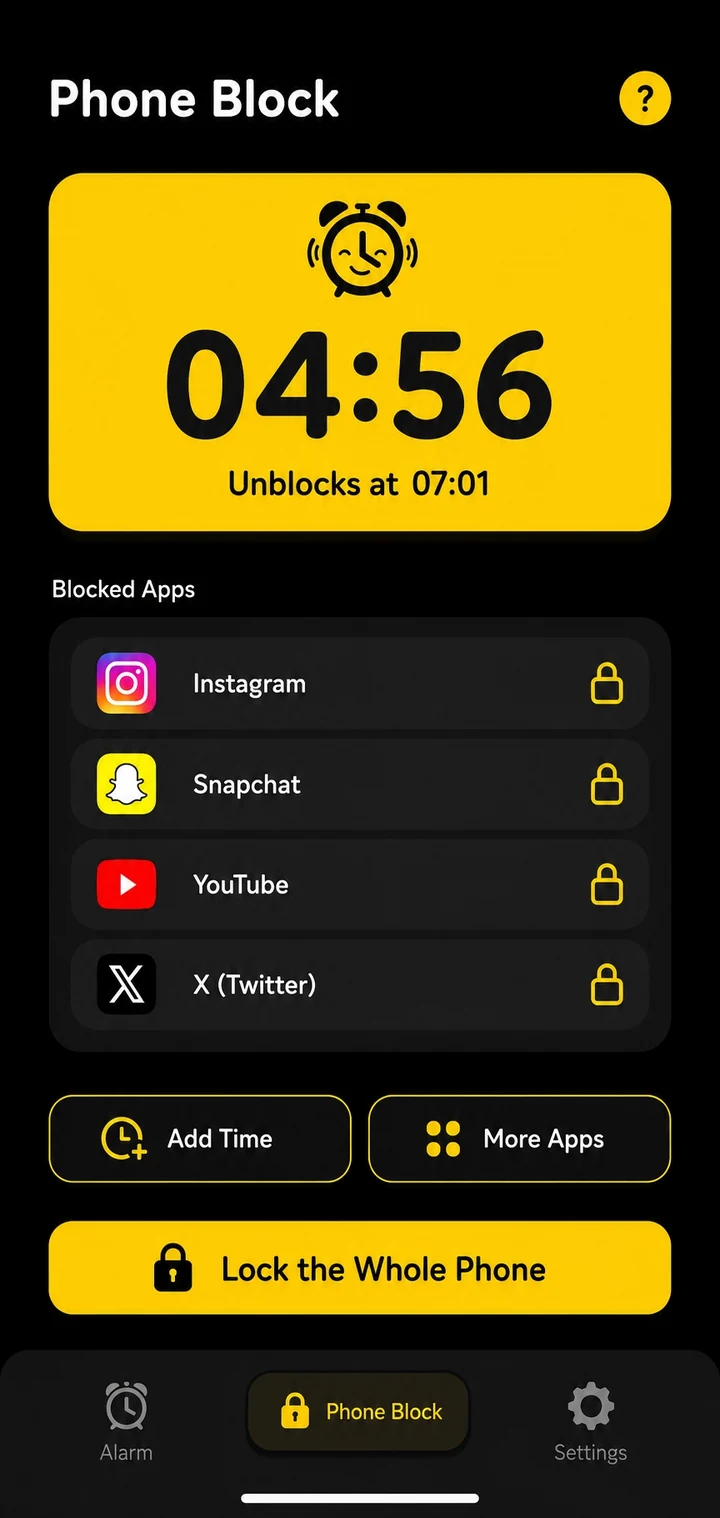
4. Then, if you like, a block. Deliberately fourth. A nightly block you control is easy to wait out, and one you set while already deep in the loop rarely survives. It is a reinforcement of a decision, not a replacement for making one.
Beyond Alarm is mostly aimed at the other end of this — the morning — so I will be straight about the fit. If your nights run long because the evening has no end, the app is not your first move; a bedtime is. Where it does help is breaking the cycle from the other side: a wake-up that cannot be dismissed from bed makes the 1am decision more expensive, because you know exactly what 6am now costs. Android only.

The loop it feeds
Late night, hard morning, exhausted day, and an even stronger case at 1am that you are owed some time. Every part of that reinforces the next.
Which is why attacking it at only one end tends to fail. A brutal alarm on four hours of sleep is not discipline, it is sleep inertia at full strength, and you will lose. Equally, a perfect bedtime that dissolves the first morning you wake up and lose an hour to the phone that is sitting next to your head does not hold either.
Pick the end that is currently costing you more, change one thing, and give it a fortnight before judging it. If the end you pick is the night, the tools that put a wall in front of it are compared here, including the ones that do not work. The version of this that works is boring, and it is mostly about the day rather than the night.
Common questions
What is the difference between revenge bedtime procrastination and insomnia?
Procrastination is delaying going to bed when nothing is stopping you — you could sleep, and you choose not to yet. Insomnia is being unable to sleep once you are in bed and trying. They feel similar at 1am and need completely different responses. If you get into bed, turn everything off, genuinely want to sleep and cannot, that is not procrastination and an app is not the answer.
Why do I do this even when I'm exhausted?
Because tiredness is not what is driving the behaviour. The driver is that the day contained no time that belonged to you, and the hour before sleep is the only unguarded slot left. Being tired makes it harder to stop, but it is not the reason you started.
Does going to bed earlier actually help?
Not on its own, because the problem is not the bedtime. If you move the bedtime and change nothing about the day, you generally lie in bed doing the same thing an hour earlier. What helps is putting genuine unclaimed time somewhere in the day that is not the hour before sleep.
Is it worth using an app to block myself at night?
It can help, but it is second-order. A block that lifts at midnight is easy to wait out, and a block you set while already in the loop tends not to survive. The first-order changes are where the phone charges and whether the evening has a defined end. Try those before paying for anything.
We build Beyond Alarm, an Android alarm app that will not switch off until you have actually moved. Most of what we write here comes out of problems we hit building it.
Beyond Alarm
An alarm that keeps ringing until you’ve actually moved — then blocks the apps that pull you back to bed. Free to start, no account.
Keep reading

Alarm app with missions — how the category works, and which mission actually fits you
A mission-based alarm forces a task instead of a tap. Here's why that mechanism works, the mission types across the category, and how to pick one that can't be beaten from bed.

Best free alarm app for heavy sleepers
A loud alarm isn't the hard part for a heavy sleeper — staying awake once it's off is. What actually works, free, and why a mission has to be hard to fake from bed to count.