
Every alarm mission, ranked by how hard it is to fake half-asleep
 Beyond Alarm6 September 2026 · 7 min read
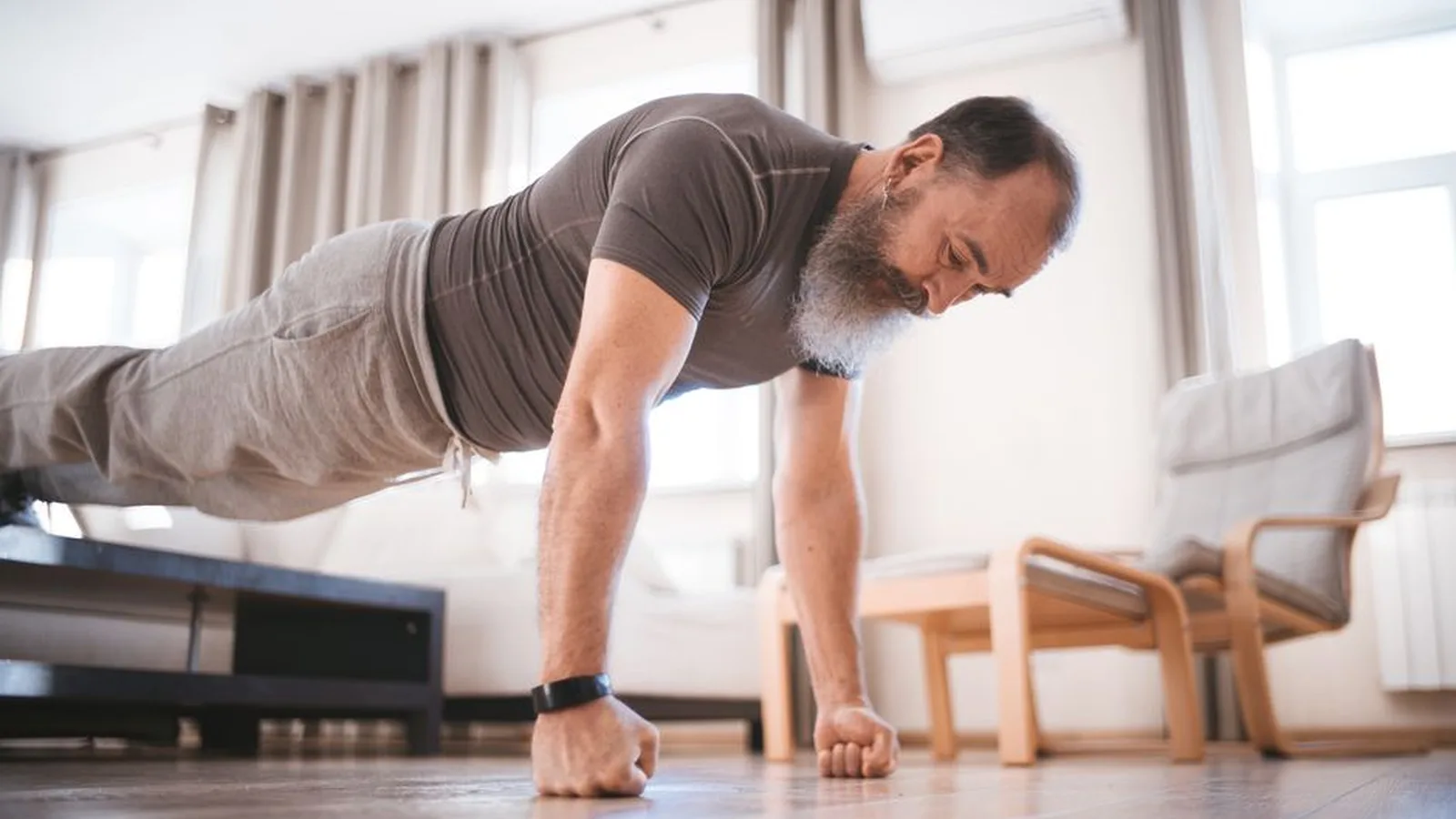
Photo by Mikhail Nilov on Pexels
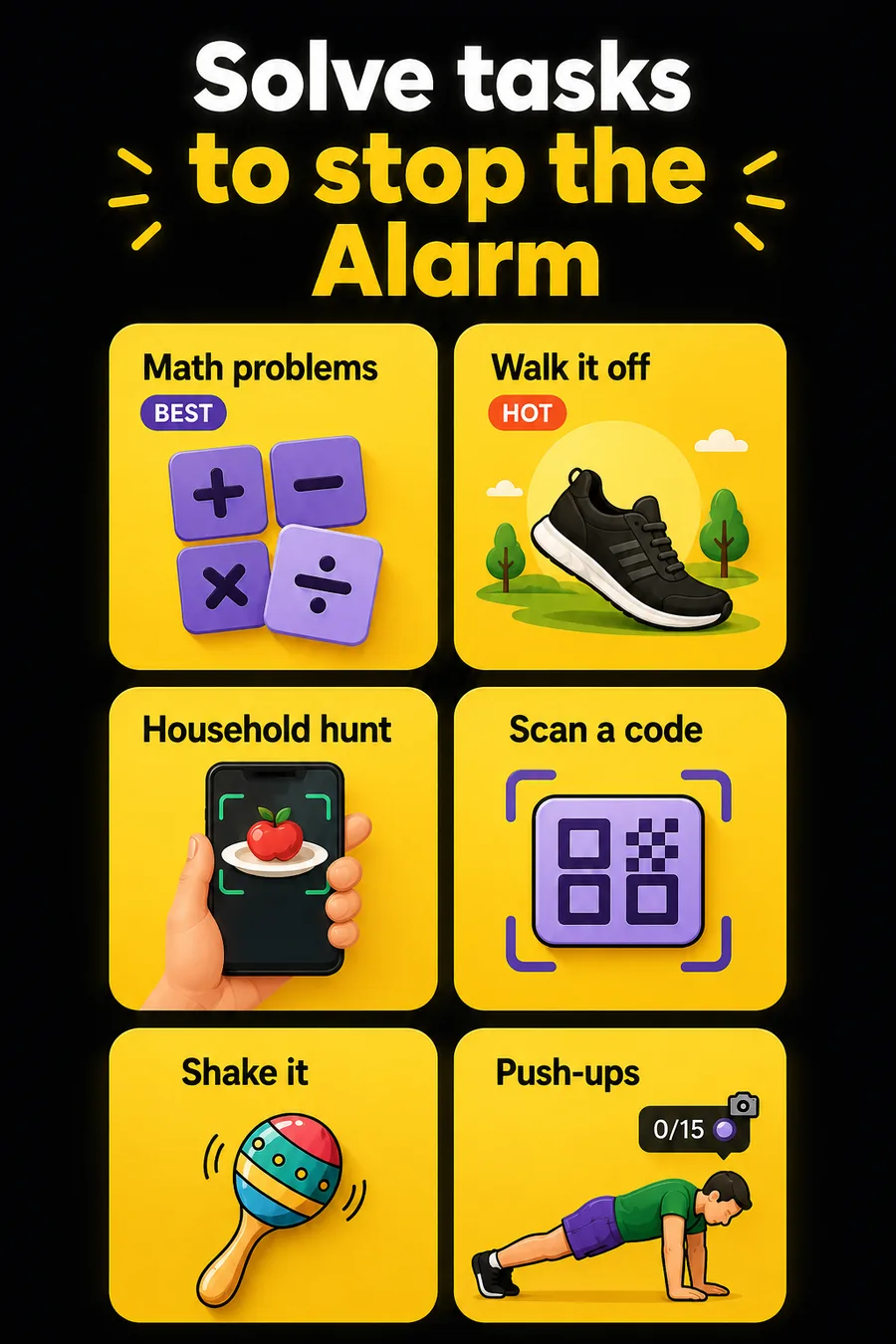
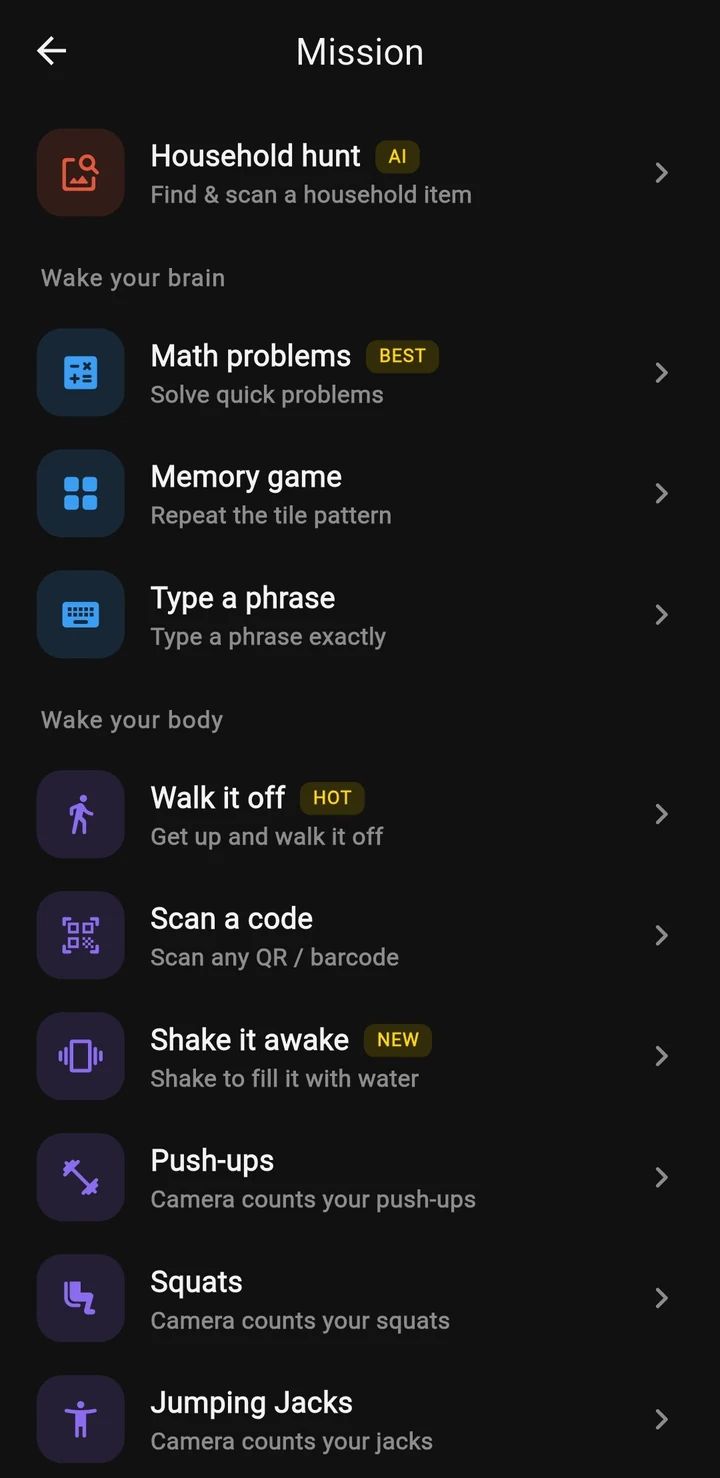
Eleven missions, one question each has to answer: does finishing it actually require you to be awake, or just conscious enough to tap a button?
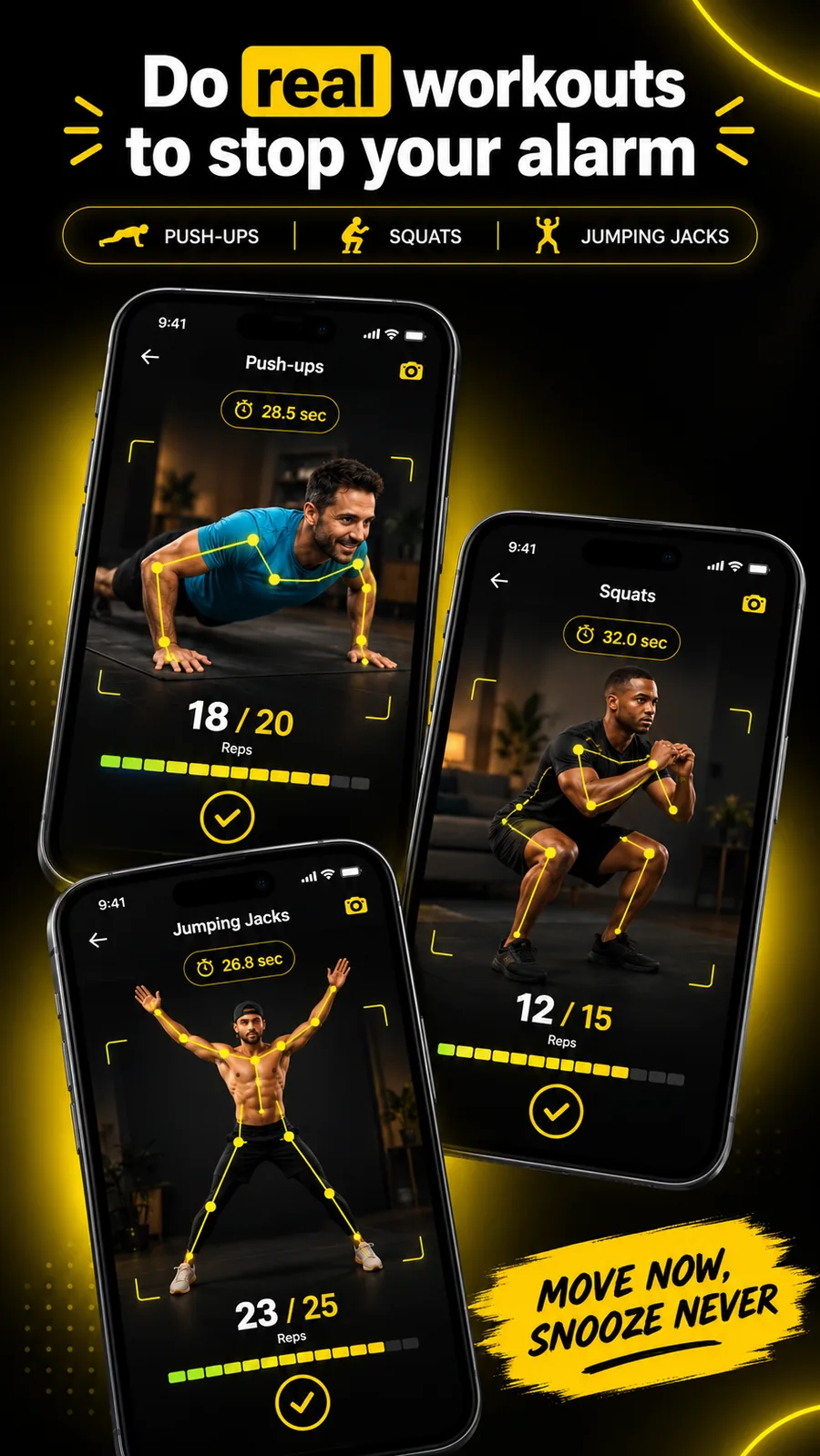
The short answer: the three missions a camera watches — push-ups, squats, jumping jacks — are the only ones that cannot be done lying down, which makes them the hardest to fake and the most reliable at getting you upright. Household hunt and Walk it off are close behind, because both force you out of the bed even if they don't check your form. Maths, memory and typing sit at the bottom — they wake your brain, and a brain running on autopilot can still tap through simple arithmetic without properly waking up.
What "hard to fake" actually means here
It is not about difficulty. A hard maths problem and an easy one are both things you can solve from a horizontal position with your eyes half shut. The axis that matters for an alarm is narrower than difficulty: can this be finished without leaving the bed, and without anyone watching to check it was done properly?
That splits the eleven missions into three tiers, and the split lines up with something real about waking up. Sleep inertia — the grogginess and impaired decision-making for the first stretch after you wake — is worst in the minutes immediately after an alarm goes off, and a 2006 study in JAMA found addition-test performance right after waking was measurably worse than after a full night of sleep deprivation, recovering over the following 15 to 30 minutes (Wertz et al., 2006). A mission you can finish without your brain properly coming online does not fight that window. One that requires standing, moving and being watched does.
The ranking
| Rank | Mission | What verifies it | Can you do it lying down? |
|---|---|---|---|
| 1 | Push-ups | Camera, pose detection | No |
| 1 | Squats | Camera, pose detection | No |
| 1 | Jumping jacks | Camera, pose detection | No |
| 4 | Household hunt | Camera, object recognition | No — has to be found elsewhere |
| 5 | Walk it off | Phone's step counter | No |
| 6 | Photo mission | Camera, a photo taken | Not really — has to be your "morning spot" |
| 7 | Scan a code | Camera, barcode/QR read | Only if the code is within reach |
| 8 | Shake it awake | Phone's motion sensor | Partially — an arm can do it from bed |
| 9 | Type a phrase | Exact text match | Yes |
| 10 | Math problems | Tapped or typed answer | Yes |
| 10 | Memory game | Tapped tile sequence | Yes |
Push-ups, squats and jumping jacks share the top rank rather than being ordered against each other, because the thing that puts them there — a camera confirming a real body actually moved through the exercise — is identical across all three. We wrote separately about how that confirmation actually works, including a bug we shipped and fixed: a pose detector that cannot see you clearly returns a low-confidence guess instead of nothing, and a counter that doesn't check the confidence score can be satisfied by standing in front of the phone doing nothing at all. The three checks that close that gap — a confidence floor, a posture check, and a requirement that the tracked joint actually travelled through a real range of motion — are what make "the camera watches" mean something.
Why the middle tier is still worth using
Household hunt, Walk it off, the photo mission and scanning a code all share one property the top tier doesn't strictly need: they get you out of the room, even without a camera checking your form.
Walk it off is verified by the phone's own step counter, so short of leaving the phone on a table and shaking it by hand — which the step counter's own motion signature makes harder to fake than it sounds — the only way to clear it is to actually walk. Household hunt asks for a specific object found somewhere else in the house, which means the bed is no longer where the mission happens. Scanning a code works the same way if the code lives on something in the kitchen or bathroom rather than beside the bed.
The photo mission is the softest of this group: it asks for a picture of "your morning spot," which is a real camera action but not one tied to a specific location the way the hunt is.
Where the cognitive missions actually help
Maths, memory and typing sit at the bottom of this list for getting you out of bed, and that is a real limitation, not an oversight — none of them checks where you are or whether you moved. What they do instead is force a specific kind of attention a swipe-to-dismiss never asks for: reading, remembering a short sequence, or typing an exact phrase without a typo, none of which a sleeping brain can do reliably.
That is a genuinely different failure mode from the physical missions, and it's why they exist as their own category rather than a weaker version of the same thing. If the goal is specifically not going back to sleep rather than getting out of bed, a cognitive mission is doing real work — the same argument that makes a scheduled block worse than a mission-gated one: a task with no clock on it only ends when it is actually finished.
They are also the fallback for every other mission on this list. Fail a push-up mission enough times and it steps down to maths; fail maths and it steps down to memory. The chain always ends somewhere achievable, which is the deliberate trade-off against a mission that can lock someone out entirely because their phone's camera cannot see them in a dark room.
Beyond Alarm
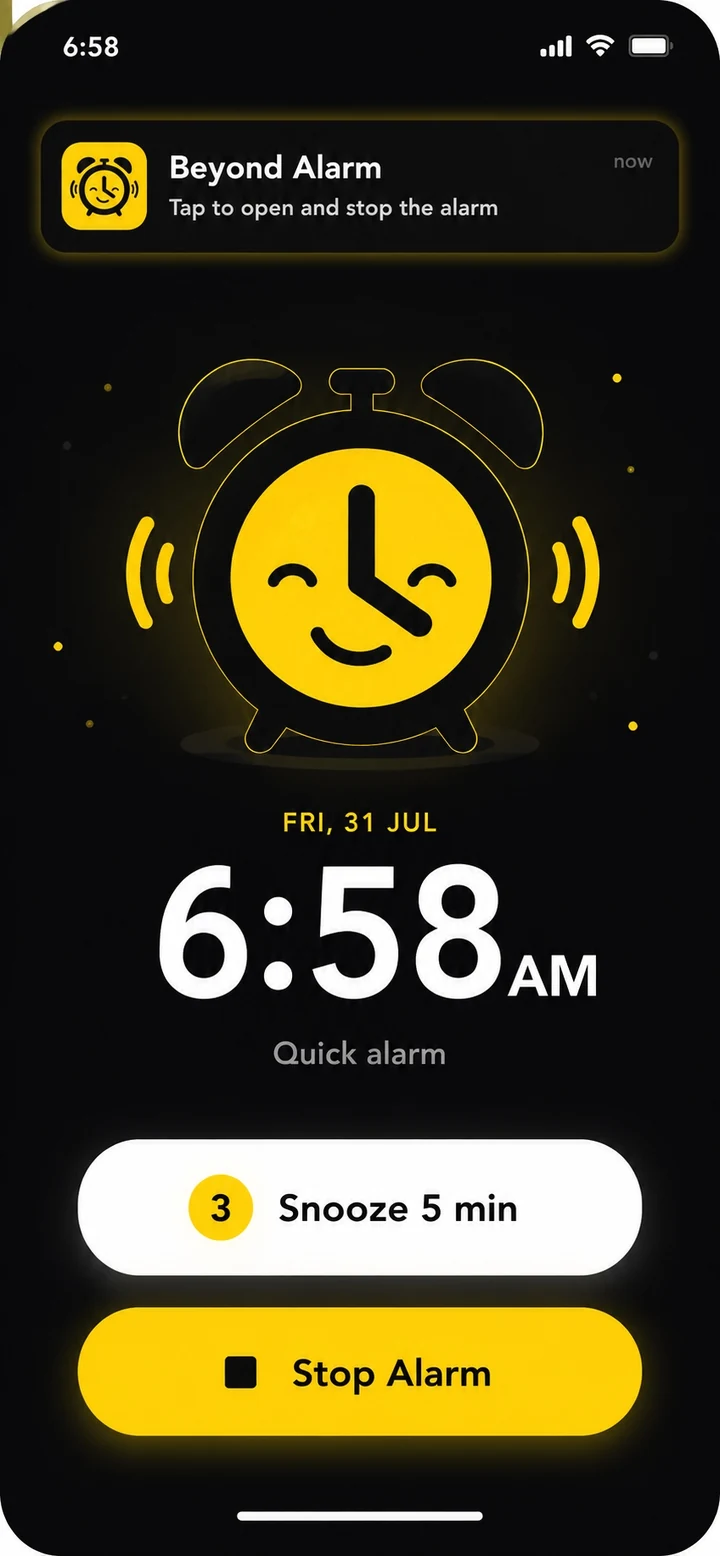
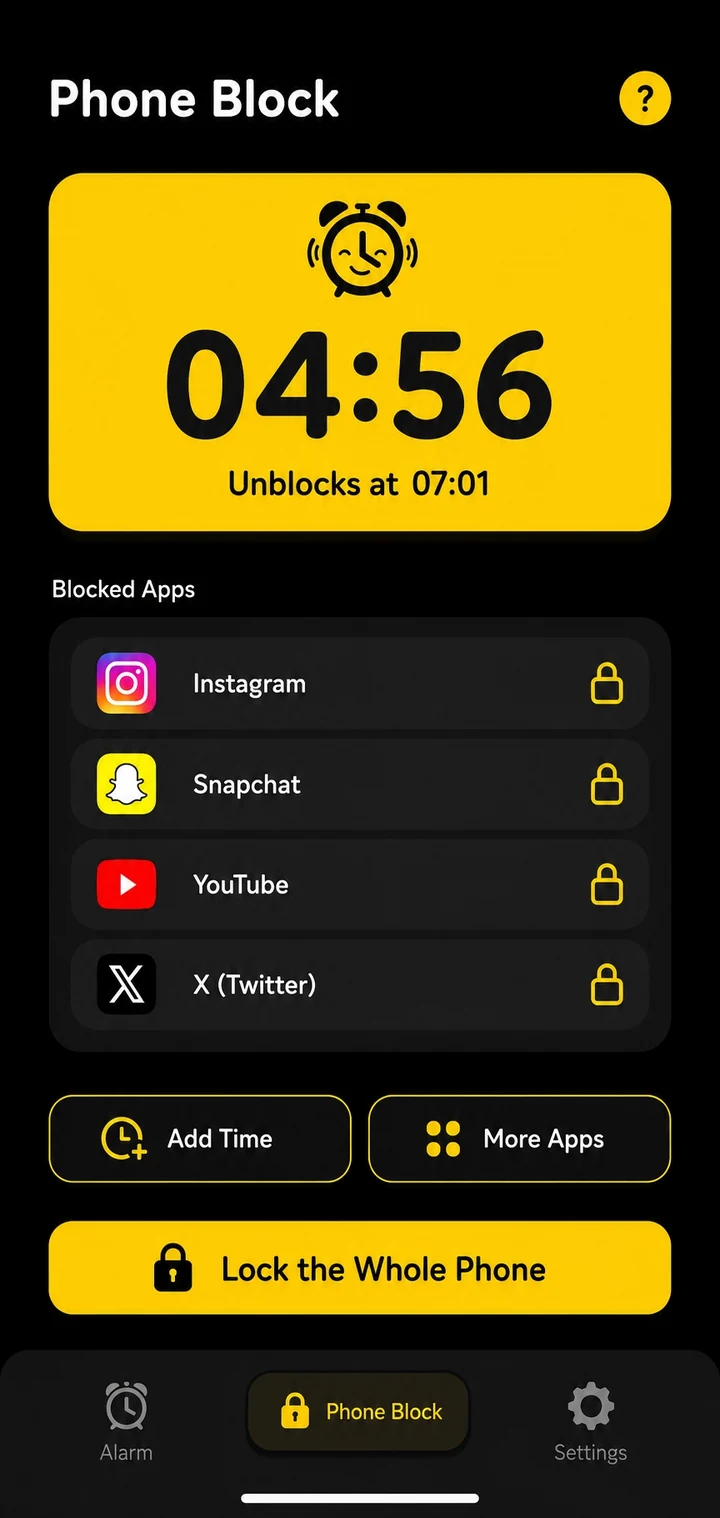
Beyond Alarm does this part for you: the alarm will not switch off until you have actually moved, and the apps you pick stay locked afterwards.


If you're choosing missions, not just an app
All eleven of these are free to use now — the three camera missions used to sit behind Beyond Alarm's Pro tier and don't any more, since 5 September 2026. If you are still comparing which alarm app to actually install, the honest version of this list is: pick a mission from the top two tiers if the problem is getting out of bed, and one from the bottom tier only if the problem is falling back asleep once you're already up — swiping off a five-second maths problem and rolling over is a real thing that happens, and it's the same failure a scheduled app block can't catch either.
FAQ
What's the single hardest alarm mission to dismiss without properly waking up?
Push-ups, squats and jumping jacks — the three the camera watches. They fail the other ten missions here in one specific way: you cannot do them lying down, and the pose detector checks that you actually moved through the exercise rather than just holding a position.
Are all eleven missions free now?
Yes. The push-up, squat and jumping-jack missions used to sit behind Beyond Alarm's Pro tier; that tier is gone as of 5 September 2026, so all eleven are free on install.
Can a maths or memory mission actually stop you turning the alarm off in your sleep?
Less reliably than a physical one. Both ask something of your brain, not your body, and a brain running on autopilot can tap through simple arithmetic or a short tile sequence without ever becoming properly conscious. They're a real step up from a swipe-to-dismiss, just not the top of this list.
Which mission should I pick if I don't want the camera involved at all?
Walk it off — it's verified by the phone's own step counter, not a camera, and it still requires you to be upright and moving. Household hunt and Scan a code also skip the camera as an exercise check, though both still open it to find or verify an object.
Does the camera actually stop people from faking the rep count?
Now, yes — but it's worth knowing it wasn't always airtight. We found and fixed a real gap where standing still in frame could be counted as reps, because the pose detector returns a guess rather than nothing when it can't see a movement clearly. Three checks now close it: a confidence floor, a posture check and a minimum-travel requirement.
Can I stack more than one mission on a single alarm?
Yes, up to five, in any order, and each one can fall back to an easier mission if you're struggling — a failed push-up mission drops to maths, and maths drops to memory. The chain always ends somewhere you can finish.
Sources
- Effects of Sleep Inertia on Cognition — Wertz, Ronda, Czeisler & Wright, JAMA, 2006. The addition-test comparison against a night of sleep deprivation is from this study.
- Sleep Inertia — Sleep Foundation — duration (15–60 minutes, up to a few hours) and the reaction-time and decision-making impairment described above.
- Pose detection — Google ML Kit — the landmark-confidence behaviour behind how the camera missions verify a real rep, covered in full in the rep-counter post.
Setting one of these up? There are practical guides for the push-up alarm, the photo alarm and the QR code alarm — where to put the phone, the spot or the code so they actually get you up.
Common questions
What's the single hardest alarm mission to dismiss without properly waking up?
Push-ups, squats and jumping jacks — the three the camera watches. They fail the other ten missions here in one specific way: you cannot do them lying down, and the pose detector checks that you actually moved through the exercise rather than just holding a position.
Are all eleven missions free now?
Yes. The push-up, squat and jumping-jack missions used to sit behind Beyond Alarm's Pro tier; [that tier is gone as of 5 September 2026](/blog/beyond-alarm-is-now-free), so all eleven are free on install.
Can a maths or memory mission actually stop you turning the alarm off in your sleep?
Less reliably than a physical one. Both ask something of your brain, not your body, and a brain running on autopilot can tap through simple arithmetic or a short tile sequence without ever becoming properly conscious. They're a real step up from a swipe-to-dismiss, just not the top of this list.
Which mission should I pick if I don't want the camera involved at all?
Walk it off — it's verified by the phone's own step counter, not a camera, and it still requires you to be upright and moving. Household hunt and Scan a code also skip the camera as an exercise check, though both still open it to find or verify an object.
Does the camera actually stop people from faking the rep count?
Now, yes — but it's worth knowing it wasn't always airtight. [We found and fixed a real gap](/blog/rep-counter-counts-fake-reps) where standing still in frame could be counted as reps, because the pose detector returns a guess rather than nothing when it can't see a movement clearly. Three checks now close it: a confidence floor, a posture check and a minimum-travel requirement.
Can I stack more than one mission on a single alarm?
Yes, up to five, in any order, and each one can fall back to an easier mission if you're struggling — a failed push-up mission drops to maths, and maths drops to memory. The chain always ends somewhere you can finish.
We build Beyond Alarm, an Android alarm app that will not switch off until you have actually moved. Most of what we write here comes out of problems we hit building it.
Beyond Alarm
An alarm that keeps ringing until you’ve actually moved — then blocks the apps that pull you back to bed. Free to start, no account.
Keep reading
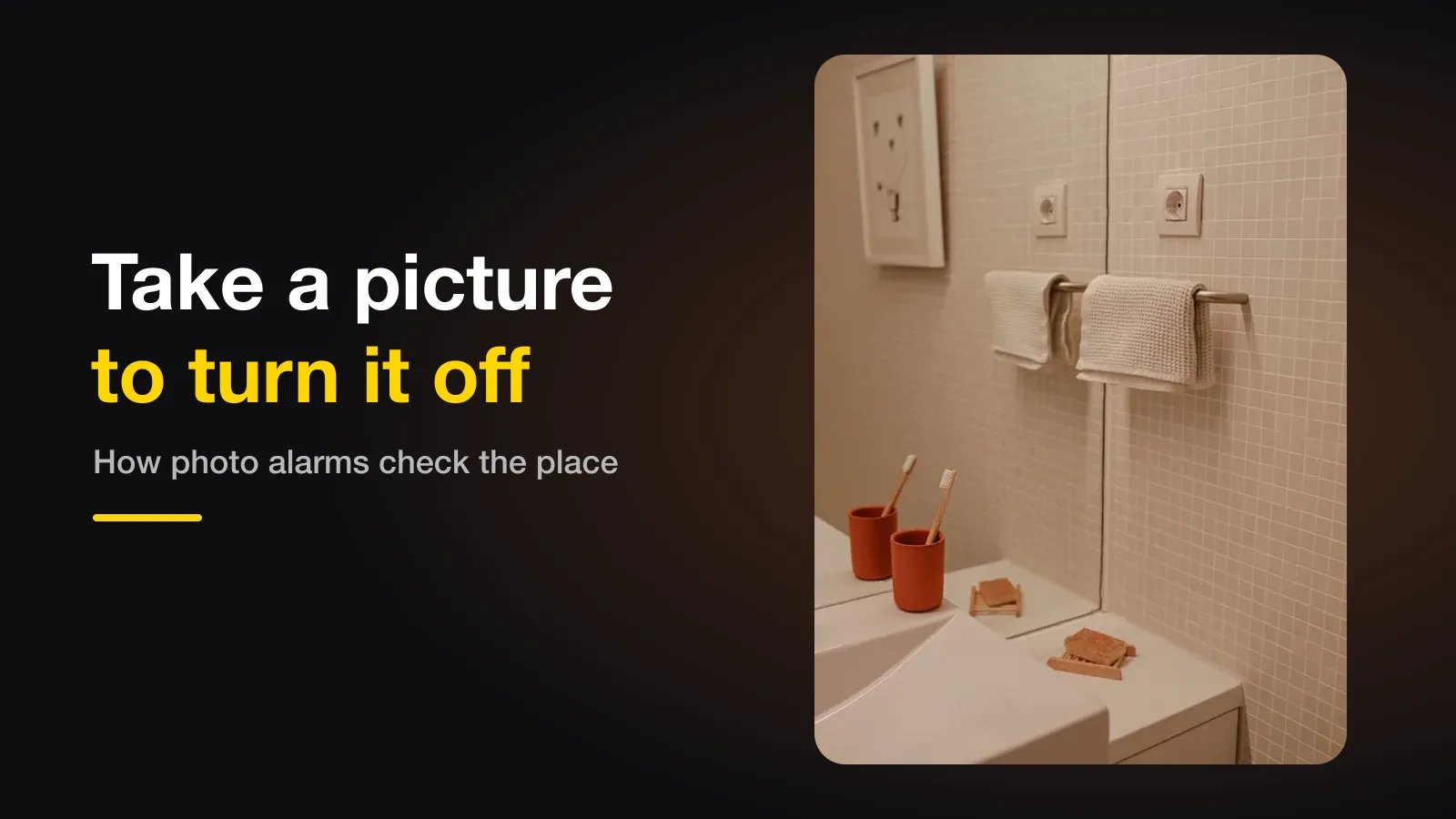
The alarm that makes you take a picture — how photo alarms decide you're in the right place
A photo alarm stops only when you photograph a place you chose the night before. How the phone decides it's the same place, which spots work best, and why a good one gets more forgiving, not less.
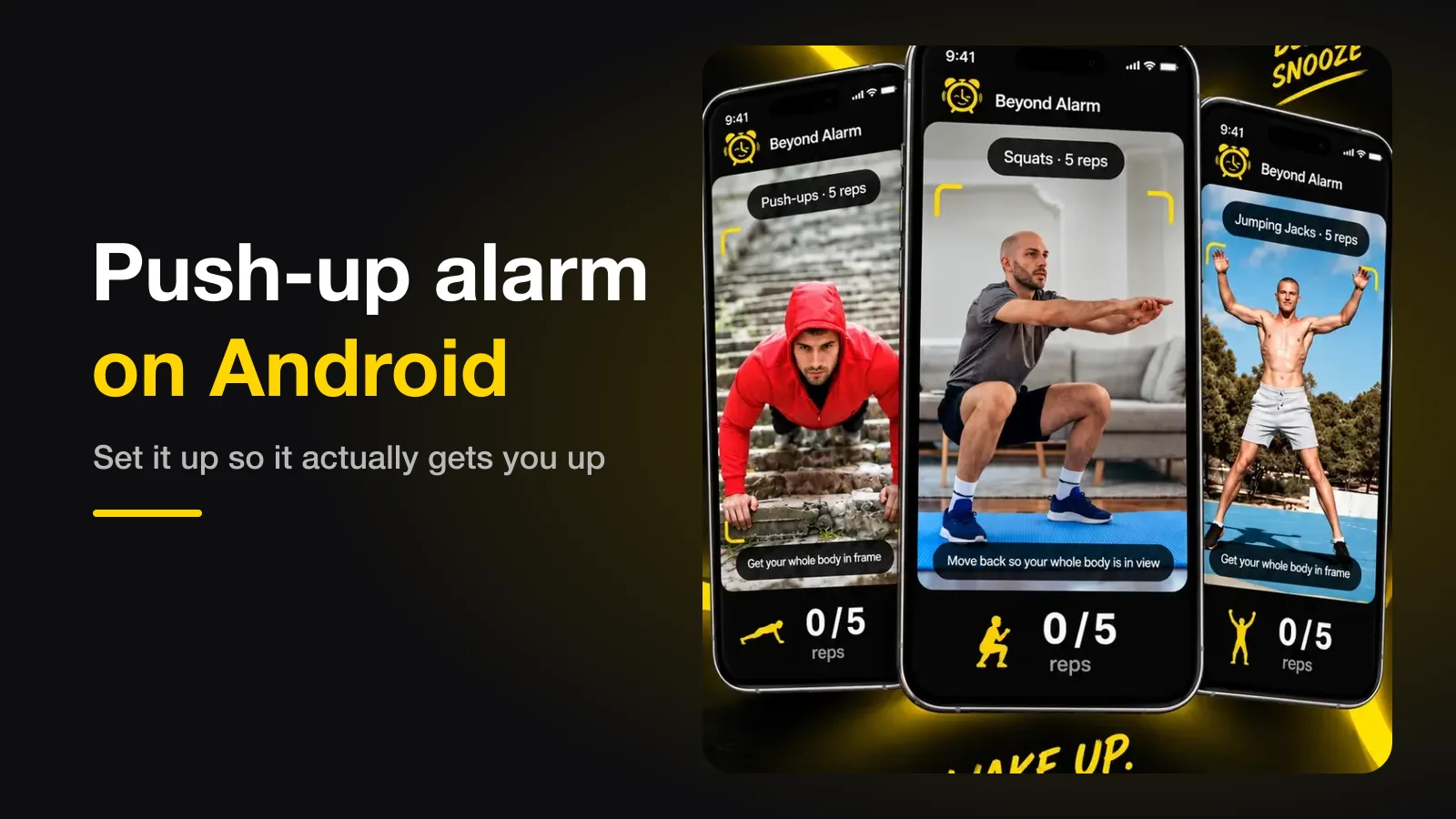
Push-up alarm on Android — how it works, and how to set it up so it actually gets you up
A push-up alarm only stops when the camera has counted your reps. How the counting works, where to put the phone, how many reps to set, and the permission setting that quietly breaks it.