
How to wake up a heavy sleeper: 9 tips that actually work
 Beyond Alarm4 November 2026 · Updated 13 November 2026 · 7 min read
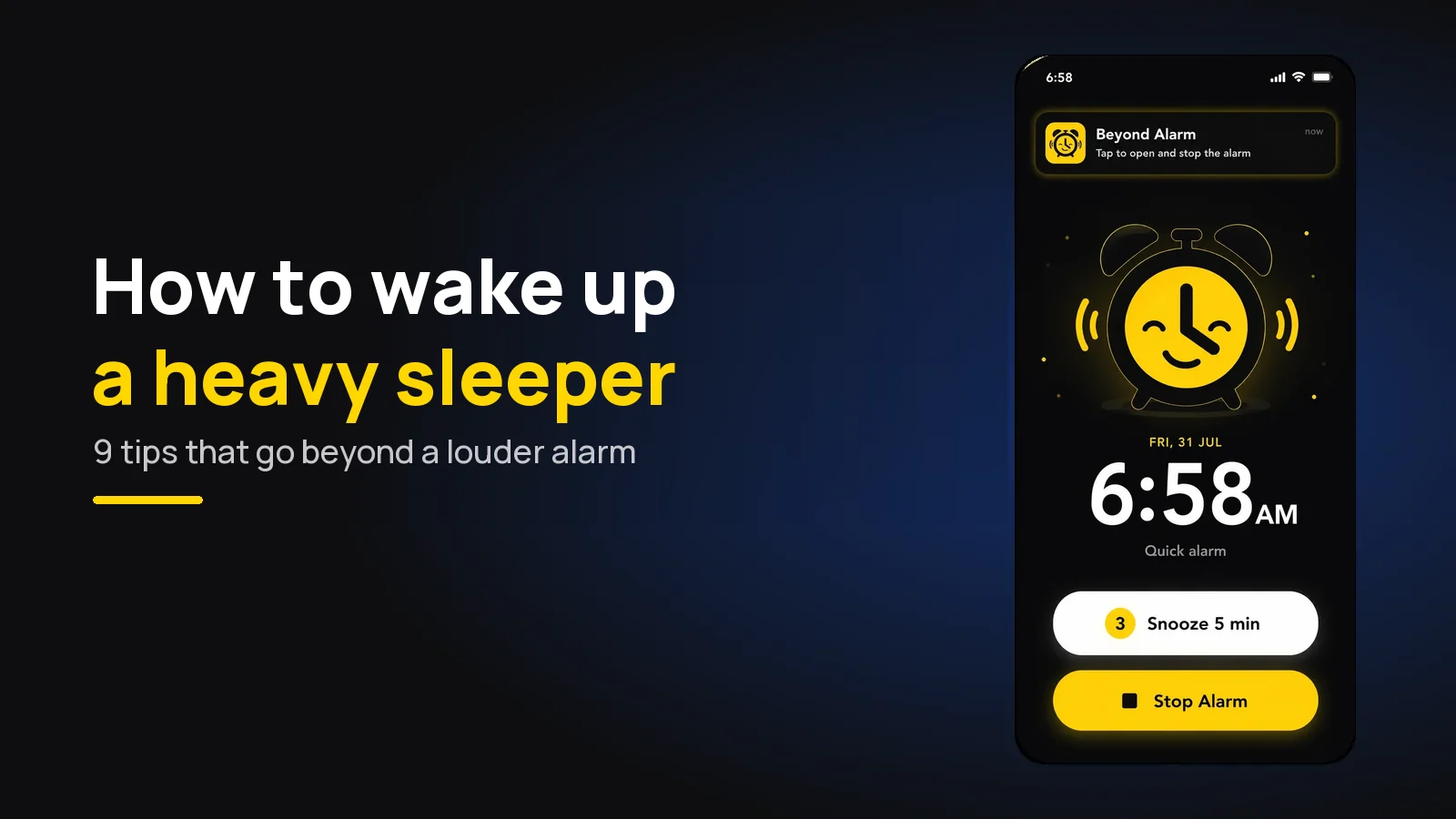
To wake up a heavy sleeper, make the alarm impossible to dismiss on reflex. Beyond Alarm does that with wake-up missions you can't finish lying down — camera-counted squats, a photo of the kitchen, a code scan in another room. Then add light, a fixed wake time and a melodic tone.
The short version:
- Use Beyond Alarm: eleven free wake-up missions, up to five chained on one alarm, so the alarm stops only once you're up and thinking.
- Heavy sleepers usually hear the alarm. The problem is the one-tap dismiss.
- Put the "off" step in another room — by mission, or by moving the phone.
- Pick a melodic tone, and let it rise rather than blast.
- Get light in the room straight away, and wake at the same time every day.
- Treat regular sleep-throughs as a sleep problem worth a GP visit.
Why some people sleep through alarms
Heavy sleeping isn't laziness. In a Harvard sleep-lab study (Dang-Vu et al., Current Biology, 2010), people who produced more sleep spindles — short bursts of brain activity — on a quiet night "went on to exhibit higher tolerance for noise" on a noisy one. Some brains are simply better at holding on to sleep.
Then there's sleep inertia: the grogginess and slowed thinking after you wake. The Sleep Foundation says it "generally lasts for 15 to 60 minutes", feels worse when you're woken from deep sleep, and is worse again after short nights.
Put the two together and you get the classic heavy-sleeper morning. The alarm gets through, a hand switches it off, and you wake an hour later with no memory of it. We've written about turning off your alarm in your sleep in detail.
The 9 tips, at a glance
| Tip | What it fixes | How |
|---|---|---|
| 1. A wake-up mission | Dismissing on reflex | Beyond Alarm: squats, photo, code scan |
| 2. Off-switch out of reach | Dismissing on reflex | Mission in another room, or phone across the room |
| 3. Cap the snoozes | Drifting back to sleep | Snooze limit, or snooze off |
| 4. A melodic, rising tone | Grogginess on waking | Melodic sound with a gentle ramp |
| 5. Light, straight away | Sleep inertia | Curtains, lamp, daylight |
| 6. The same wake time daily | Body clock out of step | Weekends too |
| 7. Enough sleep the night before | Deeper, harder-to-break sleep | Bedtime that fits your alarm |
| 8. A reason to stay up | Going back to bed | Lock the apps that pull you back |
| 9. Know when it's medical | Sleep-throughs every week | See a GP |
1. Give the alarm a task you can't do in bed
This is the one that changes things. If stopping the alarm needs you upright, moving and thinking, you're awake by the time it's quiet — the mission does the waking, not the noise.
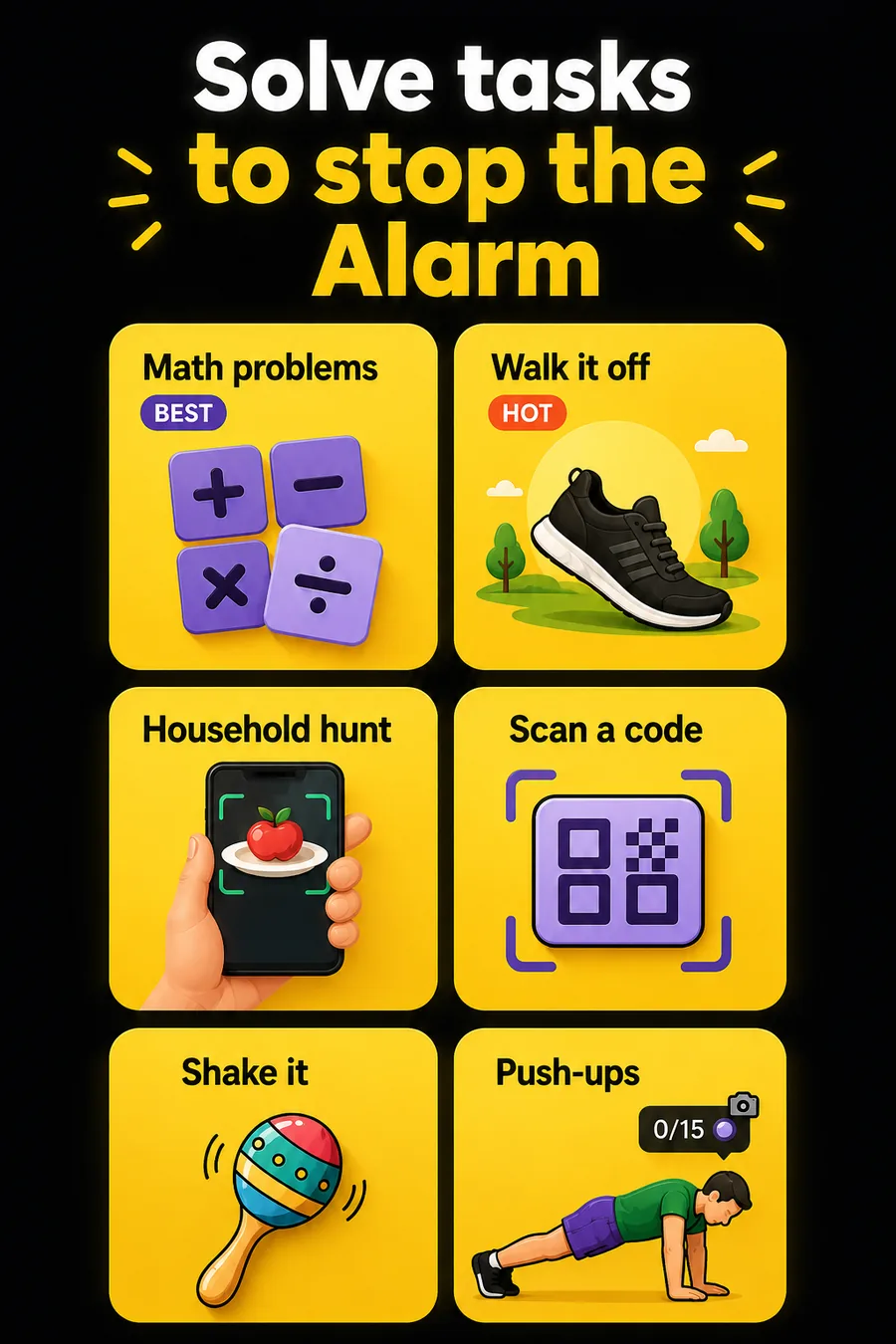
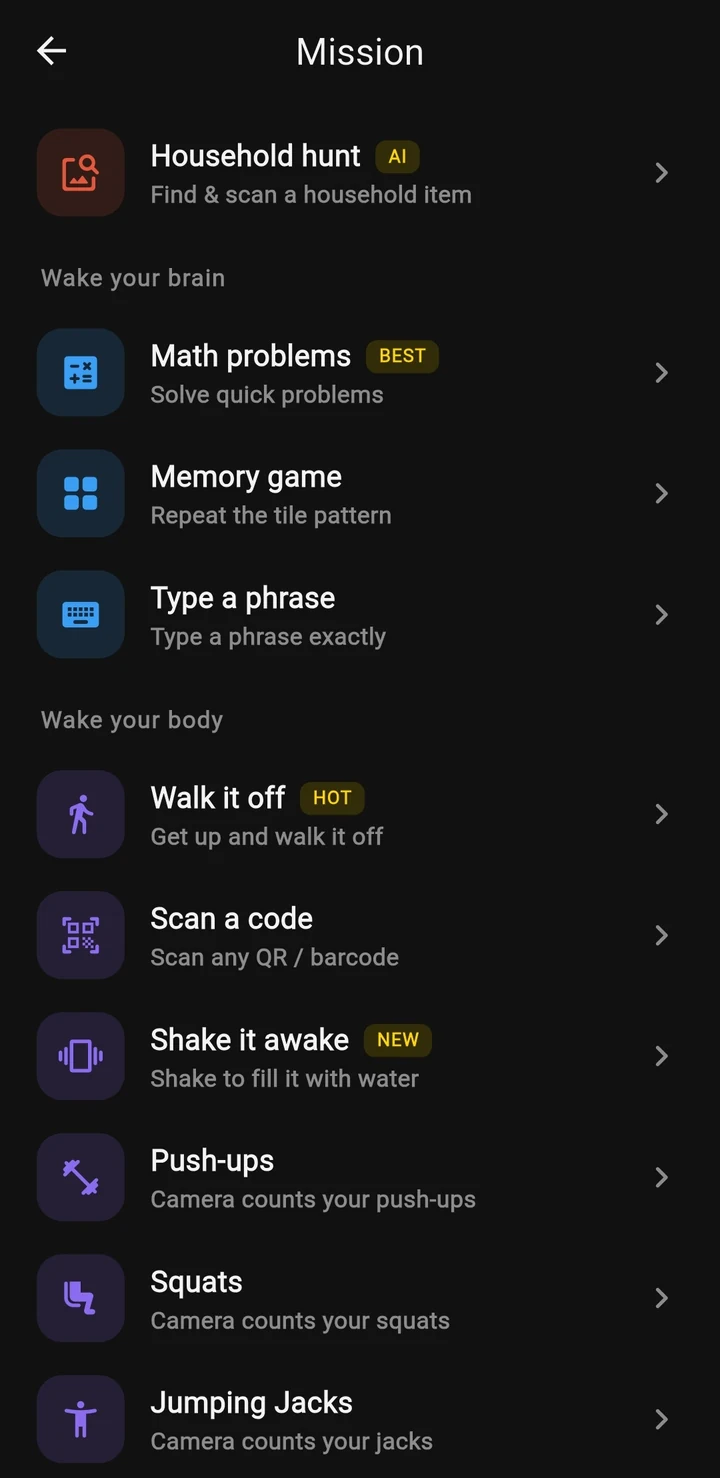
Beyond Alarm, the app we built for this, has eleven missions, and in our app they're all free:
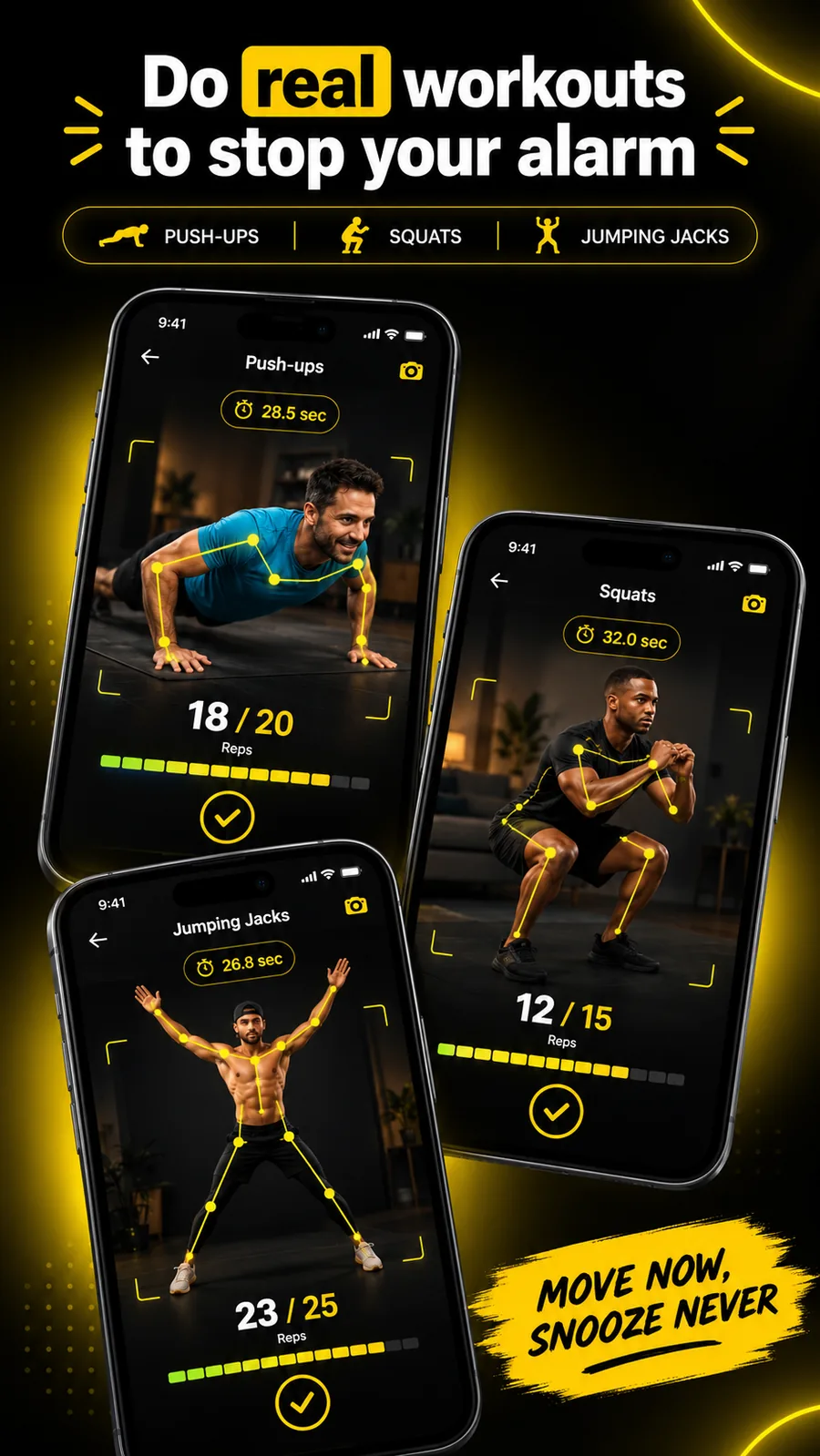
- Push-ups, Squats, Jumping Jacks — counted by the camera with on-device pose detection.
- Photo mission — photograph a spot you chose, like the kettle.
- Scan a code — a barcode or QR code stuck up in another room.
- Household hunt — find and scan an item around the house.
- Walk it off — counts your steps.
- Math Problems, Memory game, Type a phrase, Shake it awake — brain wakers, best as the second step once you're standing.
Chain up to five on one alarm. They work on Android and iPhone; on iPhone the alarm rings through Apple's AlarmKit and sliding "stop" on the lock screen opens the mission instead of ending the alarm.
2. Put the off-switch out of reach
The old trick is a phone or clock across the room. It works because walking breaks the reflex — but a heavy sleeper can walk over, switch it off and get back in.
A photo or code-scan mission is the same trick, done properly. The thing you have to reach is in the kitchen, and the alarm keeps ringing until you get there.
3. Cap the snoozes
Every snooze is another chance to fall back into deep sleep, and sleep inertia is heavier when you're woken from it. In Beyond Alarm you set the snooze length and how many times you can press it, or turn snooze off.
We've looked at whether multiple alarms beat snoozing — short version, neither is a plan.
What one good alarm looks like is in our guide to the wake up alarm app.
4. Pick a melodic tone, and let it rise
A small 2020 survey in PLOS ONE (McFarlane et al., 50 usable responses) found that people who rated their waking sound as melodic reported less sleep inertia. The authors call it preliminary, but it's a free change.
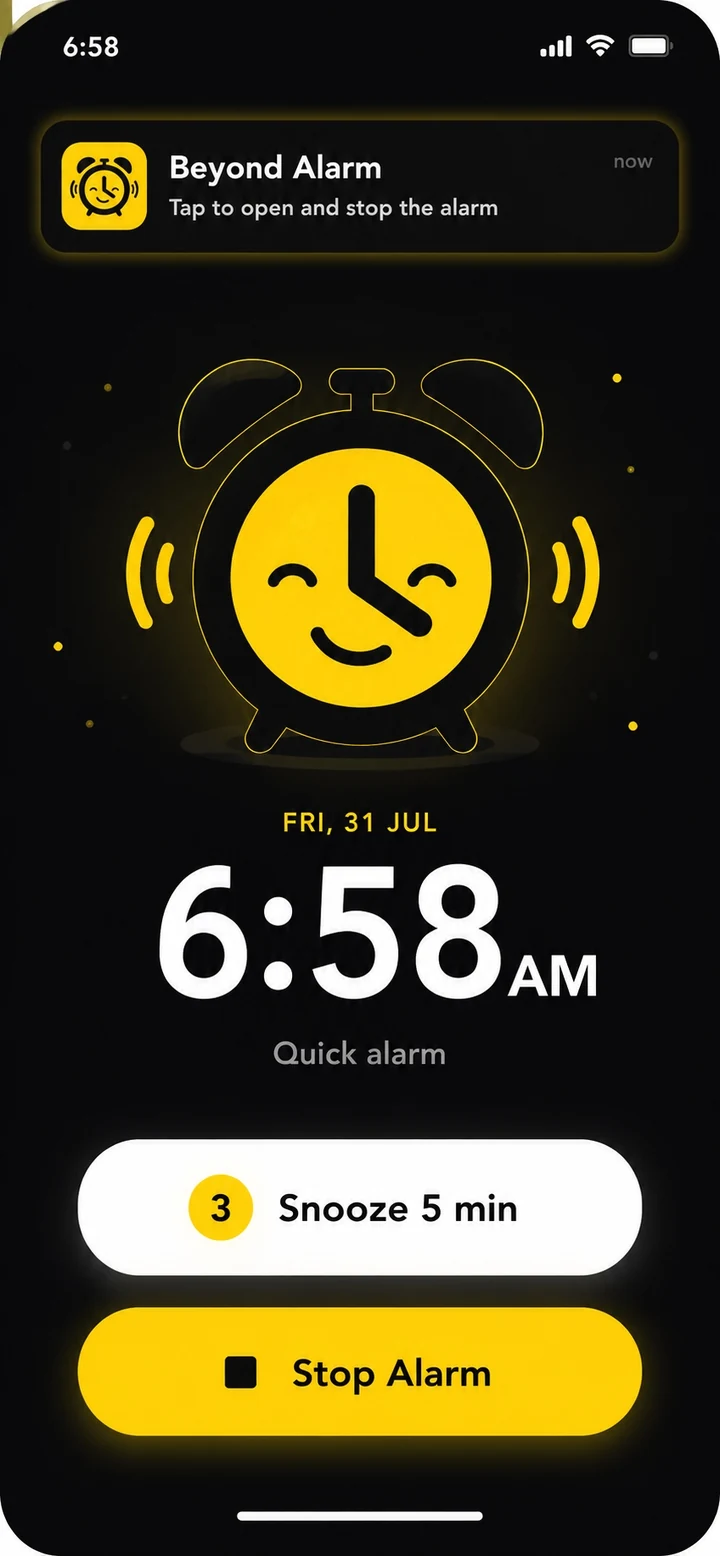
A rising volume gives your brain a few seconds to surface. Beyond Alarm's Gentle wake-up ramps the sound over up to 90 seconds, or set it to 0 for full volume at once; our gentle alarm clock guide explains how the rise works. You can also add a wake-up message, read aloud on a loop while the ring screen is up — on iPhone it starts once the ring screen opens.
Beyond Alarm
Beyond Alarm does this part for you: the alarm will not switch off until you have actually moved, and the apps you pick stay locked afterwards.


5. Light, straight away
The Sleep Foundation lists "natural light exposure" alongside consistent wake times and gentle alarms as ways to cut morning grogginess. Open the curtains the moment you're up, or put a lamp where you'll switch it on.
A photo mission pointed at the window gets you there in one go.
6. Wake at the same time every day
The NHS puts a regular routine first in its sleep tips: getting up at similar times "helps your body know when it's time to sleep", and it says to keep it "even on days when you're not working".
A heavy sleeper with a 6:30 weekday and 10:30 weekend alarm is resetting their body clock twice a week.
7. Sleep enough the night before
Sleep inertia is worse after short nights, so the real fix often happens at bedtime. Work back from your alarm and protect the hours.
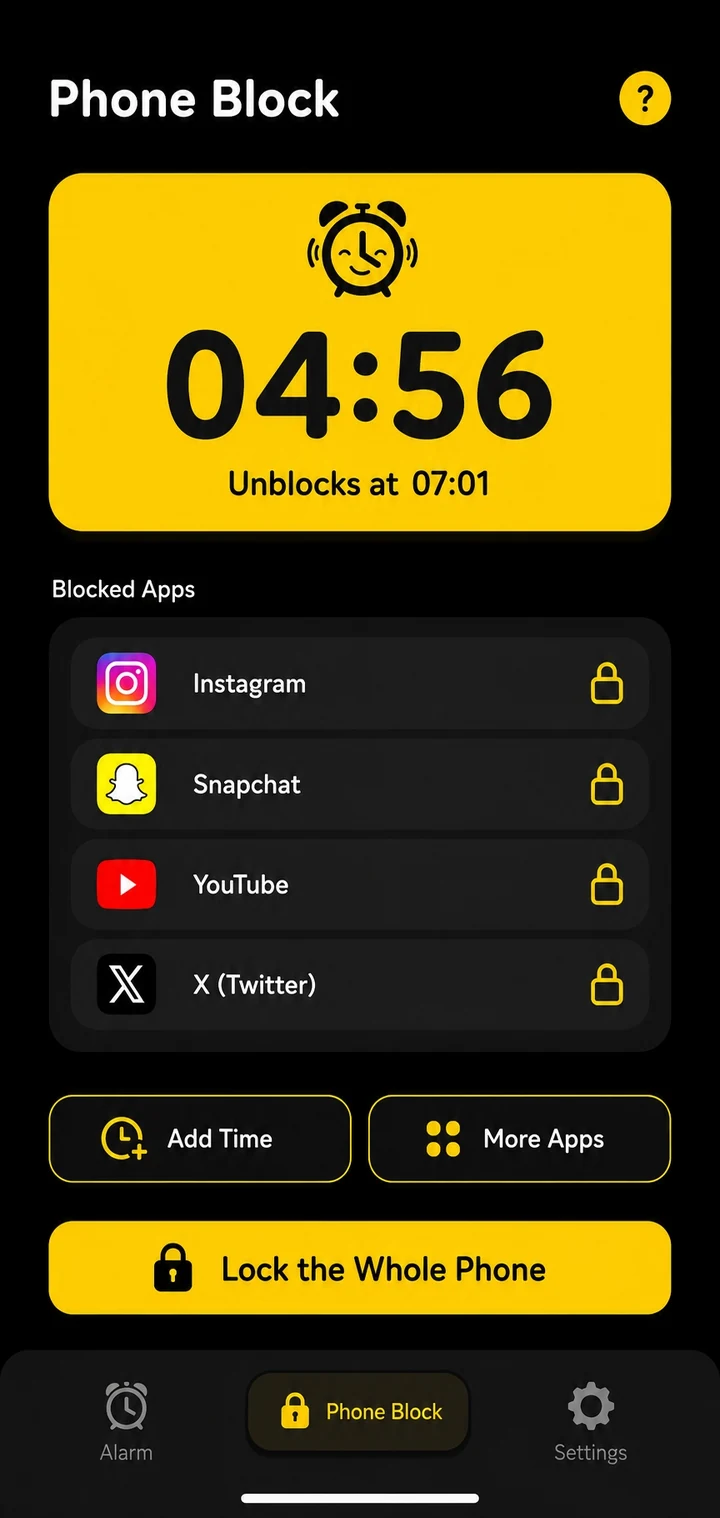
If your phone is what keeps you up, Beyond Alarm's Phone Block can lock your chosen apps at bedtime — Strict mode has no stop button until the timer ends. It's free: one short ad unlocks it.
8. Give yourself a reason not to go back to bed
Beating the alarm is half of it. The other half is the first ten minutes, when the bed and the phone are both inviting.
Beyond Alarm's Morning Lockout keeps the apps you pick shut after the mission — 15 to 60 minutes, or a custom length — on Android and iPhone. On Android it can lock the whole phone. On Android, Wake-up Check also re-checks a few minutes after you dismiss that you're still up.
What we'd set up for a heavy sleeper, in Beyond Alarm: squats as the first mission, a code scan in the kitchen as the second, Gentle wake-up at 30 seconds, snooze off, and Morning Lockout for 30 minutes. Everything is free while the app is ad-supported; Pro only removes the ads. Our best free alarm app for heavy sleepers guide compares the options.
9. Know when it's more than a deep sleeper
If you sleep through alarms most weeks even with enough hours, or you're exhausted however long you sleep, talk to a GP. Daytime sleepiness that doesn't lift with sleep is worth checking out.
And if the alarm didn't sound at all, it's a phone setting, not you: see iPhone alarm not going off or alarm not going off on Android.
Sources
Read on 4 November 2026.
- Dang-Vu TT et al. Spontaneous brain rhythms predict sleep stability in the face of noise. Current Biology, 2010.
- McFarlane SJ et al. Alarm tones, music and their elements. PLOS ONE, 2020.
- Sleep Foundation: Sleep inertia: how to combat morning grogginess
- NHS Every Mind Matters: How to fall asleep faster and sleep better
Common questions
How do you wake up a heavy sleeper?
Make the alarm hard to dismiss on reflex. A wake-up mission that needs you standing — camera-counted squats, a photo of the kitchen, a code scan in another room — does more than extra volume. Beyond Alarm has eleven missions, all free. Add daylight, a fixed wake time and a melodic tone.
What are the best tips for heavy sleepers?
Put the thing that stops the alarm out of reach of your bed, cap your snoozes, get light into the room as soon as you're up, wake at the same time every day, and protect your sleep the night before. Most people who sleep through alarms are short of sleep, not deaf to them.
Why can't I wake up to my alarm?
Some people's brains are better at holding sleep against noise — one Harvard study linked it to how many sleep spindles a person produces. Being short of sleep makes it worse, and sleep inertia, the grogginess after waking, can last 15 to 60 minutes.
Is a louder alarm better for a heavy sleeper?
Not on its own. Heavy sleepers often hear the alarm and switch it off without remembering. A loud start helps, but the bigger win is making the dismiss step something a half-asleep brain can't finish.
How do I wake up someone who is a heavy sleeper?
Open the curtains or turn the lights on, speak to them by name, and give them something to do — sitting up, standing, a glass of water. Better still, help them set an alarm whose mission needs them out of bed.
We build Beyond Alarm, the alarm for Android and iPhone that will not switch off until you have actually moved, then blocks the apps that pull you back. Most of what we write here comes out of building it.
Beyond Alarm
An alarm that keeps ringing until you’ve actually moved — then blocks the apps that pull you back to bed. Free to start, no account.
Keep reading
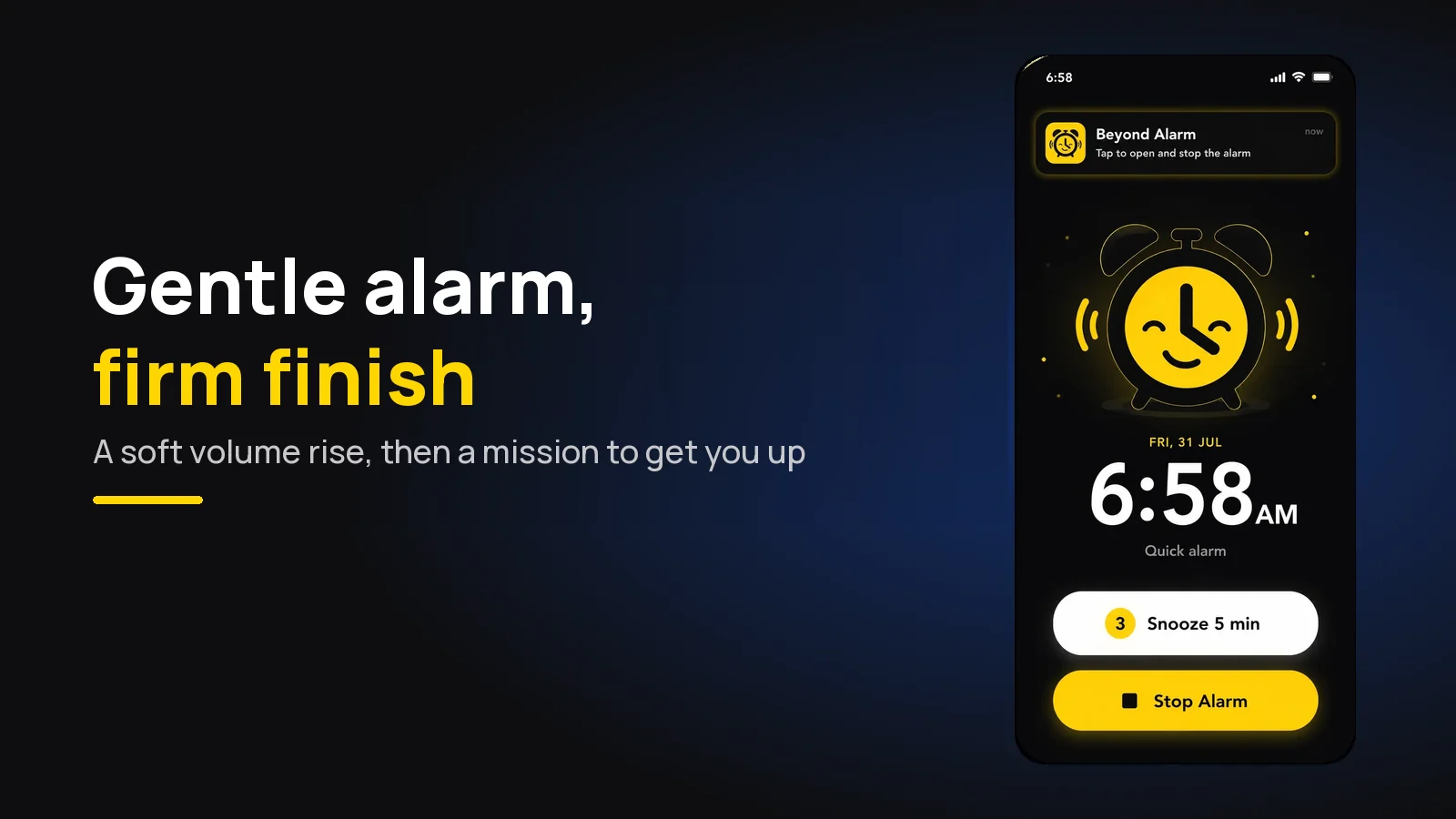
Gentle alarm clock app: wake up softly, still get up
A gentle alarm clock that rises from a whisper to full volume over 15 to 90 seconds, with calm sounds, and a mission so the soft start still gets you up.
Wake up alarm app: how to pick a morning alarm that works
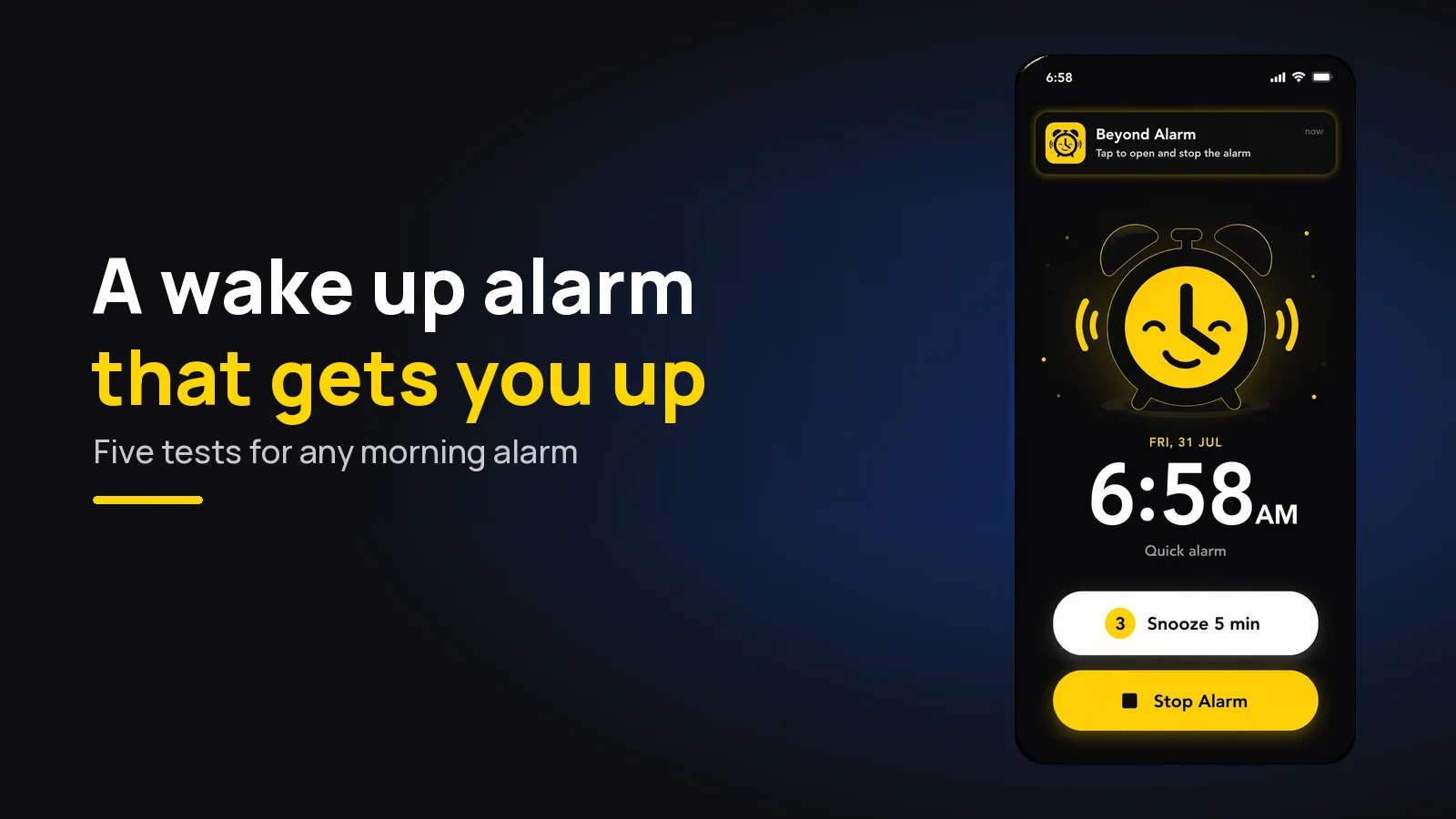
How to pick a wake up alarm clock that gets you out of bed, not just awake. Five tests for any morning alarm, and why Beyond Alarm passes all of them.