
Why you reach for your phone before your eyes are properly open
 Beyond Alarm9 August 2026 · 6 min read
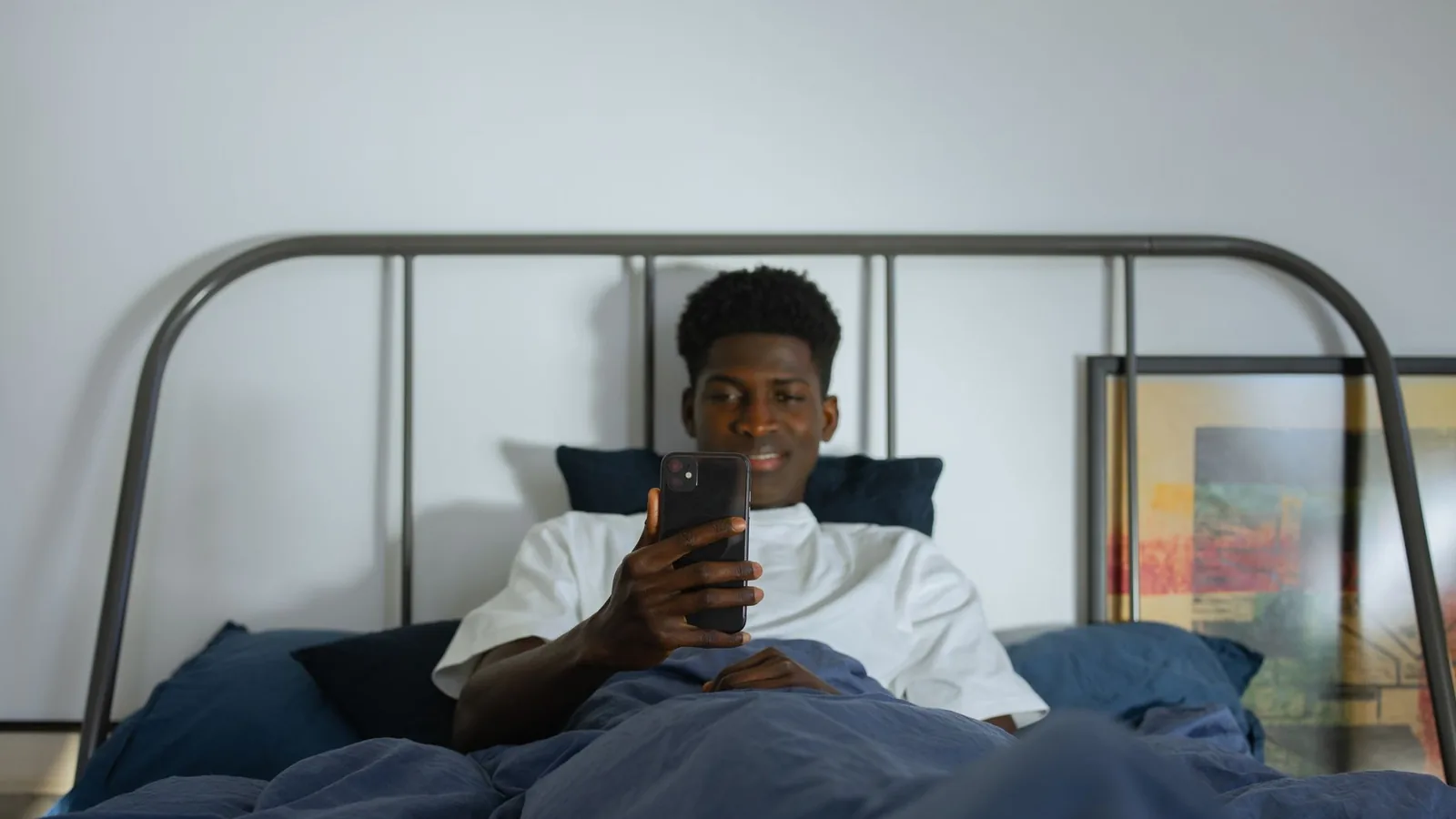
Photo by cottonbro studio on Pexels
Most people know how this goes. The alarm sounds. You reach out, silence it, and your thumb is already somewhere else. Forty minutes later you are still horizontal, still scrolling, and now late.
The most-quoted figure is 80% of people reaching for their phone within 15 minutes of waking, from an IDC Research survey of over 7,000 smartphone owners aged 18 to 44. Worth knowing that study was sponsored by Facebook, so treat the precise number with some caution.
Independent surveys land in the same territory regardless — Reviews.org puts it at 71% within ten minutes. Whether it is seven in ten or eight in ten, it is most people. When most people do a thing, explanations that centre on personal weakness are usually the wrong explanation.
The design problem underneath it
Here is the mechanism, and it is almost embarrassingly simple.
Your alarm lives on the same object as everything designed to hold your attention. To turn off the alarm, you must pick up the phone. Once it is in your hand and unlocked, every app you have is one tap away — and you are making that choice during sleep inertia, the window where your impulse control is measurably not yet back online.

That is not a fair fight. You are being asked to exercise restraint at the precise moment your capacity for restraint is at its lowest, while holding a device engineered by very large teams to be difficult to put down.
If you want the mechanism in more detail — including why the cortisol explanation you will see repeated everywhere does not hold up — that is its own post.
What it costs you
Three things, roughly in order of how much they matter.
The obvious one: time. Ten minutes that becomes forty, on a morning that had no slack in it.

The less obvious one: how the day starts. Opening a feed floods a barely awake brain with a stream of unrelated, mostly negative, entirely un-actionable inputs. You have not decided what today is about yet, and the first thing you have done is hand that decision to whatever an algorithm chose. Plenty of people describe a low-grade stressed, scattered feeling for hours afterwards and never connect it to the first ten minutes.
The circular one: your sleep. The same habit tends to exist at both ends of the day. Scrolling in bed at night delays sleep — partly light exposure suppressing melatonin, but mostly that engaging content is simply not compatible with falling asleep. Less sleep means heavier sleep inertia in the morning, and sleep debt lengthens it, which makes you more likely to reach for the phone rather than get up. The morning habit and the night habit feed each other.
What each fix actually addresses
| Fix | Removes the mechanism? | Why it usually fails |
|---|---|---|
| Willpower | No | Asks the least capable version of you to perform |
| Phone across the room | Partly | You are holding it, unlocked, ten seconds later |
| Greyscale | No | The alarm and the feed are still the same device |
| Separate alarm clock | Yes | Friction — another object to own and charge |
| A task before unlocking | Yes | Needs something you cannot do on autopilot |
Why the usual advice mostly fails
None of this matters if the alarm never rings in the first place — if that is your problem, start here.
"Just don't check it." This is a plan that requires the version of you with the least impulse control to execute perfectly, every day, forever.
"Put the phone across the room." Better, because it forces you to stand. But you are still holding an unlocked phone eleven seconds later, now upright and awake enough to justify "just a quick look."
"Use greyscale." Genuinely helps some people. Does nothing about the fact that the alarm and the feed are on the same device.
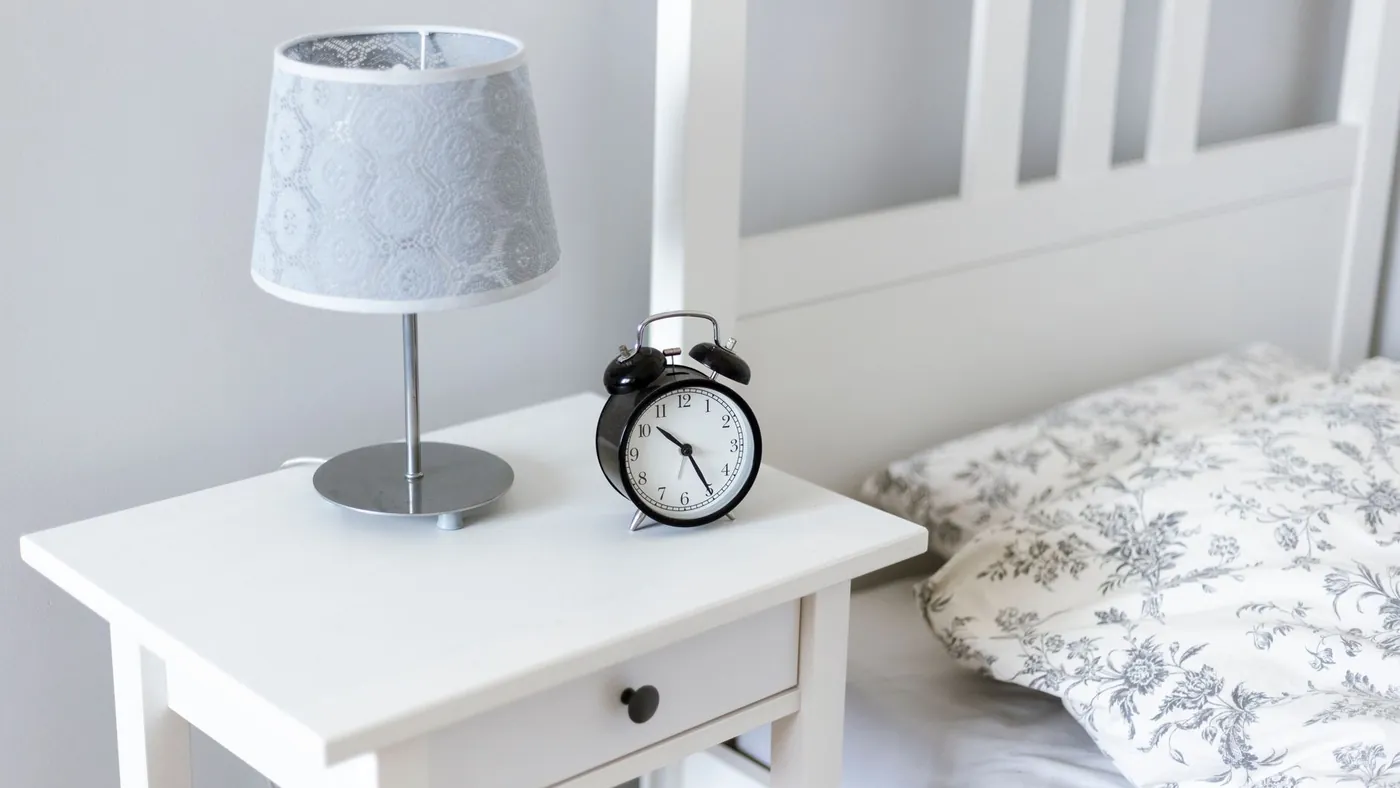
"Buy a separate alarm clock." This is the one that actually addresses the mechanism, and it works — the phone stays in another room and there is no reason to touch it. The reason more people do not do it is friction: another object, another thing to charge, and most people's phone alarm is genuinely more convenient. If you will actually do it, do it. It solves the problem at the root.
Beyond Alarm
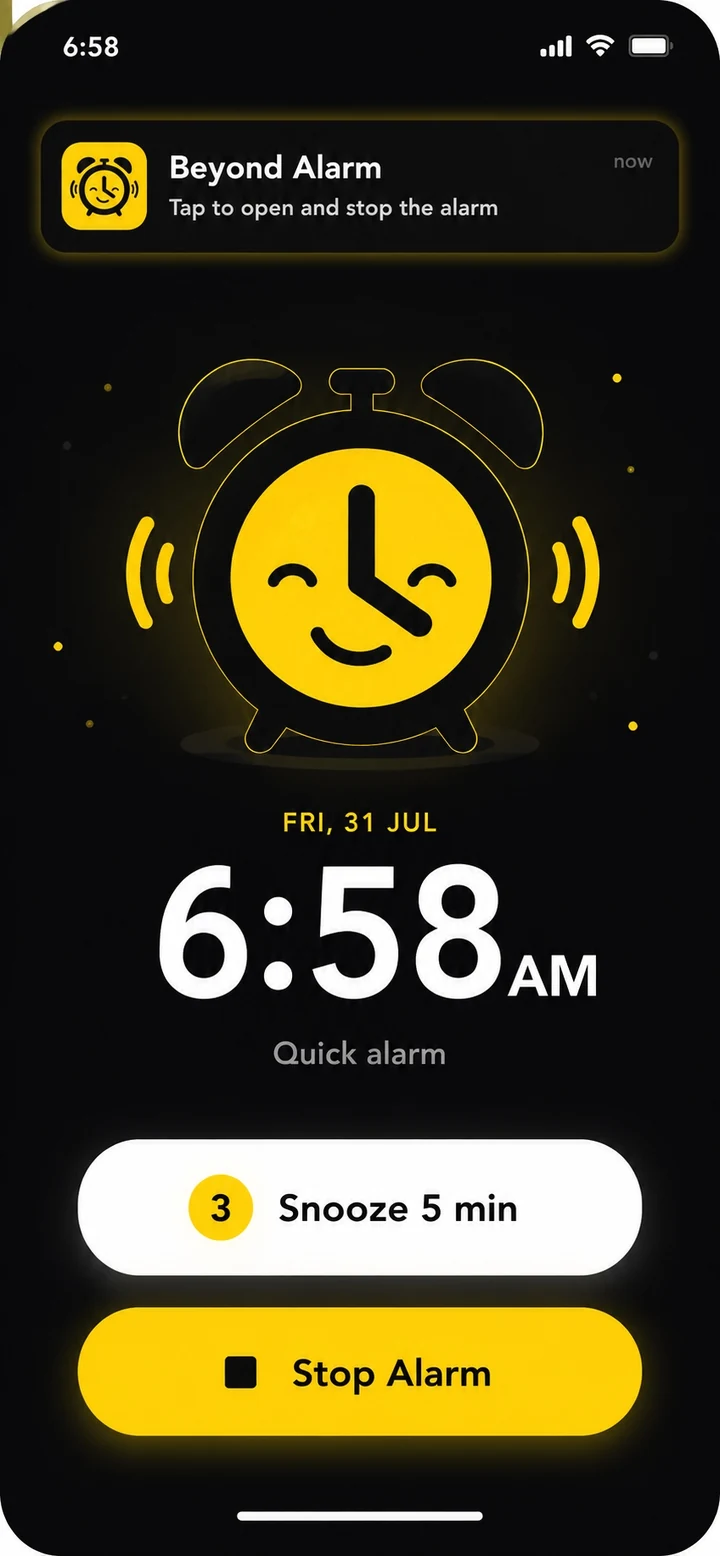
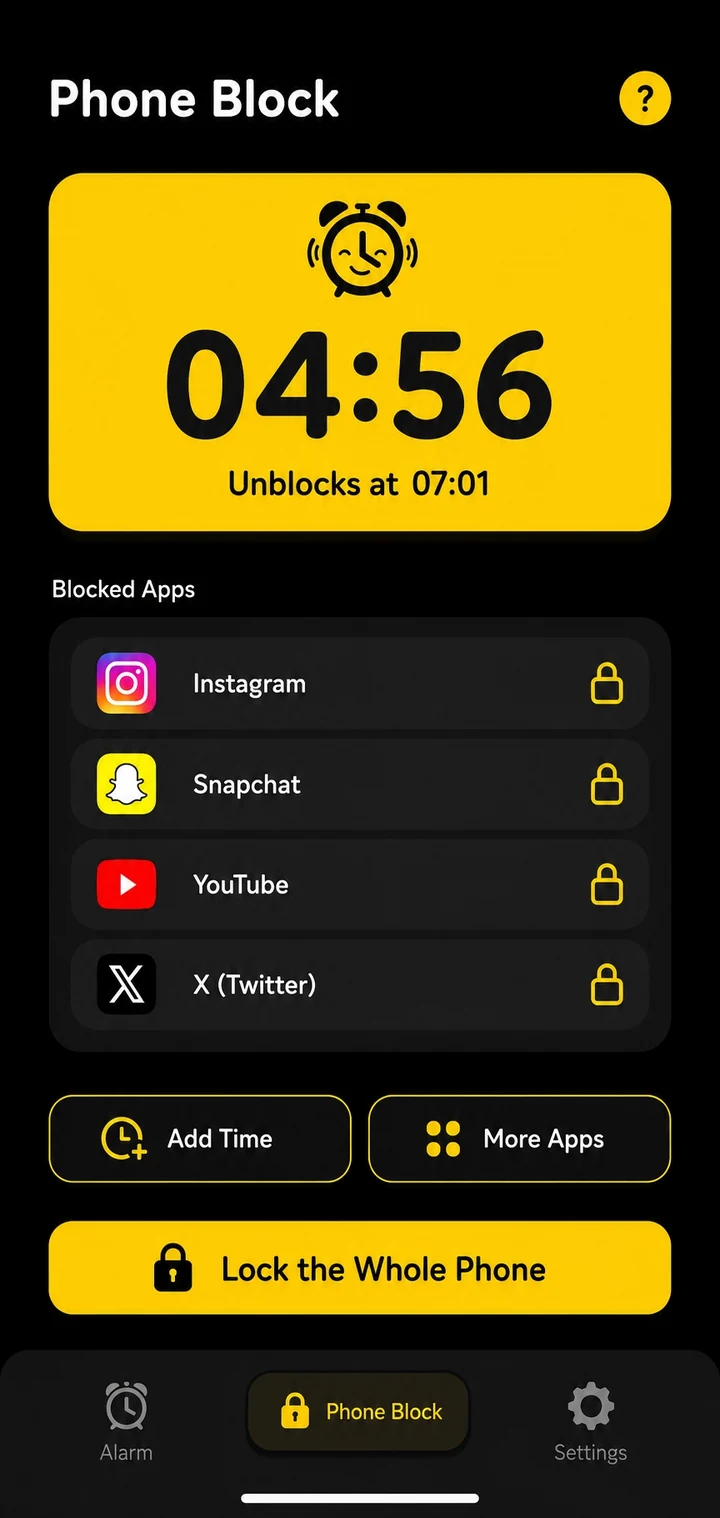
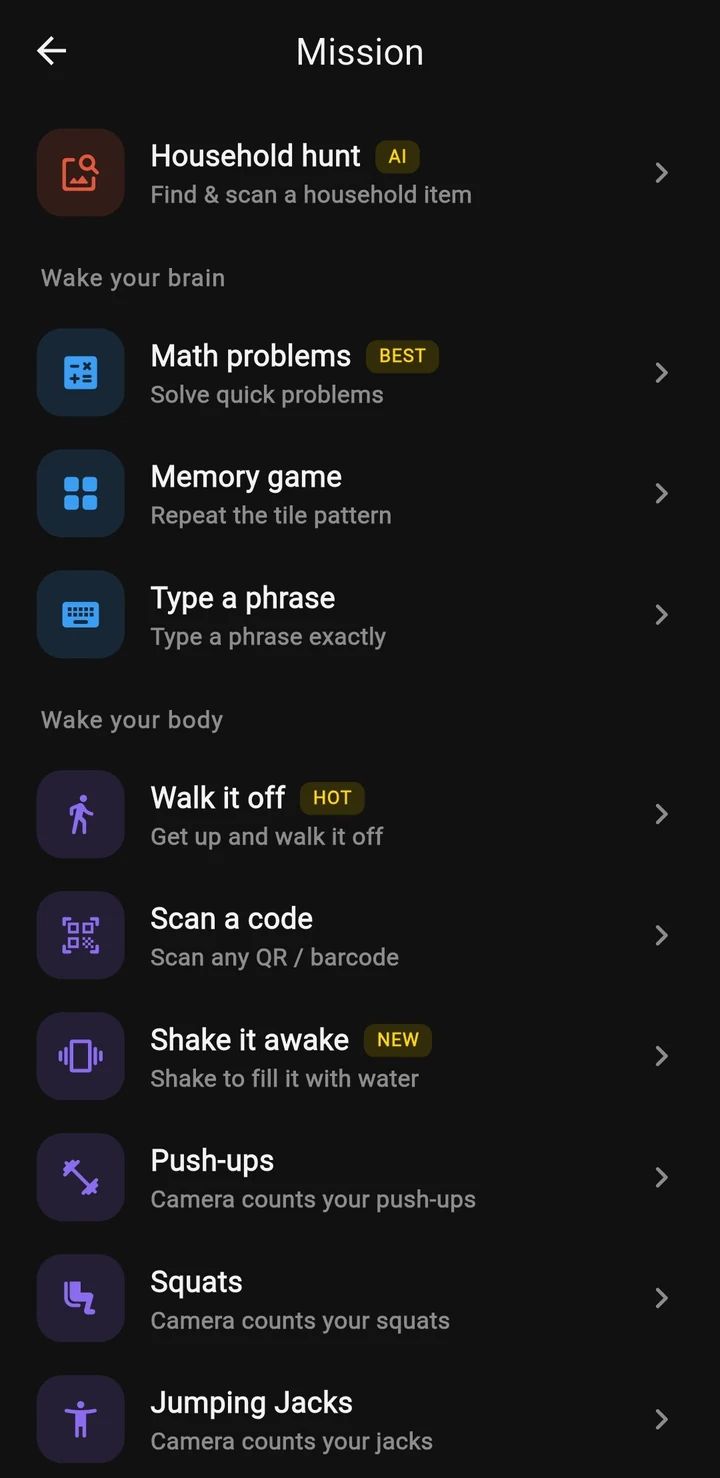
Beyond Alarm does this part for you: the alarm will not switch off until you have actually moved, and the apps you pick stay locked afterwards.


What works if you are keeping the phone
Assume the phone stays the alarm, because for most people it will.
Put something between waking and unlocking. The gap you need is not physical distance, it is a task. Anything that takes a couple of minutes and requires the awake part of your brain means that by the time the phone is available, sleep inertia has receded and you are choosing rather than reflexing.
Make the first thing non-negotiable and non-digital. Curtains. Water. Standing outside for sixty seconds. It does not have to be impressive, it has to be first and it has to be fixed. A specified first action is much easier to follow than a vague intention not to scroll.
Remove the specific apps rather than the phone. For most people it is two or three apps, not "the phone". Blocking those for the first hour keeps your alarm, your messages and your calendar working while removing the thing that actually eats the time.
This is the design decision we argued about most while building the lockout. Blocking the whole phone is easier to build and it tests badly — people need their alarm, their messages and their calendar, so a total block gets switched off within a week. A list you choose survives, because it never gets in the way of something you actually needed.
Fix the night end too. A charging spot outside the bedroom for the hour before sleep does more for your mornings than anything you do in the morning. Better sleep means lighter sleep inertia, and an easier wake — and if the reason you are up late is that the evening never quite ends, that pattern has a name and a mechanism.
This is the pairing Beyond Alarm is built around, and the reason the two features ship together: the alarm doesn't stop until you have moved, and then a morning lockout keeps the apps you chose shut for as long as you set. The rest of the phone works normally — calls, messages, calendar — so it is the "leave it in another room" fix without needing another room.
A version you could start tomorrow
Not a routine. Three lines:
- Alarm goes off. Do not unlock. Stand up.
- Curtains, then water. Two minutes, no screen.
- Then the phone — with your two worst apps unavailable for the first hour.
The point of all three is the same, and it is the thing worth taking away: you are not trying to become more disciplined at 6am. You are trying to make sure the 6am version of you has fewer decisions to get wrong. Every fix above removes a decision rather than demanding a better one.
Step three is the one people fail, because it is the only one that needs the phone to cooperate. The apps that enforce it, and what each of them can and cannot actually block, are compared here.
Common questions
How long does the average person spend on their phone in bed?
It varies widely, but the pattern people report is consistent. An intended few minutes becomes thirty to forty. The reliable measure is your own screen-time report for the hour after your alarm.
Does blue light really affect sleep?
It suppresses melatonin, but for most people the larger effect at night is simply that engaging content keeps you awake. A night-mode filter does not make a feed less interesting.
Is a separate alarm clock actually worth it?
If you will genuinely use one, yes. It is the only fix that removes the mechanism rather than asking you to resist it. The reason most people abandon it is friction, not effectiveness.
What should I do first instead of checking my phone?
Something fixed, physical and short. Curtains, water, standing outside for a minute. The point is not the activity, it is that the first action is decided in advance so the half-awake version of you does not have to choose.
We build Beyond Alarm, an Android alarm app that will not switch off until you have actually moved. Most of what we write here comes out of problems we hit building it.
Beyond Alarm
An alarm that keeps ringing until you’ve actually moved — then blocks the apps that pull you back to bed. Free to start, no account.
Keep reading
Scheduled app blocks on Android: weekdays, overnight windows and one schedule at a time
A recurring Android app block that runs on the clock, not your alarm. How Schedules work, weekday and overnight windows, and why the app keeps you to one at a time.

How to block social media after your alarm on Android
Keep Instagram, YouTube and other distractions closed after waking. Compare scheduled Focus mode with an alarm-triggered block, then set up your morning.