
Why you doomscroll the moment you wake up
 Beyond Alarm16 August 2026 · 6 min read

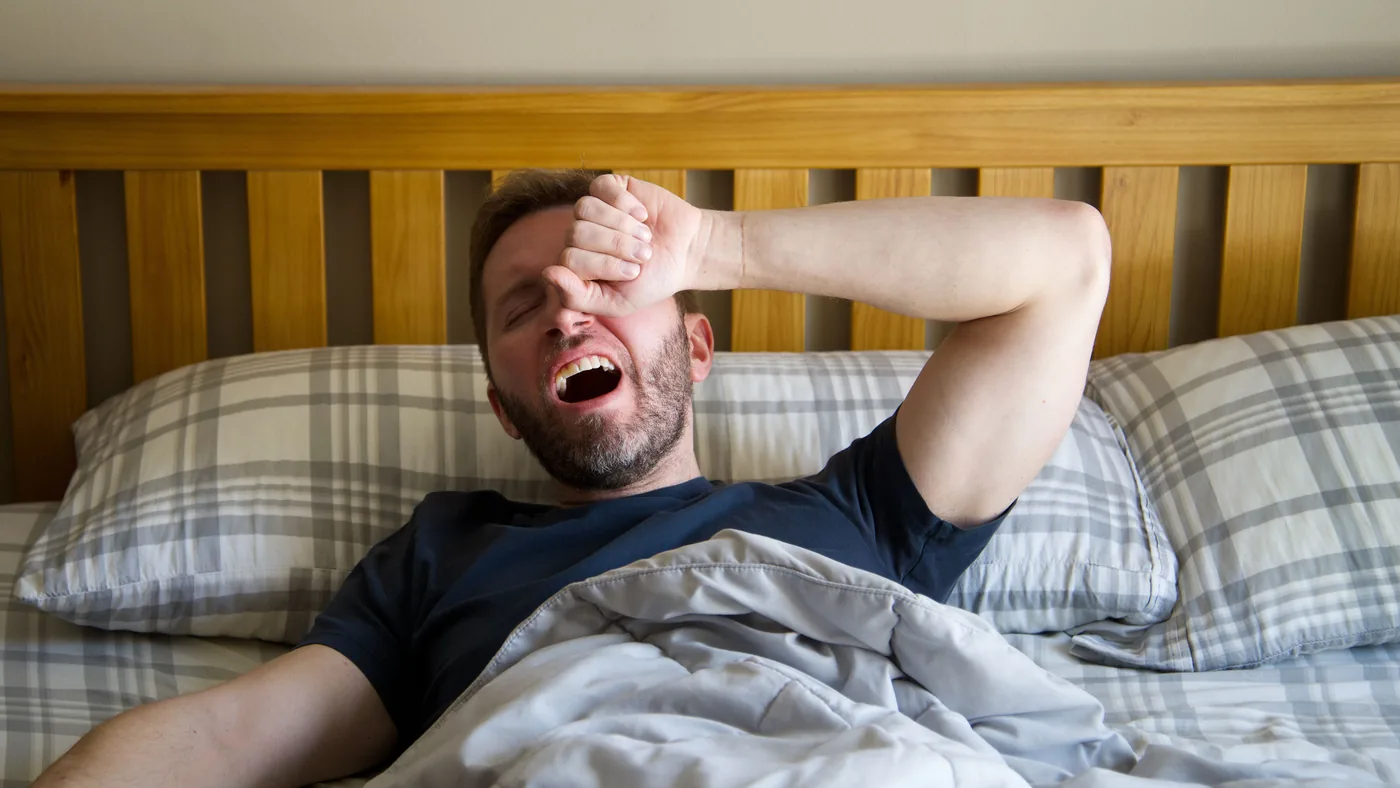
You wake up, and before anything else has happened you are eleven minutes into a feed you did not decide to open. Then you feel bad about it, which is roughly the least useful possible response, because the feeling bad implies you had a real choice and squandered it.
You mostly did not. Waking is the single worst moment of your day for making a decision, and the phone is the closest object with a reward in it. Those two facts collide every morning, in that order, and the outcome is not mysterious. What makes it stick is not the phone's design — it is where the phone is standing when your judgement is weakest. That is also the part you can change, and it is not the part most advice goes after.
What is actually happening in those first minutes
Waking is not a switch. For somewhere between fifteen and thirty minutes after you open your eyes, you are in sleep inertia — a measurable state in which reaction time, working memory and, critically, executive function are all degraded. Executive function is the thing that lets you notice you are doing something and stop. It is offline exactly when you need it.
Into that gap comes a device that is:
- within arm's reach, usually the closest object to your head
- already unlocked by your face before you have consciously decided anything
- built around a feed with no bottom, so there is no natural stopping point
- the only thing in the room offering a reward for zero effort
This is not a fair fight, and framing it as one is why the standard advice fails. You are being asked to exercise restraint at the exact moment your capacity for it is at its lowest — the same mechanism that makes turning the alarm off in your sleep possible without forming a memory of it.
The cortisol explanation you will see everywhere
Search for this and you will be told, on a great many pages, that checking your phone first thing "spikes your cortisol before your brain has finished cleaning itself", and that this is why you feel foggy all morning.
Treat that with suspicion. Two problems with it:
Cortisol rises sharply after waking anyway. It is called the cortisol awakening response, it happens in the 30 to 45 minutes after you open your eyes, it occurs whether or not there is a phone in the room, and it is a normal part of being a functioning human — it is part of how you get going. Attributing that rise to your phone is describing ordinary physiology and blaming a device for it.
The claim almost never carries a citation. Follow the links on those pages and they go to other pages making the same claim, which go to other pages. That is a circle, not evidence.
There may well be a real effect of emotionally charged content on morning stress — it is plausible and worth studying. But "your phone spikes your cortisol" as stated is doing a job that the actual explanation does not need. Sleep inertia plus proximity plus an infinite feed is entirely sufficient to explain why you scrolled for eleven minutes. You do not need a hormone to make it make sense.
I would rather tell you the mechanism is boring and true than dress it up.
Morning and evening scrolling are different problems
They get treated as one habit. They are not, and they do not respond to the same fixes.
| Evening scroll | Morning scroll | |
|---|---|---|
| What it costs | Sleep — the more serious harm | The part of the day you had plans for |
| What drives it | Reluctance to end the day; the only unclaimed time you have | Impaired executive function; nothing else in reach |
| When you notice | Usually at the time — you know you should stop | Usually afterwards, with no memory of starting |
| What helps | Ending the day deliberately; a wind-down that is not a screen | Changing what the phone can do before you are awake enough to decide |
| What doesn't | Willpower late at night | Willpower at any point |
If your problem is the evening one, the morning fixes will not touch it, and the reverse is also true. Most people have both, unevenly.
What the evidence actually supports
Being specific about this matters, because the honest picture is narrower than the headlines.
The scale is well measured. The American Academy of Sleep Medicine surveyed 2,007 US adults in June 2025 via Atomik Research, with a margin of error of roughly two percentage points. Half of adults use a screen in bed every day, and another third do most days or several days a week. 38% say pre-bed phone news makes their sleep slightly or significantly worse — rising to 46% among 18–24 year olds.
The mechanism has some support, with real limits. A 2024 mediation analysis in the Eurasian Journal of Medicine by Bozkurt, Demirdöğen and Akıncı found that bedtime procrastination partly explains how problematic smartphone use damages sleep quality — the path from phone use to procrastination was strong (β = 0.44), and from procrastination to worse sleep stronger still (β = −0.54).
That is a genuinely useful finding, and here is what most articles citing it will not tell you: it studied 245 adolescents aged 13 to 18 in one city in Turkey. That is a small, young, single-site sample. It is a reasonable piece of evidence about teenagers in Erzurum and a weak one about you. Treat it as a direction, not a proof.
I would rather you knew that than quoted the beta coefficient at someone.

Beyond Alarm
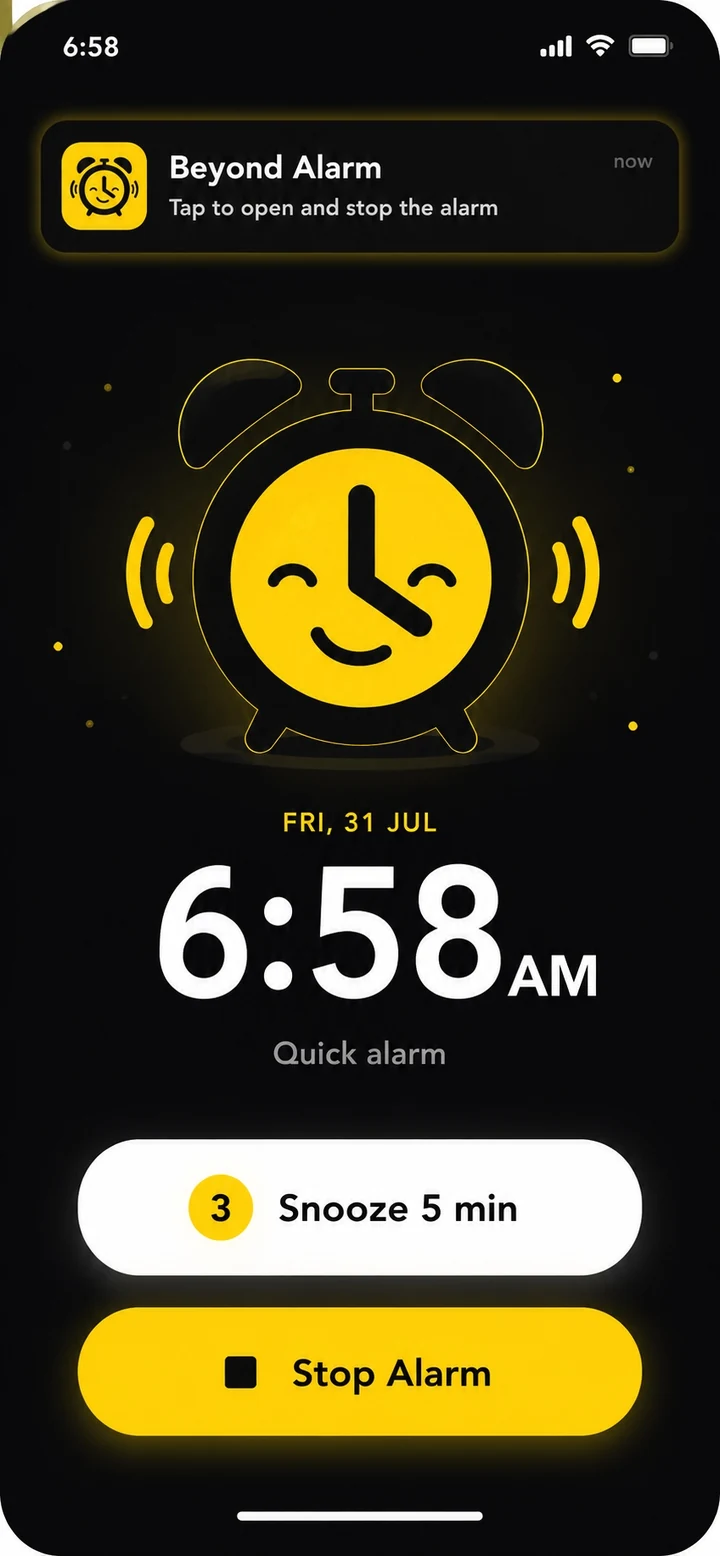
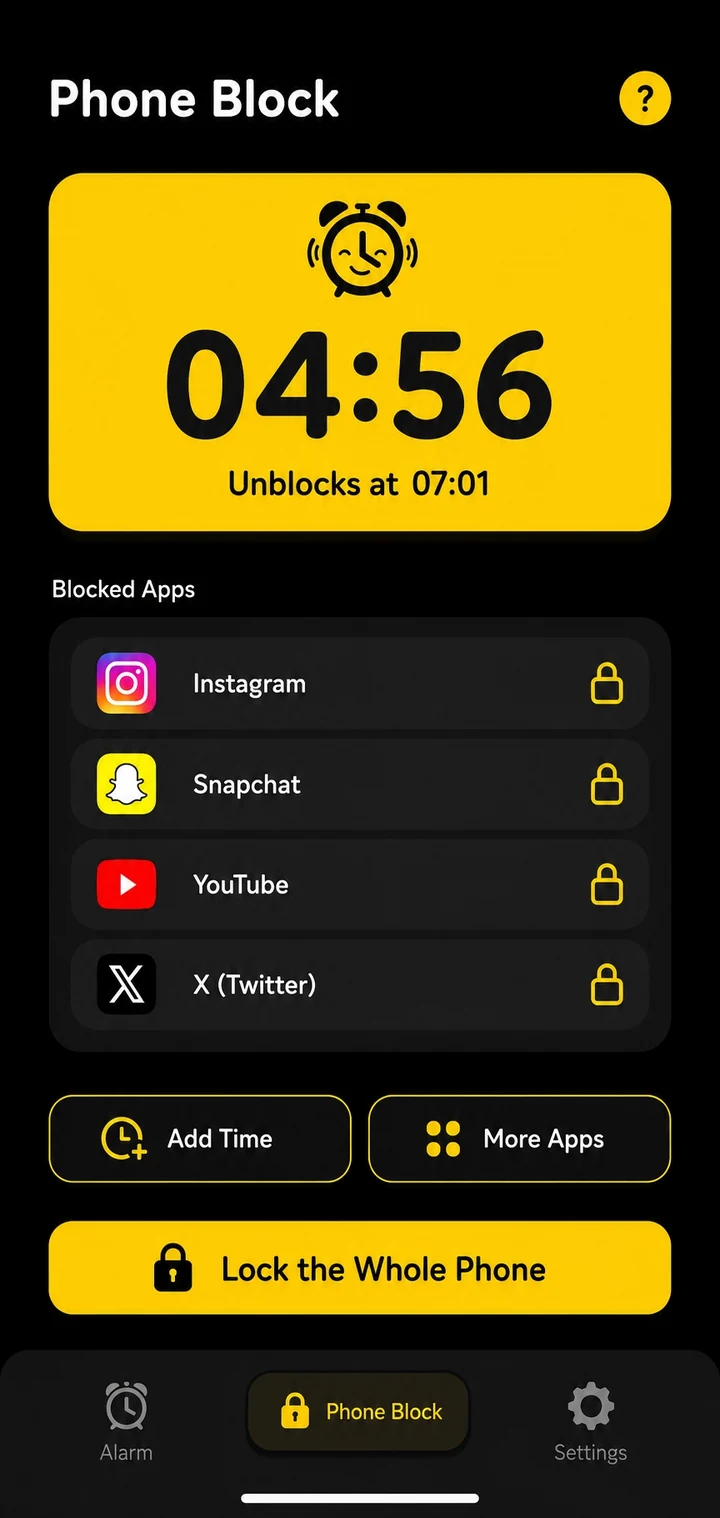
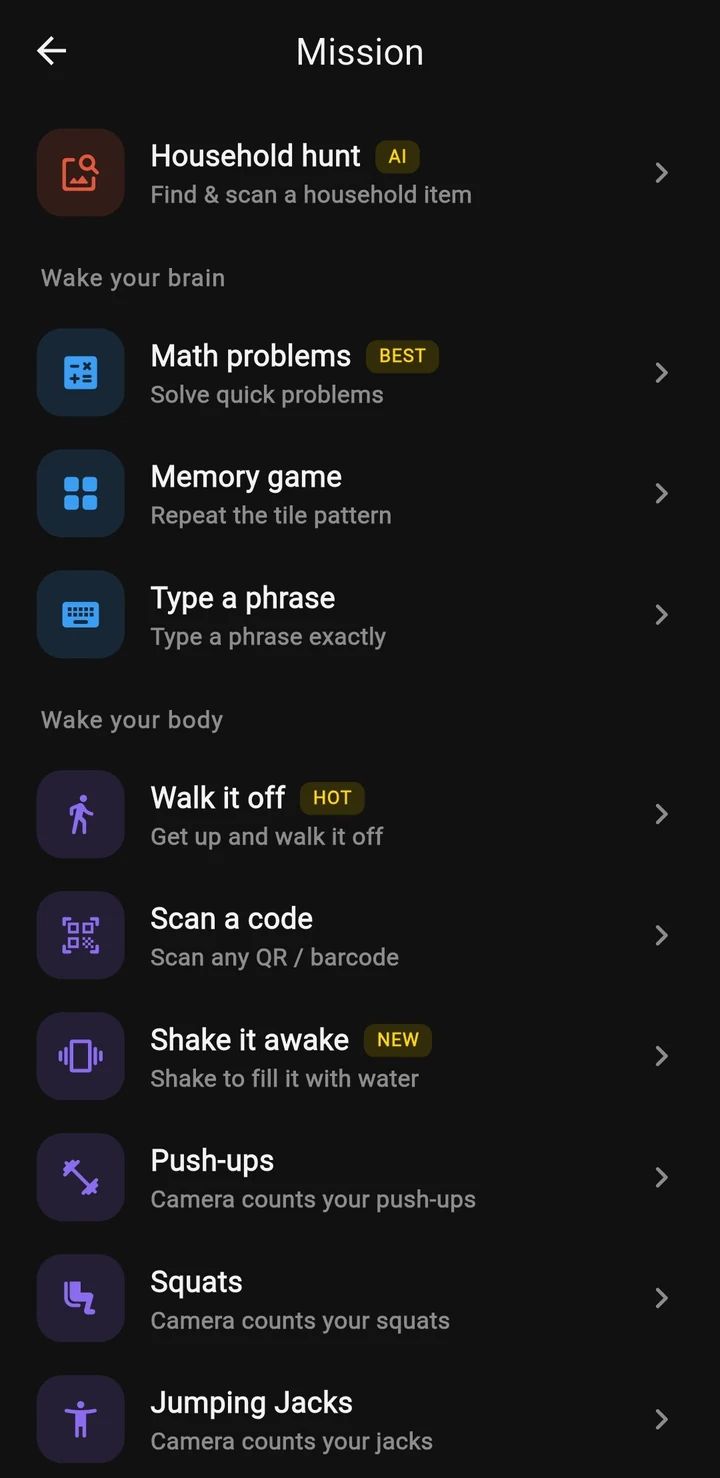
Beyond Alarm does this part for you: the alarm will not switch off until you have actually moved, and the apps you pick stay locked afterwards.


So what actually changes it
Given the mechanism, only two categories of intervention make sense.
Change the environment before you are impaired. Anything decided the night before is decided by a version of you who can decide things. Where the phone charges, whether the apps are reachable, when the block lifts — all of that is an evening decision with a morning effect, which is the only useful shape for this.
Make the first action incompatible with lying down. The urge is tied to the cue: in bed, phone in reach, nothing else happening. Break the cue and the urge mostly goes with it, usually within a couple of minutes. Standing up and leaving the room does more than any amount of resisting in place, which is why the fixes that work are physical rather than mental.
What does not work is the thing everyone tries first: deciding, in the moment, to be better. That decision is being made by the least capable version of you that exists on any given day.
For what it is worth, this is the shape Beyond Alarm takes — the alarm cannot be switched off until you have done something physical, and the apps you nominated stay locked for a window afterwards, both set the night before. It is Android only. And if you are reading this at 1am, the more useful change is a bedtime, not an app.
If you want the practical version of all this — the ranked options, including the free ones — that is in what to change when your phone is your alarm. And if the deeper issue is that the first hour of your day keeps disappearing, that is its own post.
The part worth keeping
You are not weak for this. Eight in ten adults are doing a version of it, the timing is dictated by neurology you did not choose, and the object involved was designed by people whose job was to make stopping difficult.
But the fact that it is not your fault does not make it not your problem. The leverage is in the environment, decided the night before, by the version of you who is awake — which in practice means deciding what the phone will let you do, and these are the apps that enforce that.
And it takes longer than you have been told — the median for an ordinary daily habit is 66 days, not 21, and this one sits at the slow end of that range. The numbers, and what shortens them, are in how long it takes to stop checking your phone first thing.
Common questions
Is morning doomscrolling worse than doing it at night?
They are different problems. Night scrolling costs you sleep, which is the more serious harm. Morning scrolling costs you the part of the day you had plans for, and it sets an attentional baseline that makes the following hours feel more scattered. Night is worse for your health; morning is worse for your day.
Does checking your phone in the morning really spike your cortisol?
Cortisol rises sharply in the 30 to 45 minutes after you wake regardless of what you do — that is the cortisol awakening response, and it is a normal, healthy part of waking up. The claim that your phone causes that spike is repeated constantly online without a source attached. Be sceptical of it. The real mechanism does not need a hormone story.
Why can I resist my phone at 3pm but not at 6am?
Because at 3pm you are fully awake, the phone is not the only thing within arm's reach, and you have already made a hundred small decisions successfully. On waking you have sleep inertia impairing exactly the functions you would need, the phone is physically closer than anything else, and it is the first decision of the day rather than the hundredth.
How long does the urge last if I don't give in?
Shorter than it feels. The pull is tied to the cue — being in bed, phone in reach, nothing else to do. Once you are upright and out of the room, the specific urge usually fades within a couple of minutes, which is why physically changing location works better than resisting in place.
We build Beyond Alarm, an Android alarm app that will not switch off until you have actually moved. Most of what we write here comes out of problems we hit building it.
Beyond Alarm
An alarm that keeps ringing until you’ve actually moved — then blocks the apps that pull you back to bed. Free to start, no account.
Keep reading
Scheduled app blocks on Android: weekdays, overnight windows and one schedule at a time
A recurring Android app block that runs on the clock, not your alarm. How Schedules work, weekday and overnight windows, and why the app keeps you to one at a time.

How to block social media after your alarm on Android
Keep Instagram, YouTube and other distractions closed after waking. Compare scheduled Focus mode with an alarm-triggered block, then set up your morning.